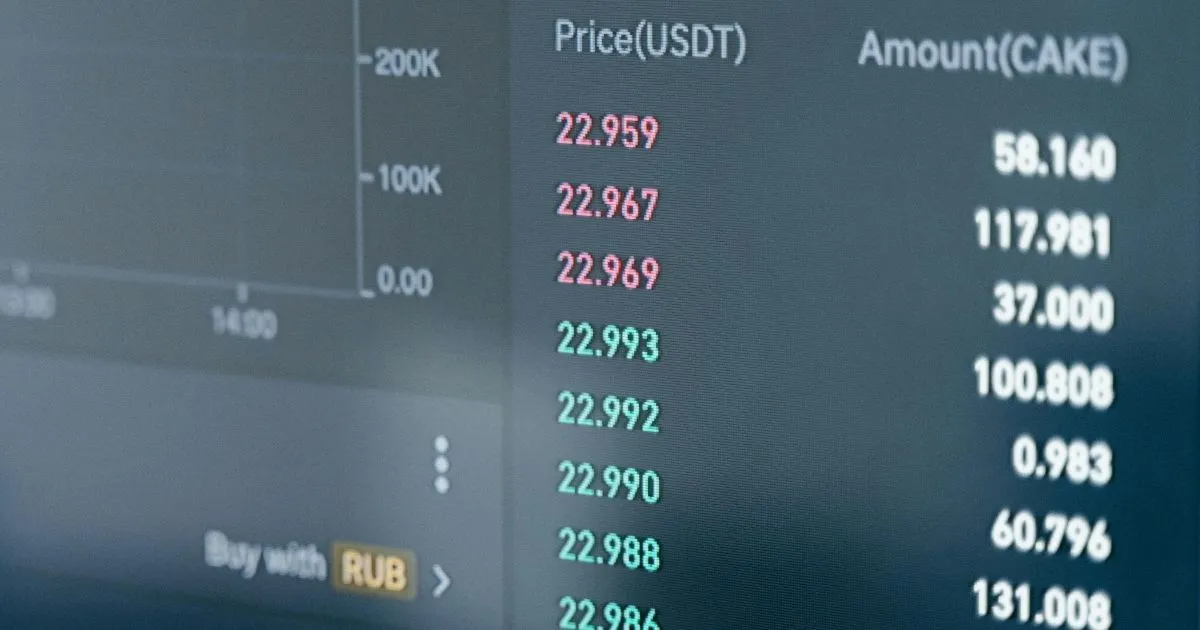
I spent most of last Tuesday staring at a flickering screen in a coffee shop just outside of Austin, Texas, watching liquidity pools breathe. It is a strange thing to witness. You see these massive pulses of capital moving between layers, jumping from one ecosystem to another, and if you look closely enough, you see the gaps. These tiny, momentary lapses in price equilibrium are where the real money sits now. The days of buying a coin and praying for a moonshot feel like ancient history, or at least a younger man’s game. Nowadays, I prefer the quiet efficiency of crypto arbitrage.
It is a Tuesday or Wednesday thing for me. By mid-week, the weekend volatility has usually settled into a predictable rhythm, yet the sheer volume of decentralized traffic ensures that price discrepancies remain consistent. You aren’t looking for a market rally. You are looking for the market to be slightly wrong in two places at once. If Ethereum is trading at a premium on one chain while lagging on another, that window of inefficiency is your paycheck. It is clinical. It is cold. And frankly, it is the only way I find I can sleep soundly while holding digital assets in 2026.
The silent mechanics of a DEX trading bot
The barrier to entry has shifted. We used to talk about speed in terms of how fast your thumb could tap a screen. Now, speed is about the proximity of your logic to the liquidity source. When I talk about using a DEX trading bot, I am not suggesting some “get rich quick” software you download from a sketchy telegram link. I am talking about the architectural necessity of automation in a landscape where human reaction time is essentially a rounding error.
The beauty of a well-configured script lies in its lack of ego. A human sees a price gap and wonders if it will grow wider. A human hesitates, thinking about the news or what some influencer said on a livestream. The bot just sees the math. It executes the swap on one chain, bridges the asset, and completes the cycle on the second chain before the block header has even fully propagated across the network. There is a certain Zen in watching these micro-wins accumulate. You aren’t hunting for 100% gains. You are harvesting 0.4% gains, dozens of times a day, over and over until the compounding effect starts to look like a serious salary.
I remember when people thought cross-chain movement was too risky because of bridge hacks. The infrastructure has matured since then. We have atomic swaps and intent-based protocols that make the middleman almost invisible. But the core principle remains the same. You are providing a service to the market by equalizing prices. You are the invisible hand, or at least, your code is. It feels more like being a plumber than a gambler. You are just fixing leaks in the price discovery mechanism.
Why the market neutral strategy wins in a sideways year
Most people I know are exhausted by the macro environment. Interest rates are a mess, global trade is weird, and the charts mostly look like a flatline punctuated by occasional heart attacks. This is exactly why a market neutral strategy has become my primary focus. I stopped caring if Bitcoin goes up or down. In fact, I almost prefer it when the market goes nowhere. As long as there is volume, there is arbitrage.
When you operate with a neutral posture, you aren’t exposed to the directional whims of the crowd. Your capital is hedged or moved so quickly that the underlying price of the asset becomes secondary to the spread between venues. I’ve had some of my most profitable days during weeks when the headlines were claiming crypto was dead. While the retail crowd was panic-selling, the price gaps between different decentralized exchanges were widening because of the lopsided selling pressure. Crypto arbitrage thrives on that friction. It turns chaos into a predictable spread.
There is a specific kind of satisfaction in waking up, checking your logs, and seeing that while the world was arguing about some new regulation or a corporate collapse, your capital was quietly moving back and forth, extracting value from the very volatility that everyone else fears. It requires a shift in mindset. You have to stop being a “believer” and start being a technician. It isn’t about the soul of the technology anymore. It is about the plumbing.
The sheer density of the current landscape helps. We have so many Layer 2 solutions and sidechains now that the fragmentation is almost comical. Every new chain is a new opportunity for a price lag. I’ve seen moments where a specific stablecoin was de-pegged by half a cent on a niche network for nearly three hours. To a casual observer, that is a glitch. To someone with the right tools, that is a wide-open door.
Of course, the “safe” part of the title is relative. Nothing in this space is ever truly safe. Smart contract risk is the ghost that haunts every transaction. You can have the perfect bot and the perfect strategy, and if the vault you are interacting with has a logic error, your capital can vanish. That is the price of admission. It is why I never put more into a single pool than I am willing to lose in a flash. It is a game of probabilities and risk management, not a guaranteed bank account.
I often wonder where this ends. As bots get smarter and more people move toward these strategies, the windows of opportunity should, in theory, shrink. We should reach a point of perfect efficiency. But we never do. Human greed and human fear are too messy. There will always be someone who fat-fingers a trade, or some news event that causes a localized liquidity crunch. There will always be a new chain launching with high incentives and low liquidity.
The mid-week grind isn’t for everyone. It lacks the adrenaline of a leverage-long or the social cachet of being “early” to a new meme coin. It is boring. It involves a lot of debugging and checking gas prices. It involves realizing that your greatest enemy isn’t the market, but your own desire to tweak the settings when things are already working. But at the end of the day, when I look at the growth of the stack without having to worry about what some billionaire tweeted, it feels like the only honest way to participate in this ecosystem anymore.
The sun is going down over the hills now, and the coffee shop is thinning out. My logs show another three successful cycles completed in the last hour. The spreads are tightening as the US East Coast goes offline, but there is still enough movement to keep the engines humming. I might let it run through the night, or I might shut it down and enjoy the quiet. That’s the thing about this. Once you stop chasing the moon, you realize there is plenty of gold just lying on the ground between the cracks. You just need to be fast enough to pick it up before someone else notices it is there.
FAQ
The primary risks aren’t market-directional but technical. You face smart contract vulnerabilities, “toxic flow” where you end up holding an asset that is crashing faster than you can exit, and bridge failures. Even if the price logic is sound, the infrastructure carrying the trade can break.
While you can start small, gas fees and bridging costs often eat the margins of smaller trades. To make cross-chain strategies viable, you usually need enough capital so that the 0.5% or 1% spread significantly outweighs the fixed transaction costs of moving between chains.
Yes, primarily because of the extreme fragmentation of the market. With dozens of active Layer 2s and different liquidity protocols, price parity is rarely instantaneous. The opportunities are shorter-lived than they were years ago, but they are more numerous.
In a crash, arbitrage can actually be more profitable because of the high volume and panic. Since the strategy relies on the difference between prices rather than the price itself, the bot will continue to trade the spread as long as there is liquidity to execute the swaps.
While “no-code” tools exist, the most successful practitioners usually have a handle on the underlying logic. Understanding how to read a smart contract or configure a bot’s parameters is essential to ensure you aren’t just running a generic script that everyone else is also using, which leads to “race to the bottom” margins.