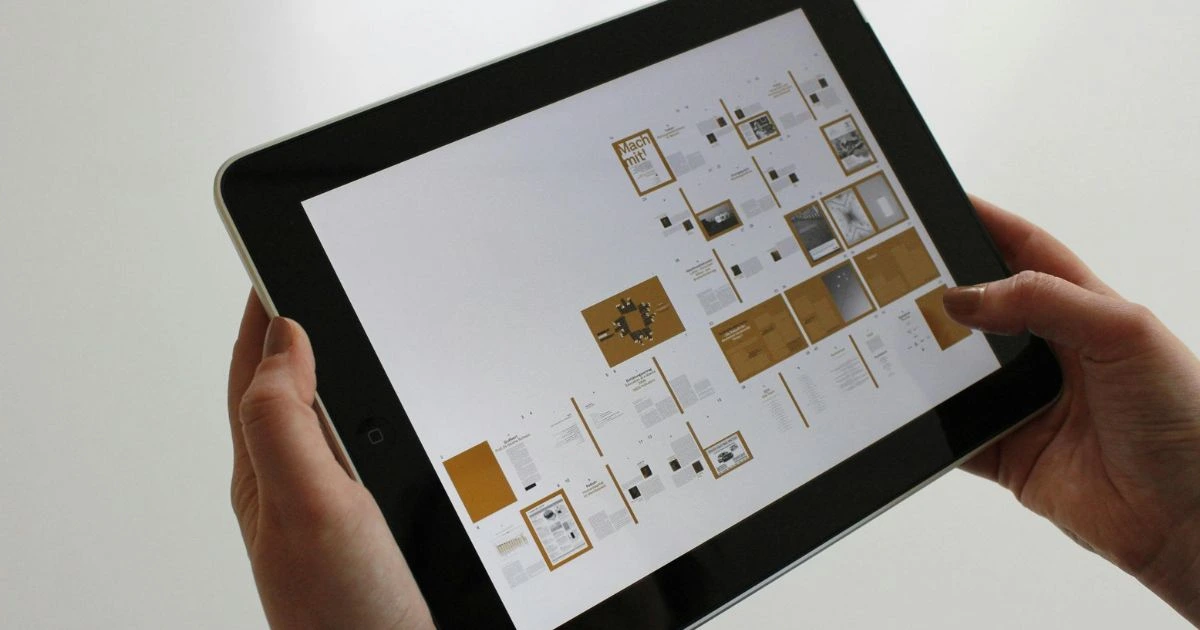
The screen is flat. We have spent the last two decades pretending it isn’t, layering shadows and gradients over our interfaces to trick our brains into sensing depth where there is only glowing glass. But for those of us in the self-publishing trenches, the flatness has become a ceiling. You pour a year of your life into a manuscript, hire a cover designer who captures the very soul of your protagonist, and then you upload it to a retail site where it becomes a thumbnail. A tiny, two-dimensional postage stamp in a sea of a million other stamps. It feels like a betrayal of the work.
Lately, something has shifted in how people consume stories. I noticed it first while sitting in a coffee shop in Austin, watching a teenager scroll through their tablet. They weren’t just flipping pages. They were tilting the device, watching the cover art shift and react, seeing the spine of the book catch a digital glare that looked suspiciously like real sunlight. It wasn’t a video. It was a 3D digital book, and it looked like something you could actually reach out and grab.
We are entering an era where the static JPEG is starting to feel like a relic of a bygone age. Readers in 2026 are tired of the sterile, distant nature of standard e-books. They want a tactile ghost. They want the sensation of ownership that comes with a physical object, even if that object is made of pixels. The strange part is that the industry would have you believe this requires a massive budget or a degree in software engineering. It doesn’t. You can do this for five dollars and about twenty minutes of your time if you stop listening to the people trying to sell you enterprise-level software.
The subtle shift toward interactive publishing
The word interactive usually makes me want to close my laptop and go for a walk. It has been ruined by corporate meetings and bad educational software. In the context of a book, interactivity shouldn’t mean buttons and loud noises. It should mean presence. When we talk about interactive publishing today, we are talking about closing the gap between the reader’s imagination and the digital file.
I remember the first time I saw a cover that actually breathed. It wasn’t an animation in the traditional sense. It was a layered 3D digital book file that responded to the accelerometer in my phone. If I tilted the phone left, I could see behind the foreground character. It felt like looking through a window rather than staring at a wall. This is the “pop-up” trick that is currently separating the hobbyists from the people who are actually moving units this year.
The trick isn’t in the coding. The trick is in the layering. Most authors send a flat file to their distributors and hope for the best. The authors who are winning right now are taking that same flat file, running it through a simple depth-mapping tool, and creating a version that feels like it has mass. It costs five dollars for a single render on most of the newer micro-platforms. That five-dollar investment changes the psychological value of the product. People don’t want to pay twenty dollars for a file they can’t feel. They will, however, pay for an experience that feels like a boutique digital collectible.
There is a certain irony in how much we are trying to replicate the past using the tools of the future. We spent years moving away from the “clutter” of physical books, only to find ourselves desperately trying to inject the soul of a hardcover back into our Kindles. It is a messy, beautiful contradiction.
Why visual storytelling now demands a third dimension
The market is louder than it has ever been. If you go on any social media platform, you are bombarded by static images of books held by people who were clearly paid to look like they are reading. It feels hollow. Visual storytelling is no longer just about the art on the cover; it is about how that art moves through the world.
When a reader sees a 3D digital book spinning slowly in a feed, or sees the pages actually flutter when a cursor hovers over them, something primitive kicks in. It’s the same impulse that makes us want to touch wet paint. We want to verify the reality of the thing. By giving a book depth, you are giving it a vote of confidence. You are saying that this story is substantial enough to occupy space, even if that space is virtual.
I’ve seen authors use this to reveal hidden details. A fantasy map that shows the topography when you tilt the screen. A mystery novel where the “back cover” contains a different clue depending on the lighting of the environment where you’re reading it. This isn’t just a gimmick. It is a new vocabulary for the medium. We are finally moving past the idea that a digital book is just a PDF that is hard to print.
Of course, there are the purists. There are always purists. They will tell you that the words are all that matter. And they are right, in a vacuum. But we don’t live in a vacuum. We live in a world where the average human attention span is being fought over by billion-dollar algorithms. If a five-dollar depth effect is what it takes to get someone to pause long enough to read your first paragraph, then you would be a fool not to use it.
The process is almost embarrassingly simple. You take your high-resolution cover art. You use one of the many AI-assisted depth generators that have cropped up this year. You define what is close and what is far. You export the file as a glTF or a high-end WebP. You embed it. That is it. The barrier to entry has collapsed, and yet so many people are still standing at the door, waiting for permission to be innovative.
I think about the old bookstalls in New York City, the way the light hits the weathered spines and how you can tell the weight of a story just by looking at the thickness of the volume. We are trying to find the digital equivalent of that weathered spine. We are looking for the “heft” of a story.
There is something slightly haunting about it, too. A 3D book sitting on a digital shelf, flickering with a light that doesn’t exist. It’s a reminder that we are in a transition period. We haven’t quite reached the “Metaverse” future everyone was screaming about a few years ago, but we aren’t in the flat world anymore either. We are somewhere in the middle, in this strange, beautiful gray area where a five-dollar trick can make a piece of fiction feel like a tangible reality.
I don’t know if this will be the standard in five years. Maybe we will have moved on to holographic projections or direct neural links. But right now, in 2026, the 3D digital book is the most honest thing we have. It’s an admission that we miss the physical world. It’s a bridge. And for the price of a cup of coffee, it’s a bridge that any author can afford to build.
It makes you wonder what else we’ve been settling for. If we can make a book feel real for five dollars, what happens when we apply that same logic to the rest of the reading experience? The text itself is still static. The margins are still fixed. There is so much room left to play, so many ways to break the “page” and turn it into something else entirely. The readers are ready. They’ve been ready for a long time. They are just waiting for the creators to catch up and stop being so afraid of a little bit of depth.
FAQ
It is a digital file that uses depth mapping to appear three-dimensional on a 2D screen, often responding to movement or touch.
The industry is looking toward environmental storytelling, where the book’s appearance might change based on the time of day or the reader’s location.
Many high-end self-published fantasy and sci-fi novels on major retail platforms are beginning to implement these “live” covers.
Indirectly, yes. Higher engagement and longer time spent on a page are positive signals for search engines and retail algorithms.
Yes, there are several apps that allow you to create basic depth effects directly on a tablet or smartphone.
No, the cost is borne by the author or publisher during production; the reader usually experiences it for free.
It uses the gyroscope and accelerometer data from your phone to shift the perspective of the layers in the image.
Common formats include glTF, USDZ for Apple devices, and sometimes advanced WebP or specialized wrapper formats.
It works exceptionally well for non-fiction, especially for titles involving data, geography, or technical subjects where depth adds clarity.
Absolutely. It’s an effective way to revitalize older books and give them a fresh look for a new audience.
While the technology will evolve, the desire for digital objects to feel “real” is a consistent trend in user interface design.
Engagement data shows that moving or depth-enabled images have a much higher click-through and retention rate than static ones.
It is a broad term for digital books that go beyond static text, incorporating elements that react to reader input or environmental data.
Yes, while the text remains the same, the presentation layer includes spatial data that gives the book a sense of physical volume.
It’s used for both. It’s a powerful marketing tool for social media, but many authors are now embedding these files into the books themselves.
Yes, you just need a high-resolution version of your cover, preferably with the original art layers if possible, though it’s not strictly necessary.
It’s a nod to physical pop-up books, as the digital layers seem to lift off the screen when the device is moved.
It adds a bit of weight to the file, but rarely enough to interfere with standard download speeds or storage limits.
Most modern smartphones, tablets, and browsers support the file formats used for these effects, though some older e-ink readers may not.
Not anymore. Most of the 2026 tools are drag-and-drop, using AI to determine the layers of your existing cover art.
Basic depth-mapping tools and micro-services currently offer single-file renders for around five dollars.