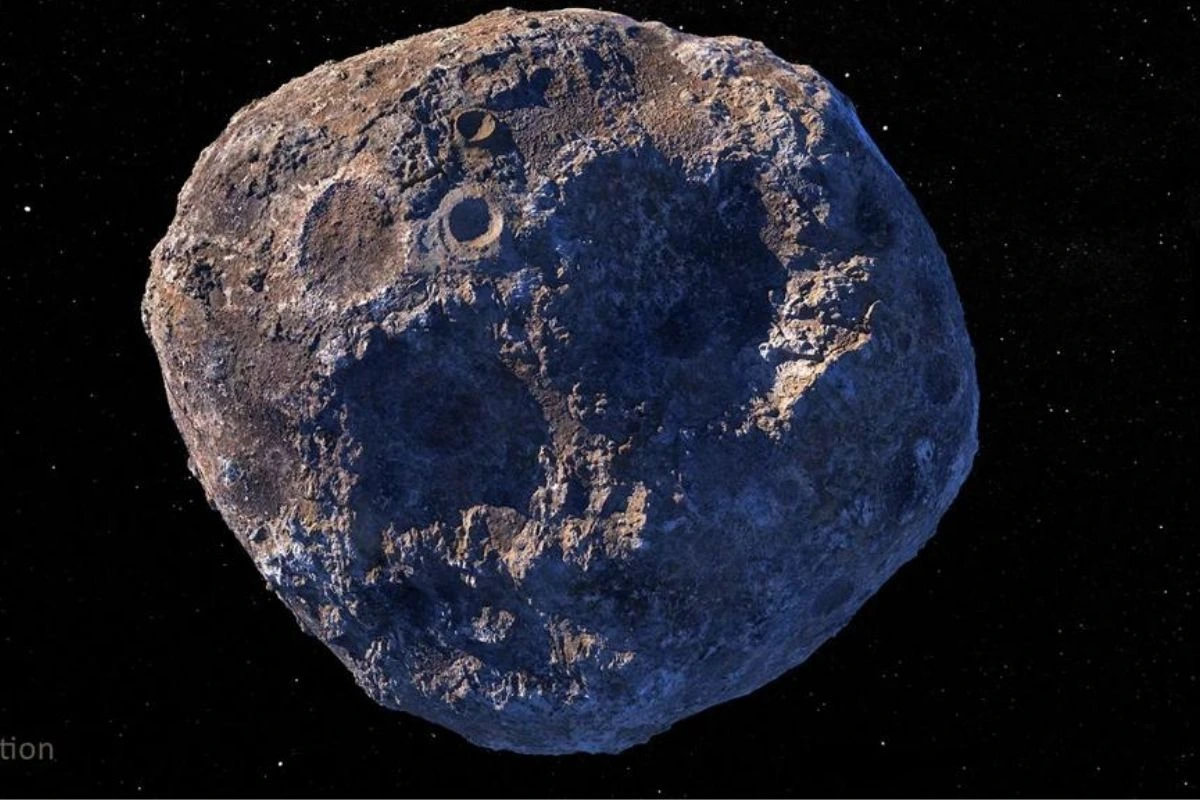
The cosmos delivered a sudden jolt to market serenity this week. While headlines screamed about a bus-sized asteroid named 2026 EG1 making an almost uncomfortably close pass by Earth, the ensuing low-grade panic highlighted a deeper, more pressing instability felt across global asset classes: systemic fragility. NASA confirmed the object, roughly 40 feet across, is slated to swing within 198,000 miles of our planet, a distance significantly closer than the Moon’s orbit. While astronomers assure us this is a mere cosmic flyby and poses no immediate threat, the reaction—the sudden spiking of space-related defense contractor stocks, the spike in insurance speculation, and the general sense of heightened anxiety—speaks volumes about our current collective nerves. We are primed for volatility, and sometimes a celestial object serves as the perfect, harmless trigger for underlying economic stress.
The immediate impact of this high-profile tracking exercise is multifaceted, filtering rapidly from aerospace defense budgets into the financial mainstream. When NASA’s CNEOS publicly broadcasts the trajectory of a Near-Earth Object moving at over 21,500 miles per hour, the market sees not astronomy, but potential discontinuity. Defense and aerospace manufacturers instantly benefit from the implied need for planetary defense readiness. This isn’t about profit over impending doom; it’s about systemic readiness creating immediate, guaranteed government spending contracts. We see analysts scrambling to re-evaluate the low-probability, high-impact scenarios that were previously relegated to academic modeling. Suddenly, securing orbital trajectories and ensuring rapid deployment capabilities become hot topics on CNBC, influencing valuation models across sectors that rely on infrastructure stability—from shipping lanes to satellite communication.
Furthermore, the attention focused extraterrestrially distracts, perhaps intentionally, from terrestrial concerns. In the current geopolitical climate—marked by deep strategic competition and renewed proxy conflicts that ripple across supply chains from Southeast Asia to Eastern Europe—any event that captures global attention acts as a slight pressure release valve for immediate regional tensions. While the proximity of 2026 EG1 has nothing whatsoever to do with global trade disputes or strategic resource competition involving nations like \*\*Iran\*\*, the simple, universal nature of an external threat momentarily shifts focus from man-made conflicts to cosmic ones. This psychological shift, however brief, can affect short-term trading behavior, often leading to a slight cooling in risk exposure driven by the shared, non-political emergency.
A History Worn Shiny: Learning From Past Cosmic Near-Misses and Market Jitters
The fascination with near-Earth objects is not new, but the financial response to them has become increasingly amplified by algorithmic trading and global connectivity. Historically, near-misses were localized events, perhaps generating a local newspaper story or a specialized scientific paper. Think back a few decades; an asteroid passing that close would have been relegated to niche scientific journals, certainly not the lead story on major financial news feeds. The modern difference lies in the concept of the Potentially Hazardous Asteroid, or PHA. NASA defines PHAs as objects whose orbits bring them within 4.6 million miles of Earth’s orbit—a vast, non-threatening distance by human measures, but seismically important in orbital mechanics over millennia.
Consider the lessons learned after significant historical events that were, in reality, minor cosmic occurrences. The 2013 Chelyabinsk event, though not a direct hit, demonstrated the sheer power of atmospheric entry, causing millions in property damage and thousands of injuries across a broad region of Russia. That event, while small-scale compared to extinction-level impacts, provided concrete data on kinetic energy transfer, which immediately reformed insurance models regarding localized, non-tectonic disaster risk. While 2026 EG1 is far smaller than the object that caused the Chelyabinsk explosion, the current media amplification stems from that recent, tangible demonstration of overhead risk, regardless of scale.
The market psychology recalls events where low-probability, high-impact risks suddenly materialized. The market’s reaction to major natural disasters, be they typhoons or volcanic eruptions, often involves a swift repricing of supply chain vulnerability and commodity flow disruption. An asteroid event, even a benign flyby like this one, primes traders to assume the worst-case scenario calculation based on precedent. It causes portfolio managers to stress-test scenarios that include sudden terrestrial disruption. This rehearsal, driven by the cosmic news cycle, is invaluable preparation for when real geopolitical shocks, perhaps involving resource control near \*\*Iran\*\* or broader conflicts, actually materialize.
The Mechanics of Fear: Why a Bus-Sized Rock Moves Multi-Billion Dollar Assets
The speed at which 2026 EG1 is traveling—over 21,500 miles per hour—is crucial to understanding why this is newsworthy, even if harmless. Kinetic energy scales with velocity squared. A small object moving slowly is debris; the same object moving at orbital escape velocity carries immense destructive potential if the trajectory shifts even marginally. This is the core of the astrophysics being communicated, and financial markets translate that kinetic energy into volatility risk premium.
We must dissect the economic signaling of risk categories. When NASA discusses asteroids, they utilize specific threat levels. While 2026 EG1 is currently tracked as a negligible threat, the very act of heightened monitoring shifts capital into sectors concerned with detection and mitigation. This feeds the burgeoning space industry, often viewed through venture capital lenses. Companies involved in advanced optics, propulsion systems, and deep-space tracking software see immediate valuation boosts because the perceived threat justifies increased R&D spending and government procurement contracts. This isn’t speculative; it is direct budget reallocation triggered by perceived national security necessity, even if the necessity is external to terrestrial geopolitical struggles.
Furthermore, the attention paid to these objects forces a re-examination of global data infrastructure. A key concern in modern financial stability is data integrity and the resilience of interconnected systems. If an asteroid event were to knock out significant chunks of GPS infrastructure or create localized electromagnetic interference—even a minor pass can create ripple effects in observational equipment—the immediate consequence is market confusion and trading halts in automated environments. This scenario pulls attention toward cyber-security defense firms specializing in infrastructure hardening, proving that space weather and celestial mechanics are firmly embedded in modern business continuity planning, overshadowing more immediate, localized tensions abroad.
The discovery of extremely fast-spinning asteroids, like the over 0.3-mile-wide 2025 MN45 mentioned in the tracking data, further complicates the picture by highlighting the sheer unknown variables in the asteroid belt. These objects rotate rapidly, making their surfaces and structural integrity unpredictable. If their composition is unstable, the risk of fragmentation increases, scattering smaller, harder-to-track objects across orbital pathways. This instability feeds into long-term risk models for everything from satellite insurance to international space debris treaties—areas where competing national interests, often centered around strategic high ground, are already strained.
The Great Distraction: How Cosmic Coverage Masks Regional Flashpoints
In the world of viral journalism, the asteroid narrative works perfectly because it universalizes fear. It is a threat that cannot be blamed on any specific nation or ideology. This provides a temporary, shared moment of human vulnerability, which is a powerful counterpoint to divisive international news cycles. While markets digest the news about 2026 EG1, one must look beneath the surface at the actual friction points currently driving long-term capital management decisions.
When media consumption shifts toward space defense, genuine geopolitical instability often receives less immediate traction, even if the long-term economic consequences are orders of magnitude greater. Consider the persistent, simmering conflicts involving critical chokepoints in global energy transport. Any meaningful escalation involving key maritime routes or energy producers, for example, would instantly tank energy futures and create profound inflation, dwarfing the speculative gains seen in the aerospace sector related to a harmless flyby. The market’s short-term dopamine hit from the space news can anesthetize traders just long enough for underlying geopolitical risks to solidify without immediate reflexive selling.
The narrative surrounding asteroid 2024 YR4, which NASA once flagged with a 3.1 percent impact probability for 2032 before rescinding the risk, serves as a perfect parallel. That event caused weeks of anxious speculation and minor hedging activity. Once the threat was officially dismissed, the market immediately reset, but the underlying vulnerabilities that drove the initial fear—the reliance on complex orbital prediction models and the vulnerability these systems represent—remain. The lesson is that the financial markets treat any high-probability prediction of doom, regardless of origin, as a systemic stress test. Whether the scenario involves a future orbital collision or a near-term diplomatic breakdown involving major oil producers near \*\*Iran\*\*, the portfolio response is structurally similar: immediate risk reallocation.
Scenario Building: From Cosmic Calm to Economic Impact
As we look ahead, three distinct paths emerge from this period of heightened awareness concerning near-Earth objects. The first, and most likely, scenario is a continuation of the status quo. NASA continues robust tracking, finding no significant near-term threats, and the market slowly returns its focus to quarterly earnings reports and inflation data. The aerospace sector sees a minor bump in sentiment, but no transformative legislation or spending follows this specific close shave. Life continues, and the brief existential reminder fades into memory.
The second scenario involves a delayed, indirect economic consequence. This close pass forces international bodies, perhaps led by G7 nations, to accelerate funding into deep-space reconnaissance and deflection technology development. This would manifest as substantial, multi-year government contracts being awarded, creating a structural boom for specific, high-tech defense contractors. This boom, however, will likely come at the expense of domestic infrastructure spending or other discretionary federal programs, creating political trade-offs that manifest as localized economic winners and losers across the industrial base, divorced entirely from geopolitical maneuvering in regions like the Middle East.
The final, most volatile scenario is the overcorrection. If, hypothetically, a minor dust cloud or orbital perturbation is detected following 2026 EG1’s passage—something imperceptible to the public but flagged internally by sensitive observational equipment—the market perception of risk could enter a permanent state of elevated anxiety. This overcorrection would lead to sustained premium pricing in commodities deemed essential for long-term survival—precious metals, decentralized data storage, and strategic resource stockpiling. In this mindset, every natural event becomes a proxy for anticipating the next, more dangerous disruption, creating prolonged investor nervousness that stunts long-term capital expenditure until the perceived threat profile of the solar system is decisively lowered.
For now, the bus-sized visitor has passed, reminding us that while terrestrial crises consume our daily headlines, the universe remains indifferent and actively tests the resilience of our technological and economic systems. The speed of detection and the confidence in the data provided by CNEOS are now tacitly judged by investors as vital indicators of systemic stability—a stability that is always more fragile than those 4.6-billion-year-old rocks suggest.
FAQ
What specific asset classes saw immediate stock market reactions to the 2026 EG1 flyby news?
Defense and aerospace contractor stocks spiked following the public tracking announcement. Additionally, there was a noted increase in insurance speculation related to potential low-probability, high-impact scenarios. This reaction highlights underlying systemic fragility primed for volatility.
How does the tracking of a Near-Earth Object (NEO) directly influence government spending decisions according to the analysis?
The public broadcast of an NEO trajectory creates an immediate perceived need for planetary defense readiness. This visibility translates directly into immediate, guaranteed government contracts for aerospace manufacturers involved in detection and mitigation technology. This spending is factored in as part of systemic readiness, separate from direct threat assessment.
What is the key difference between historical and modern market reactions to cosmic near-misses?
Historically, these events were relegated to niche scientific discussions, but modern connectivity causes rapid financial impact. The amplification is driven by algorithmic trading systems and global financial news feeds that translate astronomical events into instant risk metrics. This rapid dissemination changes the perception of risk exposure.
What distance does NASA define as the boundary for an object to be classified as a Potentially Hazardous Asteroid (PHA)?
NASA defines PHAs as objects whose orbits bring them within 4.6 million miles of Earth’s orbit. Although this distance seems vast, it is considered seismically important in orbital mechanics over multi-millennial timescales. Even objects significantly closer than the Moon’s orbit can fall into this classification for ongoing tracking.
How did the 2013 Chelyabinsk event practically impact insurance models?
The Chelyabinsk event provided concrete data regarding kinetic energy transfer from atmospheric entry, even for a relatively small object. This data immediately reformed insurance models to better price localized, non-tectonic disaster risk. It demonstrated tangible, real-world property damage potential from overhead cosmic threats.
In what way can attention paid to extraterrestrial threats serve as a distraction from current geopolitical flashpoints?
The universal fear generated by an external cosmic threat momentarily shifts global focus away from divisive man-made conflicts, such as resource competition near Iran. This psychological shift acts as a brief pressure release valve, potentially cooling short-term risk exposure driven by political instability. The shared, non-political emergency momentarily overrides regional tensions.
Why is the velocity of Asteroid 2026 EG1 (over 21,500 mph) crucial for financial risk translation?
Kinetic energy, which markets translate into volatility risk premium, scales with velocity squared. A small object moving at orbital escape velocity carries immense potential destructive power if its trajectory shifts even slightly. This fundamental astrophysics principle underpins the calculation of severity for market planners.
Which specific sectors experience valuation boosts due to heightened asteroid monitoring and perceived threat justification?
Sectors seeing immediate valuation boosts include companies involved in advanced optics, propulsion systems, and deep-space tracking software. The perceived external threat justifies increased government procurement contracts and R&D spending across the burgeoning space industry. This is seen as direct budget reallocation based on perceived national security necessity.
What key concern related to modern financial stability is brought to the forefront by the possibility of an asteroid disruption?
The core concern involves the resilience and integrity of global data infrastructure, specifically GPS systems and interconnected trading platforms. A minor celestial pass could cause localized electromagnetic interference, leading to market confusion and automated trading halts. This forces attention onto infrastructure hardening and business continuity planning.
How does the structural market preparation for an asteroid event compare to preparation for a geopolitical shock?
Portfolio managers stress-test scenarios for sudden terrestrial disruption caused by cosmic events, which is structurally similar to preparing for geopolitical shocks. Both require immediate risk reallocation and re-pricing of supply chain vulnerability, whether due to orbital threat or conflict near key resource areas like Iran.
What is the specific volatility risk premium markets apply when tracking objects like 2026 EG1?
The market translates the potential destructive kinetic energy of the fast-moving object into a quantifiable volatility risk premium. This premium accounts for the speed, velocity squared, and the unknown variables in trajectory projection. Even if the threat is negligible, the data primes traders for worst-case scenario calculations.
What did the tracking data suggest about the complexity of orbital instability related to objects like 2025 MN45?
Objects like 2025 MN45, which spin extremely fast, highlight unpredictable structural integrity and surface composition. This unpredictability significantly increases the risk of fragmentation, scattering hard-to-track objects across orbital pathways. This instability affects long-term risk models for satellite insurance and debris treaties.
When an asteroid narrative dominates the news cycle, what long-term economic consequences are often given less immediate market traction?
Persistent geopolitical instability concerning critical chokepoints in global energy transport often receives less immediate traction. Escalation in maritime routes or energy producer conflicts would generate profound inflation far exceeding the speculative gains from aerospace stocks related to a harmless flyby. Viral attraction minimizes focus on slower-developing, though more severe, terrestrial risks.
What precedent does the 2024 YR4 event set for how markets react once an asteroid threat is officially dismissed?
The 2024 YR4 event showed that once a threat is formally rescinded, the market immediately resets without addressing the underlying system vulnerabilities that drove the initial fear. The focus shifts back to fundamentals, ignoring the stress test the event provided for orbital prediction models.
What constitutes the ‘most likely’ scenario following the benign passage of 2026 EG1?
The most likely scenario involves a continuation of the status quo, where NASA retains robust tracking but no significant new threats emerge in the near term. The aerospace sector will see a minor sentiment bump, but no major legislative or spending transformation will follow this specific close call. Focus will return to standard economic indicators like earnings reports.
What would the ‘second scenario’ for economic consequences entail regarding government spending?
This scenario involves international bodies accelerating funding for deep-space reconnaissance and deflection technology development following the event’s impact on awareness. This results in substantial, multi-year government contracts for high-tech defense companies, potentially diverting funds from domestic infrastructure programs.
What is the defining characteristic of the ‘most volatile scenario’ concerning market perception after the flyby?
The volatile scenario is defined by an overcorrection where internal observational equipment flags even minor post-passage effects, leading to permanent elevation in anxiety. This results in sustained premium pricing for essential commodities like precious metals and decentralized data storage, driven by anticipating the next disruption.
According to the article, how do investors now tacitly judge systemic stability based on cosmic events?
Investors now view the speed of detection and the confidence in data provided by agencies like CNEOS as critical indicators of overall systemic stability. The technological response to cosmic threats is implicitly weighed against the reliability of terrestrial economic systems.
Why does the asteroid narrative possess a universally appealing quality that geopolitical narratives lack?
The asteroid threat is perfect because it universalizes fear and cannot be blamed on any specific nation or ideology. This creates a temporary, shared moment of human vulnerability that acts as a powerful counterpoint to divisive international politics.
Which specific financial/commodity assets are expected to see sustained premium pricing in the event of a permanent state of elevated anxiety?
Assets deemed essential for long-term survival, such as precious metals and decentralized data storage solutions, would see sustained premium pricing. This reflects a shift toward stockpiling and away from long-term capital expenditure due to prolonged investor nervousness.
Beyond defense contractors, what other commercial technology benefits from the heightened focus on orbital mechanics and detection?
Companies specializing in resilience for global data infrastructure, particularly cyber-security defense firms focusing on hardening essential services, benefit indirectly. The threat highlights the fragility of satellite and GPS reliance, pulling attention toward firms that specialize in maintaining system integrity against external shocks.