
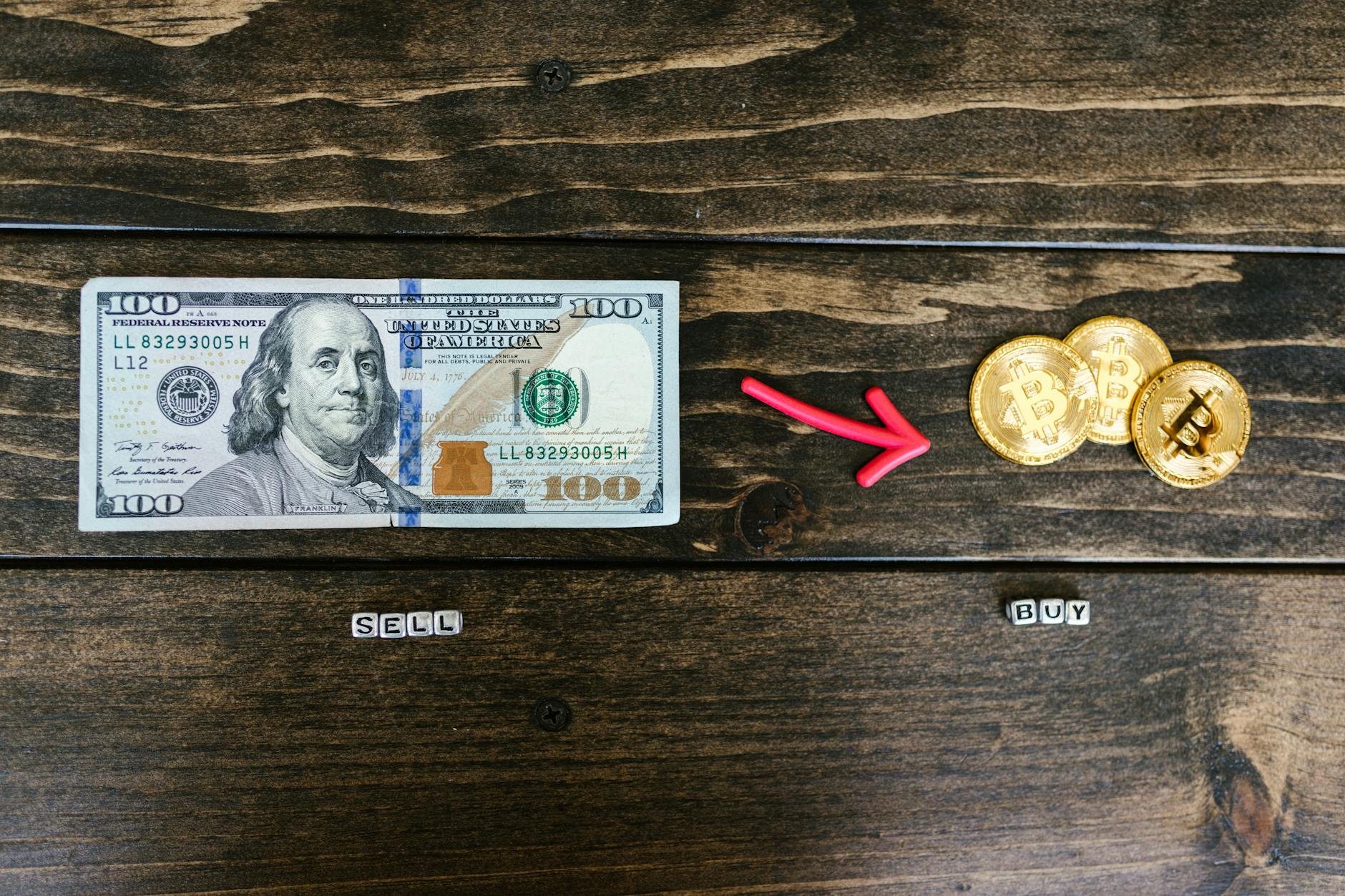
The digital gold rush often feels like a casino floor, fueled by hype and panic selling. Right now, the noise suggests extreme caution. Bitcoin, the undisputed heavyweight champion of the crypto world, is currently taking a beating, trading significantly below its recent apex. Many investors are nursing losses, watching the 17% year-to-date decline and the staggering 40% drop from its all-time high set back in October. This environment breeds fear, making any talk of buying seem audacious, even reckless. Yet, amidst this sea of red, deep historical patterns and geopolitical machinations suggest that ignoring the current dip could be the most costly mistake of the year. We are looking at two compelling, perhaps even bizarre, reasons why the window to accumulate Bitcoin between now and the end of June is opening wider than most analysts dare to admit.
The Ghost of Q2 Past: A Historical Anomaly Demanding Attention
The first compelling argument stems not from futuristic white papers or Elon Musk tweets, but from mundane quarterly accounting. While the broader market often smooths out quarterly variations, Bitcoin’s history reveals a pronounced, almost predictable, seasonal strength during the second quarter of the calendar year. Analyzing returns spanning well over a decade, from 2013 through 2025, we see an average return for Bitcoin clocking in at a robust 27% during Q2\. This is not an isolated incident; it is a decade-long trend punctuated by legendary rallies. Consider 2017, a year etched into the memory of every crypto veteran, where the second quarter delivered an astonishing 123% gain. Just two years later, in 2019, Q2 repeated its magic with a 159% surge over those crucial three months. These aren’t minor bumps; these are foundational moves that reshape the asset’s trajectory.
Skeptics will immediately cry foul, pointing out that past performance is absolutely no guarantee of future results, especially in an asset as notoriously volatile as Bitcoin. They are correct on principle, but they miss the strategic implication. Volatility is Bitcoin’s natural state, and recognizing its historical propensity to defy gravity during this specific time frame shifts the calculus from speculation to probability management. If Bitcoin merely retraces its decade-long Q2 average, starting from its recent valuation around $73,000, we are realistically looking at a Q2 close approaching $93,000\. This isn’t even factoring in the mania of previous peaks; this is simply the historical median playing out.
The real psychological leverage arrives when we allow for the possibility of an outlier performance. If Bitcoin were to even approach the performance levels seen in 2017 or 2019, the target price shifts from the high nineties into the truly stratospheric territory, potentially breaching $100,000 before the summer solstice. This historical context provides a necessary anchor for those paralyzed by the current drawdown, transforming market fear into what could be a high-probability entry point based purely on recurring market seasonality. Many investors sold out of fear just before these explosive Q2 periods began in prior cycles, a mistake history seems poised to repeat if panic sets the tone leading up to March 10.
The Tectonic Shift: The U.S. Treasury’s Secret Financial Weapon
The second catalyst is far more dramatic, steeped in geopolitical heavy-jawing and reserved for only the most esoteric corners of sovereign financial engineering: the potential activation of an official Strategic Bitcoin Reserve by the U.S. Treasury. For almost a year, since the reserve’s theoretical creation, its holdings have been limited to assets seized from malefactors—a passive accumulation of dirty money. However, the original, more ambitious blueprints suggested a mandate for proactive purchasing: the acquisition of up to one million Bitcoin tokens by the Treasury itself.
Imagine the implications if the U.S. government, one of the world’s largest sovereign entities, decided to begin aggressive, open-market buying. At a theoretical purchase price around $73,000, a move to acquire one million coins would represent a massive commitment, instantly placing the U.S. government among the top holders globally. This move would inject an unparalleled level of institutional validation into the asset class overnight. Such an action would trigger an immediate, high-stakes game theory scenario among other major nations. Watching the U.S. effectively signal that Bitcoin is an eligible, high-quality reserve asset would undoubtedly precipitate copycat acquisitions from other skeptical governments attempting to hedge against fiat devaluation or geopolitical risk.
While this scenario sounds like something ripped from hyperbolic fiction, high-profile figures are placing bets on its real-world probability, particularly considering the approaching political cycle. Visionaries like Cathie Wood of Ark Invest have suggested that ahead of key electoral contests, the temptation to stimulate markets perceived as favorable to specific political narratives could become overwhelming. Announcing a large government purchase of Bitcoin, perhaps framed as a modernization of reserve assets, would act as a powerful, immediate stimulant to the crypto markets. This political calculus, intertwined with the asset’s historical price action, creates a powerful convergence setting the stage for a significant reversal in the second quarter, well before March 11 arrives.
The Psychology of the Dip: Why Fear Masks Opportunity
The current market sentiment is defined by capitulation. When an asset drops significantly from its peak, the natural human instinct, hardwired through millions of years of evolution, is to retreat and conserve capital. This emotional paralysis prevents timely action. Investors look at the 40% drawdown and see only risk realized, failing to properly discount that risk against the asset’s proven long-term trajectory and the potential for sudden, exogenous shocks of validation, such as the Treasury move described above. This fear creates the necessary gap between intrinsic value potential and prevailing market price.
Furthermore, the market often overcorrects when a major narrative shifts. Bitcoin’s recent price action reflects a belief that the massive institutional inflows associated with spot ETF approvals were a one-and-done event. However, financial flows are continuous, and as retail sentiment bottoms out near the end of Q1, the structural demand from institutional treasuries and long-term believers remains intact. They view the drop not as a failure of the asset, but as the forced flushing out of weak hands, creating cheaper entry points for the next leg up. This psychological divergence between the panicked retail trader and the calculating institutional whale is a classic indicator that major turning points are near.
We must also consider the sheer inertia of the financial world. When the U.S. government signals a major shift in asset strategy, the ripple effects through global capital markets extend far beyond cryptocurrency indexes. Banks, asset managers, and sovereign wealth funds have established protocols for responding to U.S. treasury plays. If the Treasury begins accumulating, the compliance departments of every major money manager worldwide will swiftly be tasked with reassessing their own exposure, leading to a torrent of follow-on buying irrespective of the general macroeconomic climate. This creates a powerful, non-linear surge potential that linear extrapolation models simply cannot capture.
The Three Roads Ahead: Mapping Bitcoin’s Trajectory Through Mid-Year
Forecasting the immediate future involves mapping out plausible paths based on these catalysts. The most conservative scenario sees the historical Q2 trend assert itself gently. In this baseline case, without any major sovereign intervention, Bitcoin simply reverts toward its 27% historical average gain for the quarter, comfortably landing near the $93,000 mark by the end of June, driven by baseline market recovery and the ebb and flow of investor sentiment. This scenario implies a steady, deliberate climb that rewards patient accumulators.
The second, more volatile path involves an early political signal or a small, exploratory move by a major sovereign entity that isn’t the U.S. Treasury. Perhaps a nation like El Salvador increases its regular purchases, or a major European entity announces a study into digital reserve diversification. This would validate the Treasury scenario without fully triggering it, sending shockwaves through the market that could easily drive Bitcoin past the $100,000 threshold temporarily. This path is driven by confirmation bias and signaling rather than outright monetary policy, but the resulting price action would feel like the real deal, encouraging further retail FOMO just as Q2 peaks.
The final, parabolic scenario involves the full-throttle activation of the first catalyst: the U.S. Treasury initiating a major buying program before the summer recess. This would instantly become the single biggest financial headline of the year, dwarfing previous ETF news. The surge would be immediate, driven by a clear, undeniable signal of official sanction. In this eventuality, the sky becomes the only immediate limit, as portfolio managers worldwide scramble to reallocate based on instantaneous de-risking protocols. The psychological barrier of $100,000 would likely be shattered within weeks, setting up a new price discovery phase. Regardless of which path materializes, the confluence of seasonal strength and potential state-level intervention suggests that the period leading up to June represents a critical strategic window for investors positioning for significant upside.
FAQ
What is the primary historical pattern driving the potential Q2 surge for Bitcoin mentioned in the article?
The primary historical pattern is Bitcoin’s pronounced seasonal strength during the second quarter (Q2) of the calendar year. Analyzing data from 2013 through 2025, Q2 historically yields an average return of a robust 27%.
What were the exceptional Q2 returns Bitcoin achieved in prior bull cycles noted in the article?
In 2017, Bitcoin’s second quarter delivered an astonishing 123% gain, and in 2019, Q2 repeated this success with a massive 159% surge. These outlier performances highlight the quarter’s potential for foundational market moves.
Based purely on the historical median Q2 return, what is the projected price level for Bitcoin by the end of June starting from $73,000?
If Bitcoin merely retraces its decade-long Q2 average return of 27% from a starting point of $73,000, the projection suggests a Q2 close approaching $93,000. This calculation does not factor in the mania seen during the previous peaks.
What critical error did many investors make in prior cycles regarding the start of the explosive Q2 periods?
Many investors historically sold out of fear just before these explosive Q2 periods began in prior cycles, making the mistake of exiting before the seasonal rally commenced. The article suggests this panic-selling behavior might repeat leading up to early March.
What is the startling, secondary catalyst proposed regarding the U.S. Treasury’s potential involvement with Bitcoin?
The second catalyst involves the potential activation of an official U.S. Treasury Strategic Bitcoin Reserve mandate for *proactive* purchasing, not just holding seized assets. The blueprints suggest a possible acquisition of up to one million Bitcoin tokens by the Treasury itself.
If the U.S. Treasury acquired one million Bitcoin at $73,000, what global impact would that have on institutional validation?
Such a move would instantly place the U.S. government among the top global holders, injecting unparalleled institutional validation into the asset class overnight. This would likely trigger immediate copycat acquisitions from other skeptical nations hedging against fiat risk.
How does the approaching political cycle tie into the possibility of the U.S. Treasury buying Bitcoin?
Visionaries suggest that ahead of key electoral contests, the temptation for politicians to stimulate markets perceived as favorable to specific narratives could be overwhelming. Announcing large government purchases could act as an immediate, powerful stimulus to the crypto markets.
Who specifically suggested the political calculus might lead to market stimulation via asset purchases?
High-profile figures like Cathie Wood of Ark Invest have placed bets on the probability of this scenario, particularly citing the pressure of the approaching political cycle. They believe strategic asset accumulation could be framed as reserve modernization.
What specific dates are mentioned in relation to the potential fear-based selling and market signaling?
The article notes that investors might sell out of fear based on panic leading up to March 10. The potential for significant market reversal or sovereign signaling is heavily weighted before March 11.
How does the article describe the current prevailing market sentiment that masks investment opportunity?
The current sentiment is defined by capitulation, where the natural human instinct is to retreat due to the significant drawdown from the peak. This emotional paralysis prevents timely action by focusing only on realized risk rather than potential upside.
What structural demand remains intact even as retail sentiment bottoms out near the end of Q1?
The structural demand from sovereign treasuries and committed long-term believers remains intact despite retail fear. These sophisticated buyers view the price drop as a necessary flushing out of weak hands, creating cheaper entry points.
What is the crucial psychological difference between the panicked retail trader and the calculating institutional whale during the dip?
The institutional whale views the drop as a high-probability accumulation opportunity based on long-term trajectory and potential governmental validation. Conversely, the retail trader perceives the drawdown purely as immediate, realized risk.
How would the global financial system, specifically asset managers, react if the U.S. Treasury began actively accumulating Bitcoin?
When the U.S. government signals such a strategy, banks and asset managers worldwide would task their compliance departments with swiftly reassessing their own exposure to digital assets. This would likely lead to a torrent of follow-on buying as they adopt new protocols.
What is the ‘conservative scenario’ for Bitcoin’s trajectory through mid-year, disregarding major government intervention?
The conservative scenario relies on the historical Q2 trend asserting itself gently, meaning Bitcoin reverts toward its 27% historical average gain for the quarter. This baseline case projects a comfortable landing near the $93,000 mark by the end of June.
What characterizes the ‘second, more volatile path’ projected for Bitcoin leading into mid-year?
The second path involves an early political signal or a small, exploratory move by a major sovereign entity other than the U.S. Treasury, such as El Salvador increasing its purchases. This would validate the core thesis without full U.S. involvement, potentially pushing prices past $100,000 temporarily.
What defines the ‘parabolic scenario’ for Bitcoin’s price action before the summer?
The parabolic scenario is triggered by the full-throttle activation of the U.S. Treasury initiating a major buying program before the summer recess. This would instantly become the year’s biggest financial headline, shattering the $100,000 barrier rapidly.
Why is the current environment where Bitcoin is 40% down from its all-time high considered a ‘critical strategic window’ by the author?
The window is critical because it combines two strong, potentially converging catalysts: recurring seasonal strength (Q2) and the possibility of exogenous validation from a major sovereign entity. Ignoring the dip could be the costliest mistake due to this setup.
The article notes Bitcoin is currently trading significantly below its recent apex; what is this recent drawndown percentage cited?
The article references a current year-to-date decline of 17%, alongside a staggering 40% drop from its all-time high set back in October. This drawdown is the primary source of current market fear and capitulation.
How does the article characterize volatility in relation to strategic investing?
The article posits that volatility is Bitcoin’s natural state, which should be recognized strategically. Recognizing this propensity shifts the calculus from pure speculation toward probability management based on known historical tendencies.
What risk does the passive accumulation of Bitcoin by the U.S. Treasury currently entail, according to the text?
Currently, the Treasury’s holdings are limited to assets seized only from malefactors, representing a passive accumulation of ‘dirty money.’ The speculative catalyst involves the mandatory shift from passive seizure to proactive, open-market purchasing.
What is the main danger of relying exclusively on linear extrapolation models when forecasting Bitcoin’s trajectory due to the potential Treasury move?
Linear extrapolation models cannot capture the powerful, non-linear surge potential created by clear sovereign signaling. An official U.S. government announcement would cause rapid portfolio reallocation based on new de-risking protocols that traditional models overlook.
