


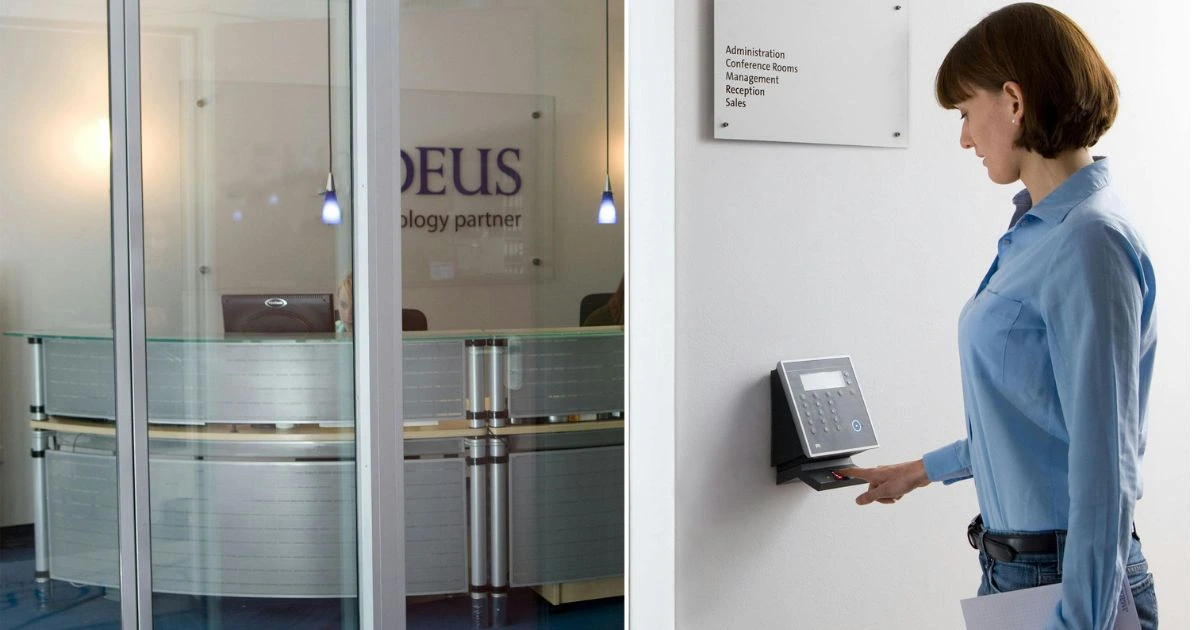
The air in the modern office has always felt a bit heavy, hasn’t it? We spent years obsessing over open-plan layouts, then we retreated into “focus pods,” and now we find ourselves standing at the edge of something much more intimate. It is no longer just about where we sit, but how our very biology responds to the four walls around us. Walking into a workspace today feels different than it did even three years ago. There is a quiet, almost invisible shift happening. We are moving away from the aesthetic of the “cool office” and toward the precision of the biometric office.
I remember sitting in a high-rise in Chicago a few months back, watching a team navigate their morning. It wasn’t the standing desks or the artisanal coffee that caught my eye. It was the way the environment seemed to breathe with them. The lighting wasn’t just bright; it was shifting in Kelvin temperature to match their circadian rhythms. The ventilation wasn’t just blowing cold air; it was pulsing based on CO2 levels that spiked during a heated brainstorming session. This isn’t science fiction anymore. It is the reality of how we are trying to reclaim human focus in an era of infinite distraction.
We have reached a point where “hustle culture” has hit a wall of biological reality. You cannot ask a brain to perform at peak levels when the physical environment is sending signals of stress or lethargy. The science of the biometric office isn’t about tracking employees like data points on a map. Rather, it is about understanding that our heart rate variability, our skin temperature, and even our blink rates are honest narrators of our mental state. If the room knows you are redlining before you even realize it, the room can help you downshift.
Reimagining workplace wellness through the lens of biology
The term wellness has been dragged through the mud a bit lately. It has become synonymous with yoga vouchers and bowls of free fruit. But true workplace wellness is structural. It is physiological. When we talk about biometric design, we are looking at how environmental stressors—the hum of an HVAC system, the flicker of a cheap LED, the stagnant air of a sealed room—actually degrade the neural pathways required for deep work.
I’ve often wondered why we ever thought a one-size-fits-all thermostat setting was a good idea. We know that thermal comfort is tied directly to cognitive load. If you are shivering, your brain is diverting energy to thermoregulation instead of that complex spreadsheet. Biometric integration allows the space to become a collaborator. Imagine a desk that subtly adjusts its height or the surrounding airflow because it detects a rise in your cortisol levels. It sounds invasive until you experience the relief of a space that actually supports your body’s needs in real-time.
There is a certain irony in using high-tech sensors to get us back to a more “natural” state of being. We are using infrared sensors and wearable integrations to mimic the way humans used to work before we trapped ourselves in cubicles. We need the ebb and flow of light. We need the variation in sound. The silence of a library can be just as deafening as the roar of a factory if it doesn’t match the task at hand. Some of the most interesting developments I’ve seen involve acoustic masking that adjusts its frequency based on the ambient stress detected in the room. It’s a subtle dance between the digital and the primal.
How productivity tech is moving beneath the surface
For a long time, we thought productivity tech meant more apps, more notifications, and more ways to “sync” our lives. We were wrong. The most effective technology is the kind you don’t actually see. It’s the software running the building’s nervous system. It’s the algorithm that realizes the marketing team has been in a windowless meeting room for three hours and slowly increases the oxygen mix to prevent the inevitable 3:00 PM slump.
In 2026, the conversation has shifted. We aren’t asking if people are working; we are asking if they are capable of working well. I’ve spoken to founders who are ditching traditional KPIs in favor of “biological readiness” scores. It sounds radical, perhaps even a bit radical for the sake of being radical, but there is a logic to it. If a team member’s biometric data shows they haven’t recovered from a high-stress week, forcing them into a high-stakes strategy session is a recipe for bad decision-making. The office should be a place that facilitates recovery as much as it facilitates output.
There is a risk here, of course. The line between a supportive environment and a panopticon is razor-thin. If a company uses this data to punish rather than provide, the whole system collapses under the weight of distrust. But when it works, it’s beautiful. I’ve seen workspaces where the lighting in “recharge zones” is tuned to specific wavelengths that encourage the parasympathetic nervous system to take over. You walk in feeling frazzled and walk out twenty minutes later with a genuine sense of clarity. That isn’t a “perk.” It is a fundamental rethink of what a place of work is supposed to do for the human beings inside it.
We often ignore the fact that our bodies are essentially chemical factories. We respond to the environment in ways our conscious minds can’t always articulate. Why does one room feel “creative” while another feels “clinical”? It usually comes down to the fractals in the wall patterns or the specific frequency of the ambient noise. Biometric design allows us to quantify those “vibes” and replicate them. We are finally learning how to build spaces that don’t fight against our evolution.
The future of the office isn’t in the metaverse or in some remote-only vacuum. It’s in the physical world, enhanced by a deep, scientific understanding of our own frailty and strength. We are building cathedrals of focus. Whether we are in a sprawling campus in California or a refurbished warehouse in Accra, the goal remains the same: to create a space where the human spirit isn’t just accommodated, but actively nourished.
As we look further into this year, I suspect we will see more companies moving away from the “smart building” labels and toward something more empathetic. We don’t need buildings that are smart; we need buildings that are sensitive. We need environments that recognize when we are tired, when we are inspired, and when we just need to be left alone in a pool of warm, natural-spectrum light.
It makes you wonder what we’ll think of our current offices five years from now. We’ll probably look back at our static chairs and flickering fluorescent tubes with the same horror we feel toward Victorian-era medicine. We are finally waking up to the fact that we are biological creatures first and “workers” second. And honestly, it’s about time the architecture caught up to the anatomy.
FAQ
It is a workspace that uses sensors and data to adjust environmental factors like light, air, and sound based on the physiological needs of the people inside.
Toward “empathetic architecture” where the building feels like a living organism that supports its inhabitants.
Air quality sensors (VOCs and CO2) often have the most immediate and noticeable impact on team clarity.
It’s more of a foundation that makes those programs more effective by addressing the physical environment first.
Studies suggest that certain environmental “looseness”—like warmer light and lower ceilings—can foster more divergent thinking.
Biometric systems can play specific sound frequencies (like pink noise) that mask distractions based on the room’s current occupancy.
Yes, by ensuring you aren’t over-exposed to blue light late in the workday, your natural sleep cycle remains intact.
Most designs include manual overrides because human preference will always be more complex than an algorithm.
While they are early adopters, the tech is scaling down for mid-sized firms looking to retain talent through better environments.
Sensors can track subtle cues like blink rate, head movement, and even typing rhythm to gauge cognitive load.
They are repeating patterns found in nature that, when integrated into wallpaper or carpets, have been shown to reduce stress levels.
Smart furniture can detect posture shifts that indicate discomfort and suggest movements or adjust the desk height automatically.
Absolutely. Clear data governance and “privacy by design” are essential to ensure employees feel supported, not watched.
In most ethical implementations, the data is anonymized and used to control the building’s systems rather than monitor individual performance.
It’s a concept where work intensity is matched to an individual’s physical recovery and energy levels.
While harder to implement, home office “biometric kits” are becoming popular for dedicated remote workers seeking similar benefits.
High CO2 levels lead to brain fog and sleepiness; biometric offices flush spaces with fresh air the moment levels rise.
By optimizing air quality and acoustics, they remove “hidden” stressors that keep the body in a low-level state of fight-or-flight.
Initial costs for sensors and smart HVAC systems are higher, but proponents argue the gains in focus and health provide a clear return on investment.
Lighting tuned to circadian rhythms helps regulate melatonin and cortisol, keeping you alert during the day and helping you wind down at night.

