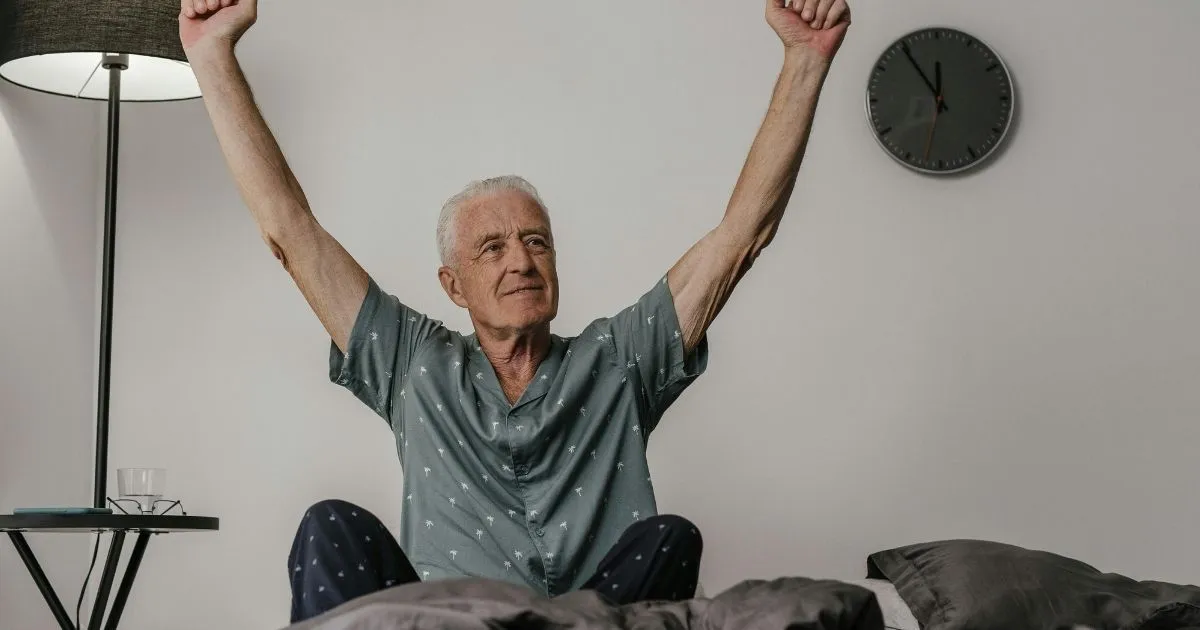
I stopped looking at my phone before 9:00 AM because the blue light felt like a physical weight on my chest. It sounds dramatic until you realize that every notification is just someone else’s priority trying to colonize your brain before you’ve even had a chance to remember your own name. By the time 2026 rolled around, the sheer noise of the venture world had become so deafening that the only way to survive was to turn inward, or at least to treat the human body like the temperamental hardware it actually is. Founder bio-hacking isn’t about becoming a machine. It is quite the opposite. It is about acknowledging that you are a biological entity that evolved to hunt and gather, not to sit in a glass box in San Francisco staring at spreadsheets for fourteen hours straight.
The morning starts in the dark. Not because I’m a martyr for productivity, but because there is a specific, quiet frequency to the world at 5:30 AM that doesn’t exist at any other time. I’ve found that the most effective way to prime the nervous system isn’t a double espresso or a frantic check of the overnight markets. It’s temperature. There is something profoundly clarifying about a three minute exposure to cold water. It forces a momentary cessation of thought. You cannot worry about your series B runway when your skin is screaming at you. This isn’t just about the dopamine spike, though that’s a nice side effect. It’s about the deliberate practice of choosing discomfort. If you can handle the shock of the ice, the rest of the day’s pivots feel manageable by comparison.
The subtle shifts in executive health
Most people talk about wellness as if it’s a destination, a place you arrive at once you’ve bought enough supplements or tracked enough sleep cycles. But when we look at the reality of executive health in high-stakes environments, it’s really more of a constant, messy calibration. I’ve spent months testing different variables, and the one thing I’ve learned is that more data isn’t always better. I used to wear three different rings and a wristband, but eventually, I realized that seeing a “poor recovery” score on my app was actually making me feel more tired. The placebo effect is a powerful tool, but the nocebo effect is just as real. Now, I rely more on how my joints feel when I first stand up.
Nutrition has become this strange, tribal battlefield, yet for anyone running a company, the goal is simple: cognitive stability. If your blood sugar is a roller coaster, your decision-making will be too. I’ve moved away from the heavy breakfasts of the past. Instead, it’s about fats and micronutrients that don’t trigger an insulin response. There’s a specific kind of clarity that comes from a fasted state, a sharpness that feels almost predatory. It’s the difference between feeling like you’re dragging your brain through mud and feeling like you’re cutting through it with a hot wire. It’s less about what you eat and more about when you stop eating the night before.
The air quality in our offices is another thing we rarely discuss, but it’s foundational. I spent a week in a high-rise in Chicago where the CO2 levels were so high by mid-afternoon that I felt like I was losing twenty IQ points. We think we’re burnt out, but sometimes we’re just suffocating in stagnant air. Opening a window or investing in a proper filtration system does more for your output than any “smart drug” ever could. It’s these invisible variables that define the ceiling of our performance.
Maintaining peak performance through neural recovery
We treat our brains like sponges that can never be over-saturated. We keep pouring in information, podcasts, meetings, and white papers, wondering why we feel so brittle by Thursday. Peak performance requires a level of aggression in your recovery that matches the aggression in your work. I’ve started implementing what I call “nothingness blocks.” Twenty minutes where I don’t consume anything. No music, no conversation, no reading. Just sitting and letting the mental silt settle to the bottom of the pond.
The eyes are an overlooked gateway to the brain. We spend all day focusing on a point two feet in front of our faces. This keeps the nervous system in a state of high alert. Simply stepping outside and looking at the horizon, letting your vision go wide, sends a physical signal to your brain to exit the “fight or flight” mode. It is a biological reset button. If you don’t use it, you stay in a state of low-level chronic stress that slowly erodes your ability to think long-term. Founders who burn out aren’t usually the ones who worked too hard; they’re the ones who forgot how to turn the engine off.
I’ve also become obsessed with the concept of salt. Not the processed table stuff, but real, mineral-rich electrolytes. Most of the brain fog we attribute to stress is actually just mild dehydration or a lack of magnesium. When your electrical signals are firing across your synapses, they need a medium to move through. If your mineral balance is off, you’re trying to run a lightning bolt through a dry stick. It doesn’t work.
There is a certain loneliness in this pursuit. People look at you strangely when you refuse the pastry at the meeting or when you stand up to pace during a call because you need to move your lymphatic system. But the trade-off is a level of presence that most people haven’t felt since they were children. You start to notice the subtle shifts in a room, the unspoken hesitation in a co-founder’s voice, the hidden opportunity in a data set that others missed because they were too tired to see it.
It’s easy to get lost in the gear and the gadgets. I’ve seen founders spend fifty thousand dollars on hyperbaric chambers only to ruin the benefits by staying up until 2:00 AM arguing with strangers on the internet. The bio-hacking that actually moves the needle is boring. It’s consistent. It’s about the boring stuff done with religious intensity. Sleep, light, temperature, and movement. Everything else is just expensive decoration.
The hardest part isn’t the cold showers or the fasting. It’s the discipline to protect your morning from the world. It’s the realization that your focus is your only real currency. Once you lose it, it’s incredibly expensive to buy back. We are entering an era where the most successful people won’t be the ones with the most information, but the ones with the most control over their own biology. You have to decide if you want to be the operator or the equipment.
Sometimes I wonder if we’ve over-optimized. If in our quest for the perfect morning, we’ve lost the ability to just exist. But then I remember the feeling of a day where everything clicks, where the friction of life seems to vanish, and I realize the effort is worth it. It’s not about living forever. It’s about being fully awake while you’re here. There is no manual for this, only the feedback your own body gives you if you’re quiet enough to listen. The 2026 routine isn’t a fixed list. It’s a relationship with your own physiology that evolves every single day.
FAQ
The most critical element is light exposure. Getting natural sunlight into your eyes within the first thirty minutes of waking sets your circadian clock and regulates your cortisol for the entire day.
Not at all. The most effective interventions, such as cold exposure, consistent sleep schedules, and nasal breathing, are entirely free. The gadgets are secondary to the habits.
Some effects, like the mental clarity from cold water or fasting, are immediate. Others, like improved executive health and hormonal balance, typically take three to four weeks of consistency to become noticeable.
Yes, but timing is key. Delaying caffeine intake for ninety minutes after waking helps prevent the afternoon crash by allowing your body to naturally clear out adenosine.
Subjective feeling is often more accurate than wearable data. Keeping a simple log of your focus levels, mood, and physical energy can reveal patterns that a sensor might miss.