


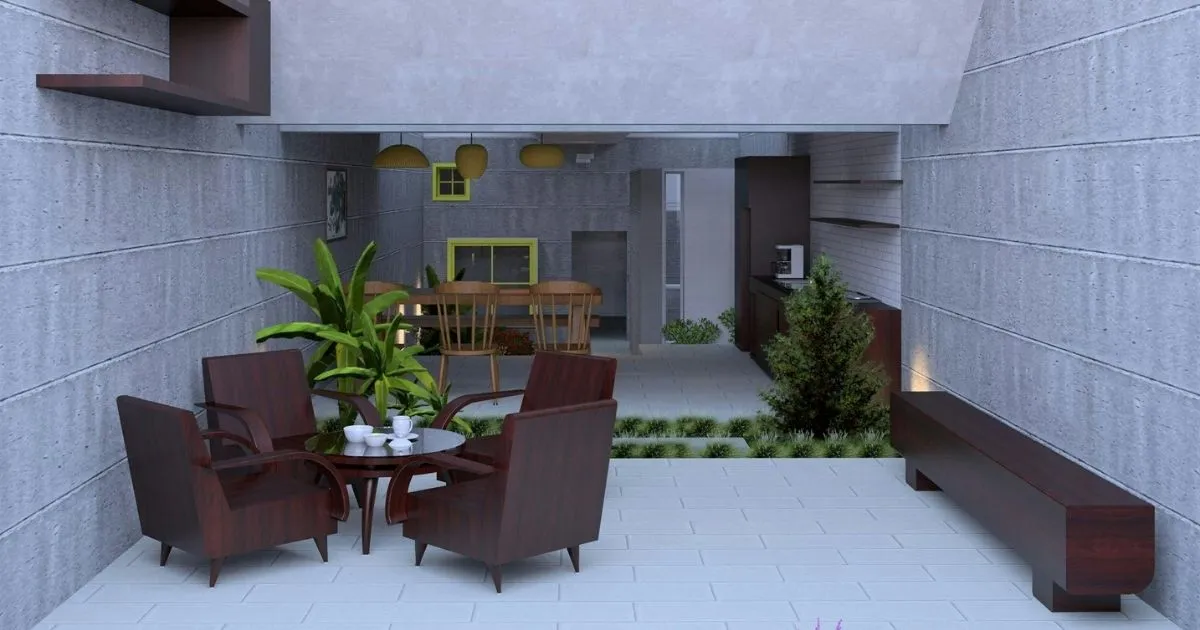
The floor lamp in my corner is a ghost. If you walked into my apartment right now, you would see a dusty patch of hardwood where a stack of unread magazines usually sits. But through the lens of my glasses, there is a mid-century modern piece in brushed walnut casting a warm, amber glow across my rug. It is not actually there, of course. I haven’t paid for it yet. I am currently living with a digital twin of a product located in a warehouse three states away, and honestly, the physical reality of the object feels almost secondary to how well its pixels settle into my space.
This is the strange, quiet friction of shopping in the current year. We have moved past the gimmick phase where AR was just a shaky 3D model dancing on a phone screen. By now, the transition into AR Retail 2026 has become so seamless that the boundary between browsing and inhabiting a product has dissolved. It used to be that you went to a store to see if a sofa felt right. Then you went to a website to see if it was cheap. Now, you bring the store into your sanctuary to see if the object belongs in your life.
The psychological shift is heavier than the technological one. There is a specific kind of intimacy in seeing a new dining table under your own flickering light bulbs rather than the aggressive, sterile fluorescent hum of a showroom in downtown Chicago. When you place a digital object in your home, you aren’t just looking at its specs. You are checking if the legs of the chair clash with your baseboards. You are seeing if the scale of a television makes your art look small. It is a deeply personal, almost intrusive way to consume, and retailers are finally catching up to that vulnerability.
The quiet evolution of the future of shopping
I remember when people thought the biggest change in retail would be delivery drones or crypto-payments. We were looking at the plumbing when we should have been looking at the walls. The real revolution happened in the light. Modern sensors have reached a point where they understand the texture of my velvet curtains and how a digital shadow should fall across them. This level of fidelity has turned e-commerce tech from a catalog into an experience of presence.
Retailers who survived the last few years did so because they stopped treating their apps like digital brochures and started treating them like spatial portals. It is no longer about “viewing in 3D.” It is about the persistence of objects. I can leave a digital bookshelf against my wall for three days. I walk past it. I see how the morning sun hits it. I notice if the color starts to annoy me by Sunday afternoon. By the time I hit the buy button, the buyer’s remorse has already been processed and discarded. The return rates for these high-fidelity spatial items have plummeted because the surprise is gone. We already know the truth of the object before it ever touches a shipping pallet.
There is a certain irony in how this tech has made us more tactile in our demands. Because we can see the weave of the fabric so clearly in the render, we have become more obsessed with the physical reality of the material. We want to know the weight. We want to know if the leather will creak. The visual certainty provided by augmented reality has raised the bar for the physical product. You cannot hide a cheap finish behind a grainy web photo anymore when the customer has already inspected every screw head in a one-to-one scale simulation in their own kitchen.
Why e-commerce tech is moving toward the invisible
We are reaching a point where the interface is disappearing entirely. I find myself frustrated now when I have to use a 2D slider to change the color of a rug. Why can’t I just point at it and think of navy blue? The friction of the screen is the last wall to fall. In cities like New York or San Francisco, you already see people in cafes subtly adjusting their air-gestures, interacting with layers of information that others simply cannot see. It looks like a slow, silent dance.
This shift has changed the role of the salesperson too. They aren’t standing on a floor waiting for you to walk in. They are appearing as spatial avatars in your room, if you invite them, to walk you through the assembly of a piece of furniture or to explain why a certain wood grain works better with your existing floor. It feels less like being sold to and more like a consultation with a ghost who has very good taste. The aggression of the old retail model—the “can I help you find something” that always felt like a threat—has been replaced by a collaborative design process.
Yet, there is a lingering strangeness to it all. Our homes are becoming crowded with things that don’t exist. I have a digital wardrobe in my bedroom that holds more clothes than my actual closet. I “wear” them in meetings, but they never need washing. We are beginning to value the digital twin as much as the physical item. In some cases, people are buying the AR rights to a piece of furniture months before they can afford the physical version, just so they can enjoy the aesthetic presence of it in their living room. It is a strange way to live, caught between the phantom and the material.
The data trails we leave behind are becoming more three-dimensional as well. If a retailer knows exactly where you tried to place that floor lamp, they know the layout of your home. They know you have a cat because they saw the scratch marks on your old sofa in the spatial scan. They know your ceiling height and your preference for dim lighting. The privacy trade-off is immense, but for most people, the convenience of never having to measure a doorway again seems to be a price they are willing to pay. We are trading the blueprints of our private lives for the certainty that a new fridge will actually fit through the back door.
The aesthetics of the shopping experience have also drifted away from the polished perfection of the 2010s. There is a move toward what I think of as “honest rendering.” The most successful AR platforms now include imperfections. They show how a fabric might wrinkle over time or how a metal finish might patina. We don’t want the idealized version anymore; we want the version that looks like it has been lived in. We want the digital ghost to look as tired as the rest of our furniture.
I wonder sometimes if we will eventually lose the ability to appreciate a space for what it actually is, without the digital overlays. My living room feels empty when I take my glasses off. The “showroom” is gone, and I am left with just the magazines and the dust. There is a vacuum where the walnut lamp used to be. It is a peculiar kind of mourning for something that was never really there to begin with.
The brands that will win in this era are the ones that understand this emotional resonance. It isn’t about the fastest load times or the highest resolution anymore. It is about who can best respect the sanctity of the home while occupying it. It is about the grace of a digital shadow. As we move deeper into this decade, the act of buying will continue to feel less like a transaction and more like a haunting. We are inviting these objects in, letting them sit with us, and seeing if we can stand their company before we ever let them through the door.
What happens when the digital version of our lives becomes more curated and beautiful than the physical reality? I look at that empty corner again. The magazines are still there. The walnut lamp is just a memory in a chip. But I can still see where the light should be.
FAQ
The primary difference lies in environmental intelligence and persistence. Earlier versions felt like floating stickers, whereas current technology uses advanced light estimation and spatial mapping to make objects feel anchored. Digital items now cast realistic shadows, reflect the actual light sources in your room, and stay exactly where you put them even if you leave the app and return days later.
While high-end spatial glasses offer the most immersive experience, most of these advancements have been scaled to work on standard smartphones. The “invisible” tech relies more on sophisticated cloud processing and better sensors that are now standard in most mid-to-high-range mobile devices, making the showroom experience accessible to anyone with a modern phone.
Returns have drastically decreased because the “mental leap” of imagining a product in a home has been eliminated. Since customers can verify the scale, color, and fit of an item in their actual environment before purchasing, the typical reasons for returns—such as the item being too large or the color clashing—have been largely mitigated.
Yes, it is a significant consideration. When you scan a room to place a product, you are providing retailers with spatial data about your home’s layout and contents. Most reputable platforms now use edge computing to process this data locally on your device, but it is always vital to check the permissions regarding whether the spatial maps are uploaded to a company’s servers.
While AR cannot yet provide physical haptic feedback without specialized gloves, it uses visual tricks to communicate texture. High-resolution shaders can simulate how light catches on velvet versus leather, or how a soft cushion compresses under weight. This visual fidelity is often enough to trigger a sensory memory of how those materials feel, bridging the gap between sight and touch.

