
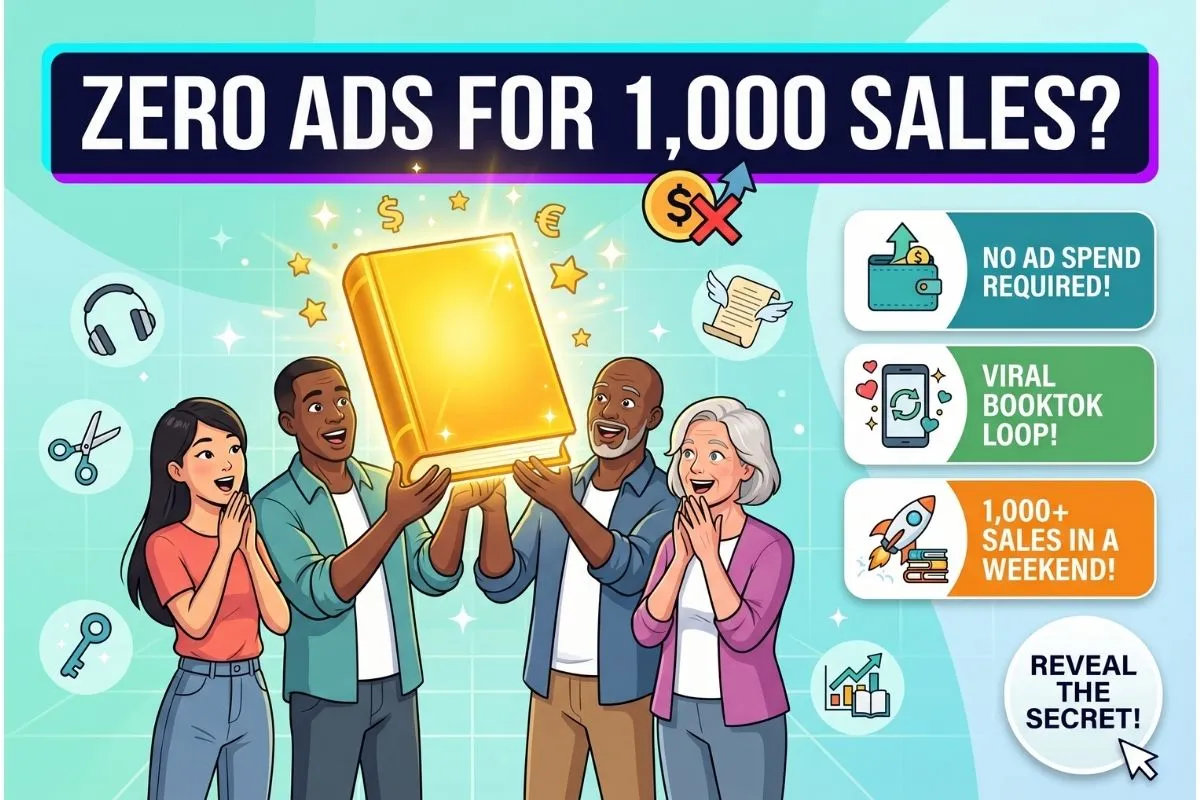
Imagine waking up on a Sunday morning, checking your author dashboard, and seeing a sales graph that looks like a hockey stick pointing straight up. Your book, which normally sells a modest five to ten copies a month, has suddenly moved over a thousand units since Friday night. You haven’t spent a single penny on pay-per-click advertising, nor have you begged your mailing list for reviews. This is the new, exhilarating reality for savvy authors who have finally cracked the code of modern digital discovery. For years, the publishing industry relied heavily on traditional digital advertising, specifically pouring massive budgets into retailer platforms to secure top spots in search results. However, the landscape has fundamentally shifted beneath our feet. As click costs skyrocket and reader fatigue sets in, the old, expensive methods are rapidly losing their effectiveness. In their place, a revolutionary, organic strategy has emerged, completely redefining how literature finds its passionate audience. We are witnessing the maturation of a powerful, community-driven phenomenon that relies entirely on authentic engagement, proving that a compelling story shared properly can bypass traditional algorithms.
The Evolution of Literary Discovery
The literary world has been completely transformed by the rapid evolution of digital communities, particularly the phenomenon we now recognize as BookTok 2026. Just a few years ago, independent authors and traditional publishing houses alike believed that mastering the complex algorithms of retail giants was the only viable path to commercial success. You would spend hours bidding on obscure keywords, endlessly tweaking your ad copy, and crossing your fingers for a positive return on your investment. Today, that mechanical, spreadsheet-driven approach feels distinctly antiquated. Readers are no longer discovering their next favorite sci-fi epic or contemporary romance through sponsored banners at the top of a store page. Instead, they are finding them through deeply personal, highly emotional short-form video recommendations. This vibrant subculture on the platform has matured from a simple trending hashtag into a sophisticated, global ecosystem. Here, readers trust the passionate, tear-filled reviews of their peers far more than any polished, targeted advertisement. When a creator posts a beautifully crafted, emotionally resonant video about a book’s specific tropes, morally grey characters, or shocking plot twists, it resonates on a deeply human level. This organic connection drives unparalleled TikTok Book Sales, proving that authenticity is the new currency in the publishing world.
Unpacking the Mechanics of the Loop
To truly understand why traditional ads are failing, we must break down the mechanics of the “TikTok Loop,” a self-sustaining cycle of visibility and sales that costs virtually nothing to initiate. It typically begins with a single, highly engaging video—often featuring trending audio, visually striking aesthetics, and quick text overlays that highlight the core emotional hooks of the story. Once this initial video gains traction, the platform’s incredibly intuitive algorithm pushes it to a broader, highly targeted audience of hungry readers. These viewers don’t just passively watch the content; they actively save the video to their favorites, share it with their friends, and most importantly, they head straight to their preferred e-reader platform to download the book immediately. But the magic of the loop doesn’t stop with a single purchase. As these new readers consume the story, they return to the app to create their own videos, reaction posts, aesthetic mood boards, and fan casts. They effectively become a volunteer marketing army for the author. This massive wave of user-generated content feeds right back into the algorithm, catching the attention of even more readers, which in turn drives another massive, compounding spike in sales over a single weekend.
The Invisible Engine of Digital Sharing
A critical, yet often entirely misunderstood component fueling this explosive growth is the concept of dark social marketing. Unlike public comments, visible retweets, or easily trackable blog posts, dark social refers to the invisible, private sharing that happens behind closed doors—in direct messages, group chats, email threads, and tightly knit private Discord servers. When a reader watches a compelling, fast-paced video about a new fantasy romance or a gripping psychological thriller, their first instinct is often to send it directly to their book club group chat with a message like, “We absolutely need to read this next month!” Traditional analytics tools and retail dashboards cannot track these private, peer-to-peer shares, making it appear to the author as though the resulting sales are magically appearing out of thin air. In reality, a massive underground network of passionate readers is constantly circulating recommendations away from the public eye. By creating content specifically designed to be shared privately—such as videos prompting viewers to “tag a friend who loves enemies-to-lovers”—authors can successfully tap into this invisible goldmine. This dark social media word-of-mouth endorsement is incredibly potent because it comes directly from a trusted friend, leading to conversion rates that paid ads simply cannot match.
Bypassing the Retail Gatekeepers
For a remarkably long time, the dominant, undisputed strategy for authors was to feed the retailer algorithm with a steady diet of paid clicks. The underlying logic was simple and ruthless: pay to play, secure the top sponsored banner, and capture the buyers who were already searching for specific genres. However, as thousands of new authors flooded the market, the cost per click inevitably skyrocketed, effectively pricing out all but the most well-funded publishers. Furthermore, everyday consumers have developed an inherent “banner blindness,” unconsciously scrolling past and ignoring anything labeled with a “Sponsored” tag. The brilliant advantage of the “TikTok Loop” is that it bypasses this fiercely competitive digital shelf entirely by generating immense off-platform demand. When thousands of people suddenly search for a specific book title organically because they saw it on their social feed or received a dark social marketing link from a friend, the retail algorithms are abruptly forced to take notice. The system interprets this massive influx of direct, organic searches as an undeniable signal of high quality and extreme relevance. Consequently, it rewards the book with better organic placement in the store, pushing it up the bestseller lists without the author spending a dime on ads.
Adapting to the New Era of Storytelling
Embracing this brave new landscape requires a fundamental, sometimes uncomfortable shift in how authors view their role in the marketing process. In BookTok 2026, you can no longer afford to just be a writer locked away in a quiet room; you must actively become a storyteller across multiple visual mediums. This certainly does not mean every introverted author needs to become a professional dancer or a charismatic on-camera influencer. Instead, it requires a deep, objective understanding of what makes your specific book appealing and figuring out how to communicate that unique essence visually and rapidly. Some of the absolute most successful videos currently driving massive sales feature no human faces at all—they rely purely on atmospheric imagery, evocative quotes, turning pages, and a perfectly matched, emotional soundtrack. The authors who are currently dominating the digital charts are those who experiment relentlessly, post their content consistently, and engage authentically with their readers in the comment sections. They view the platform not merely as a sterile billboard to shout “buy my book,” but as a vibrant, interactive community square where they can forge real connections with their ideal audience, ensuring long-term career stability in an ever-changing industry.
Comparing the Strategies: The Data at a Glance
The shift from paid advertising to organic, loop-driven marketing represents a fundamental change in return on investment. Here is a clear breakdown of how the old guard compares to the new standard.
| Marketing Metric | Traditional Amazon Ads | The “TikTok Loop” Strategy |
| Initial Financial Cost | High (Requires daily PPC budgets) | Low to Zero (Requires time and creativity) |
| Algorithmic Target | Buyer search intent (Keywords) | Reader emotional interest (Tropes & Aesthetics) |
| Sales Scalability | Linear (More money generally equals more clicks) | Exponential (Viral sharing and user-generated content) |
| Reader Trust Level | Low (Viewed by consumers as a paid solicitation) | High (Viewed as an authentic peer recommendation) |
| Marketing Shelf Life | Stops immediately the moment the budget runs out | Evergreen (Engaging content can circulate for months) |
Frequently Asked Questions (FAQ)
Do I need to show my face to sell books using the TikTok Loop? Absolutely not. While personality-driven content works well for some creators, many of the highest-selling authors use “faceless” marketing. This involves using beautiful background footage, high-quality images of the book, trending audio, and compelling text overlays that highlight the story’s best tropes and most dramatic quotes.
How long does it take for a book to go viral? There is no set timeline. Some authors experience overnight success with their very first video, while others build an audience steadily over six months before hitting the algorithm’s tipping point. Consistency and a willingness to analyze which videos perform best are the true keys to long-term success.
Is traditional pay-per-click advertising entirely useless now? Not entirely, but its role has changed. While relying solely on ads to launch a new author is becoming prohibitively expensive, Amazon Ads can still be effectively used as a supplementary tool to capture the organic search traffic generated by your viral social media campaigns.
The Curiosity Summary: The Psychology of the Sale
Why does a ten-second video hold more selling power than a carefully crafted advertisement? It all comes down to the fascinating science of mirror neurons and social proof. When a reader watches a video of someone physically reacting to a book—gasping at a plot twist, crying over a character’s fate, or laughing at witty banter—their brain simulates those exact same emotions. Traditional advertising targets the logical, transactional part of our brain, asking us to evaluate a product’s worth. The TikTok Loop, however, bypasses logic entirely and speaks directly to our emotional desire for shared experiences. In the modern publishing era, you aren’t just selling a stack of bound paper or a digital file; you are selling an emotional journey. By harnessing the power of community-driven platforms, authors are finally putting the power of discovery back where it belongs: in the hands of the readers.
