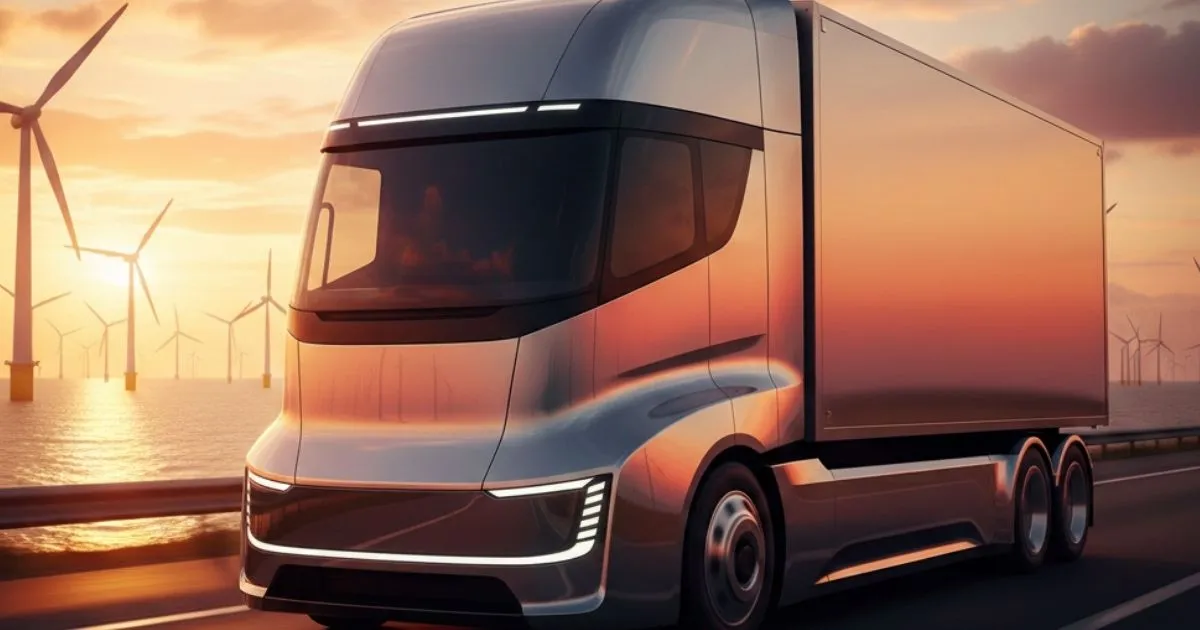
The morning fog at the Port of Rotterdam used to smell like heavy fuel oil and old iron. Now, as we move through early 2026, the air is thinner, sharper, and carries the faint hum of electric motors from the automated guided vehicles scurrying across the quay. There was a time, not so long ago, when the term Eco-Logistics was whispered in boardrooms like a charitable donation, a line item under corporate social responsibility that everyone hoped wouldnt eat too much of the quarterly margin. We were wrong. Watching the massive hydrogen-powered freighters dock today, it is clear that sustainability was never about saving the planet in a vacuum. It was about saving the balance sheet from the terminal rot of inefficiency.
I remember sitting with a logistics director in 2023 who complained that going green was a luxury for companies with money to burn. He saw solar panels and electric fleets as expensive toys. Fast forward to this year, and that same director is obsessing over carbon data because his European clients won’t even look at a quote without a verified footprint report. The shift hasn’t been a gentle evolution, it has been an aggressive restructuring of how value is moved across the globe. We are seeing a world where the greenest route is almost always the most profitable one, simply because waste is now the most expensive variable in the entire supply chain.
The Financial Reality of Sustainable Shipping and Modern Margins
The math behind the transition is starting to look very different than it did three years ago. We used to think of sustainable shipping as a premium service, something for the high-end boutique brands. But in 2026, the cost of diesel and the weight of carbon taxes have turned the old model on its head. When you look at the ROI of a modern, eco-optimized fleet, you aren’t just looking at fuel savings. You are looking at a fundamental reduction in risk. Insurance premiums for vessels equipped with AI-based situational awareness and emission-reduction technology have plummeted. The market has decided that a dirty ship is a risky ship, and risk is the one thing a finance department hates more than high upfront costs.
There is a specific kind of quiet satisfaction in seeing an AI route optimization tool shave 20 percent off a journey’s fuel consumption by simply understanding the currents and the wind better than a human captain ever could. It’s not just about the environment, it’s about the fact that every liter of fuel not burned is a liter of fuel that stays on the bottom line. I’ve seen small to mid-sized agencies transform their entire valuation by pivoting toward these technologies. They aren’t just shipping boxes anymore, they are selling a transparent, low-friction pipeline that bypasses the increasingly heavy penalties imposed on traditional logistics. The “green premium” that consumers were supposed to pay has morphed into a “brown penalty” for those who refused to adapt. If you are still moving goods the way you did in 2020, you are effectively subsidizing your competitors’ innovation with your own inefficiency.
It is fascinating to watch how localized hubs have replaced the massive, sprawling distribution centers of the past decade. By moving inventory closer to the end user and using micro-fulfillment centers, businesses are slashing the most expensive and carbon-intensive part of the journey: the last mile. This isn’t just a win for the atmosphere. It’s a win for the cash flow cycle. Faster delivery means faster payments and fewer returns. When the logistics are tight, the capital isn’t trapped in a shipping container in the middle of the Atlantic for six weeks. It is moving, and in finance, movement is life.
How Global Regulations and Business Profit are Finally Aligning
We have reached a point where policy and profit are finally speaking the same language. With the full implementation of the Carbon Border Adjustment Mechanism and various global emission trading schemes, the invisible costs of pollution have become very visible on the ledger. I spoke recently with a private equity analyst who told me they no longer even bother performing due diligence on logistics firms that haven’t integrated circularity into their core model. If a company can’t account for the lifecycle of its packaging or the carbon intensity of its third-party carriers, it is viewed as a liability.
This shift toward transparency has created a secondary market for efficiency. Businesses are now scouting for acquisitions based on the “green health” of their supply chains. A company with a legacy diesel fleet is now a “fixer-upper” at best, while a lean, eco-logistics-ready operation is a high-value asset that commands a massive multiplier. The logic is simple: the legislative ceiling is lowering every year. If your business profit depends on being able to pollute for free, your business model has an expiration date.
The beauty of the 2026 landscape is that the tools for this transition have become democratized. You don’t need to be a Fortune 500 company to access the kind of predictive analytics that used to be guarded behind seven-figure consulting fees. Even smaller agencies are now leveraging blockchain-based tracking to provide their clients with unassailable data on their environmental impact. It has become a badge of competence. When I see a firm effectively managing its reverse logistics, taking back packaging and refurbishing components, I don’t just see an eco-friendly brand. I see a company that has mastered the art of recapturing lost value. They are finding gold in the trash that their competitors are still paying someone else to haul away.
It makes me wonder about the firms still sitting on the sidelines, waiting for the “green fad” to pass. They remind me of the people who thought the internet was a temporary distraction for academics. The reality is that the climate doesn’t care about your political stance, and neither does the market. The market only cares about efficiency, durability, and the elimination of waste. In 2026, those three things are perfectly synonymous with sustainability.
As we look toward the second half of this decade, the distinction between a “green business” and a “successful business” will likely disappear entirely. We are entering an era where the most sophisticated financial minds are the ones most obsessed with the carbon density of their operations. It isn’t a moral crusade, though it certainly has moral benefits. It is a cold, calculated pursuit of the most resilient way to operate in a resource-constrained world. The question isn’t whether you can afford to invest in eco-logistics. The question is how much longer you can afford the waste of the alternative.
There is something hauntingly beautiful about the new smart warehouses at night, glowing with the blue light of energy-efficient systems, knowing that every movement inside is being calculated to the milligram of carbon. It feels like we are finally learning how to build things that last, rather than just things that are cheap for a moment. Whether you are looking at this from the perspective of an operator, an investor, or someone looking to acquire a piece of the future, the signal is the same. The noise of the past is fading, and the hum of the future is electric.