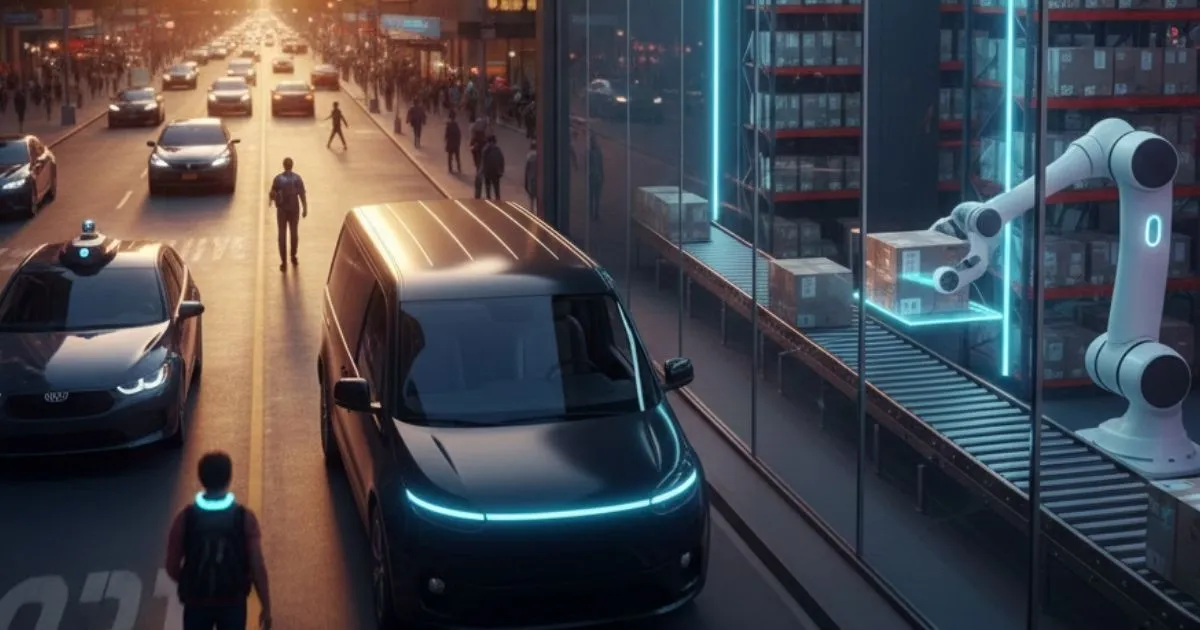
The city never actually sleeps, but in 2026, it seems to have developed a persistent, high-speed heartbeat that dictates the rhythm of every street corner. I spent an afternoon sitting in a small cafe in Brooklyn just watching the sidewalk, and it became clear that the very fabric of how we buy things has fundamentally shifted under our feet. There was a time, not so long ago, when waiting three days for a package felt like a reasonable compromise for the convenience of clicking a button. That era is dead. Today, the expectation is immediacy, a relentless demand for speed that has pushed traditional retail models to the breaking point. This shift is not just about consumer impatience, it is about the brutal reality of survival in a market where margins are being squeezed by rising fuel costs and the sheer complexity of urban navigation. The solution that has emerged from this chaos is Micro-Fulfillment, a concept that sounds technical but is actually deeply human in its execution. It is the art of bringing the warehouse to the doorstep, turning dusty backrooms and unused urban basements into high-tech hubs of activity.
The math behind this transition is unforgiving. For years, e-commerce giants relied on massive distribution centers located in rural areas where land was cheap and taxes were low. This worked when the goal was two-day shipping, but it fails miserably when the goal is two-hour shipping. The cost of that final leg of the journey, the infamous last mile, can account for more than half of the total shipping expense. When you factor in the density of modern cities and the volatility of global energy markets, the old way of doing things becomes a financial black hole. Retailers are waking up to the fact that they cannot just work harder, they have to work closer. This is where the landscape of modern commerce is being rewritten. It is a transition from scale to precision.
RETHINKING E-COMMERCE LOGISTICS FOR A FRACTIONAL WORLD
Building a resilient network is no longer a luxury reserved for the billionaires of the industry. I have spoken with dozens of small to mid-sized business owners who are struggling to keep their heads above water because they are trying to play a game designed for giants. They see their profits evaporate in shipping fees and returns, wondering why the digital gold mine they were promised feels more like a treadmill. The shift toward decentralized storage is the first real lifeline they have seen in a decade. By utilizing automated micro-centers, these businesses can finally compete on level ground. These facilities are compact, often occupying less than ten thousand square feet, yet they can process thousands of orders a day with a level of accuracy that human pickers simply cannot match. It is a strange sight to behold, watching robotic arms dance in a refrigerated dark store while the world outside goes about its business, unaware that their dinner or their new shoes are being sorted by a machine just behind a brick wall.
This evolution in E-commerce logistics is more than just a technological upgrade, it is a psychological one. We are moving away from the idea of the “global warehouse” and returning to a high-tech version of the local general store. The efficiency gained here is not just measured in minutes saved, but in the preservation of capital. When a product is already sitting three miles from the customer, the carbon footprint drops, the delivery vehicle can be a bike or a small electric cart, and the probability of a successful first-time delivery skyrockets. Investors are noticing this shift too. The smart money is no longer chasing the next shiny app, but rather the infrastructure that makes the physical world move faster. There is a quiet brilliance in the way these small hubs integrate into existing neighborhoods, breathing new life into real estate that was previously considered obsolete. It creates a moat around a business that a purely digital competitor simply cannot cross.
The reality of 2026 is that the barrier to entry for high-level retail has moved. It is no longer about who has the best website, but who has the most intelligent physical presence. We are seeing a massive consolidation of resources where brands are partnering with third-party providers to share these micro-hubs, creating a collaborative ecosystem that keeps everyone’s costs down. It is a pragmatic approach to a problem that was once thought unsolvable. The friction of the physical world is being smoothed out by data-driven placement of inventory. If the data shows a surge in demand for a specific type of organic coffee in a specific zip code, that coffee is moved to the nearest micro-hub before the customers even know they want it. It is predictive, it is proactive, and it is the only way to protect a bottom line that is under constant assault from every direction.
THE TRUE COST OF DELIVERING SAME-DAY DELIVERY TO THE MASSES
There is a certain irony in the fact that to go faster, we had to get smaller. The push for Same-day delivery has often been criticized as a vanity metric, something that consumers want but do not actually need. However, the market has proven the critics wrong. Once a customer experiences the ease of having a forgotten ingredient or a replacement part arrive before they have even finished their commute home, there is no going back. The convenience becomes an addiction. For the merchant, providing this service is a double-edged sword. It drives incredible loyalty and higher conversion rates, but if the backend is not optimized, it can lead to a quick bankruptcy. This is why the focus has shifted so heavily toward the automated micro-fulfillment center as the primary engine of growth.
I recently walked through one of these facilities in a converted garage space. It was quiet, save for the low hum of conveyors and the soft whir of sensors. There was no chaos, no shouting, and none of the frantic energy associated with traditional holiday shipping rushes. It was a picture of clinical efficiency. This is the future of work and the future of wealth. The human element has not been removed, but it has been elevated to oversight and strategy rather than back-breaking labor. This transition allows for a level of scalability that was previously unimaginable. A brand can expand into a new city not by building a massive complex, but by leasing space in a dozen micro-hubs scattered across the metro area. It is an agile, low-risk way to capture market share.
The financial implications of this model are profound. By reducing the distance between the product and the person, we are effectively de-risking the entire supply chain. Localized inventory means that a disruption at a major port or a fuel strike has a much smaller impact on the day-to-day operations of a savvy retailer. It is a form of decentralization that mirrors what we have seen in the software world over the last twenty years. We are seeing the “cloudification” of physical goods. This is where the real value lies for anyone looking to acquire or build a modern business. A company that owns its logistics stack, or at least has a highly optimized relationship with a micro-fulfillment network, is worth significantly more than one that is at the mercy of traditional couriers.
As we look toward the end of the decade, the distinction between “online” and “offline” will continue to blur until it disappears entirely. Every storefront will be a mini-warehouse, and every warehouse will be a data point in a vast, interconnected web of commerce. The winners will be those who understood that speed is a function of geography as much as it is a function of technology. The losers will be those still waiting for a truck to arrive from three states away. It is a fascinating time to be watching the markets, seeing how these physical innovations are manifesting as actual profits on a balance sheet. There is a sense of inevitability to it all. The systems are being built, the robots are being deployed, and the expectations of the public have been set in stone. The only question left is who will own the infrastructure that powers this new reality.
The conversation around margins and e-commerce has often been one of despair, but I find myself increasingly optimistic. The tools to fix the system are finally here, and they are more accessible than ever before. We are witnessing a professionalization of the last mile that is turning a chaotic liability into a predictable asset. It requires a change in mindset, a willingness to let go of the old centralized dogmas, and a commitment to the granular details of urban movement. For those who can navigate this transition, the rewards are substantial. The city is still beating at that high-speed rhythm, but for the first time, the businesses within it are finally learning how to keep time. It is not just about saving a few dollars on a delivery, it is about building a foundation that can withstand the pressures of a world that refuses to wait.