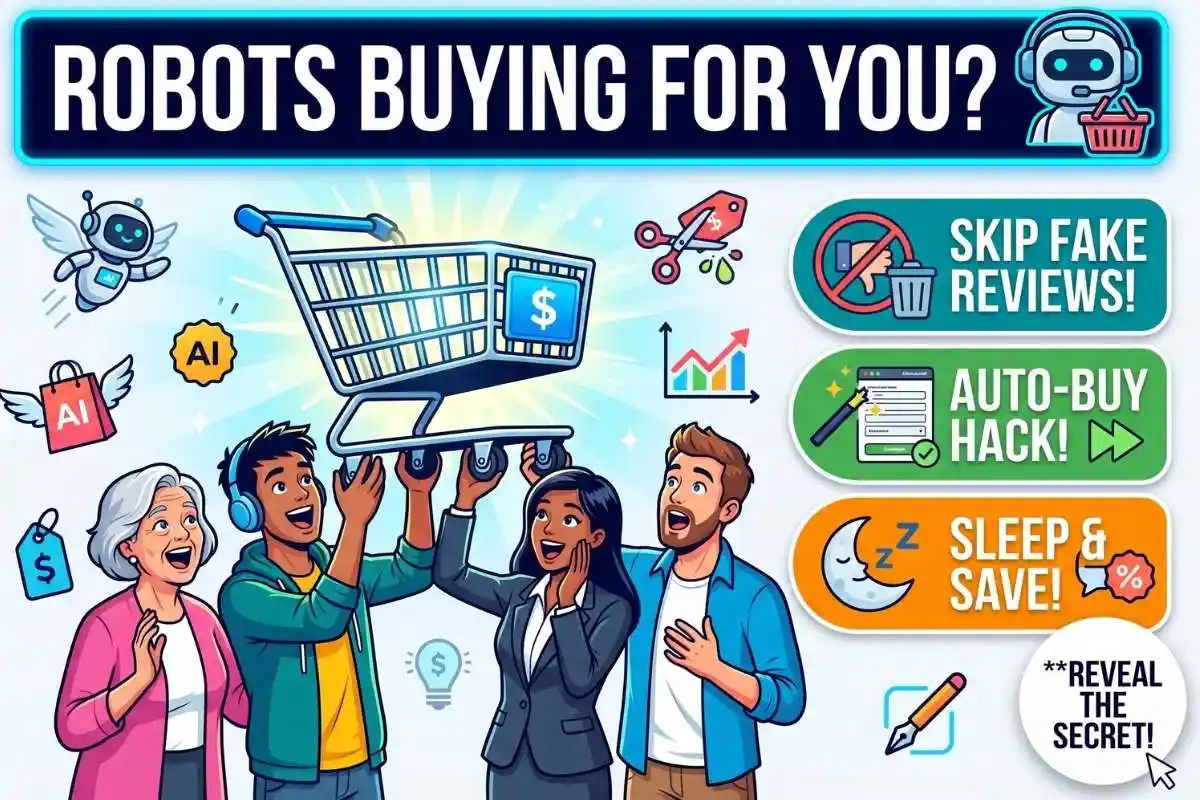
Imagine waking up on a Tuesday morning to find a perfectly tailored pair of running shoes sitting on your front porch, purchased at the lowest possible price, and delivered without you ever opening a web browser. You didn’t buy them. Your personal AI agent did. Welcome to the reality of 2026, where the mundane act of online shopping has fundamentally shifted from a human activity to an automated, machine-driven process. We have officially entered the era of agentic commerce, where sophisticated algorithms securely hold our payment information, evaluate market conditions, and autonomously pull the trigger on purchases. On the surface, this sounds like the ultimate modern convenience. Yet, the terrifying reason we surrendered our purchasing power to bots isn’t just about saving time; it is because the digital marketplace became so hostile, complex, and psychologically exhausting that human beings are no longer equipped to navigate it alone.
The Evolution from Chatbots to Autonomous Buyers
To understand how we arrived at this moment, look at the rapid evolution of artificial intelligence. Just a short time ago, AI in e-commerce was limited to clumsy customer service chatbots that could barely answer simple questions. Today, those systems have been replaced by highly capable intelligent agents—autonomous software entities programmed to perceive their environment, make complex decisions, and take independent actions. In 2026, these agents can instantly read through thousands of customer reviews, automatically cross-reference global inventory levels, verify return policies, and predict promotional discounts in fractions of a second. They don’t just guide you to the checkout line; they create the cart, apply discount codes, and process the payment while you sleep. Financial institutions have developed standardized machine-to-machine protocols allowing these bots to seamlessly negotiate with store servers directly, bypassing user interfaces entirely. We have essentially given these digital entities the keys to our digital wallets, allowing them to act as authorized financial proxies.
The Collapse of the Human-Centric Internet
The truly terrifying catalyst for this shift is the collapse of the human-centric internet. Over the past decade, online shopping devolved into a chaotic battlefield of manipulative marketing, fake reviews, dynamic pricing algorithms, and deceptive user interfaces designed to trick you. Human shoppers were experiencing unprecedented decision fatigue, forced to spend hours researching a simple household appliance just to ensure they weren’t being scammed. The sheer volume of sponsored content made it nearly impossible to discern genuine quality. Recognizing this crisis in consumer trust, regulators like the Federal Trade Commission have struggled to keep up with infinite variations of dark patterns. As a defense mechanism, consumers started deploying AI agents out of absolute necessity. We needed machines to fight the machines. Your AI agent doesn’t get tired, ignores flashy banners, and isn’t swayed by a fake countdown timer. We handed over the buying process because the digital mall became too dangerous for the human mind to process safely.
The New Era of Machine-to-Machine Marketing
As consumers increasingly delegate buying decisions to software, a profound transformation is occurring: brands are no longer marketing to you. They are marketing to your bot. If an AI agent decides which brand of paper towels to reorder or which laptop offers the best specifications for the lowest price, a clever television commercial becomes entirely irrelevant. Instead, corporations are rapidly restructuring their e-commerce strategies around “bot optimization.” They ensure their product data, backend systems, and supply chain metrics are perfectly formatted for machine consumption rather than human appeal. This creates a bizarre new reality where the most successful products might be completely unknown to the general public, lacking traditional brand awareness, but highly favored by algorithmic agents due to optimized metadata. The terrifying aspect of this shift is that human emotion and traditional brand loyalty are being stripped out of the equation, replaced by cold data parameters dictating exactly what items enter our homes.
The Illusion of Control and the Privacy Paradox
While we enjoy having a tireless digital assistant manage our household inventory, this dynamic introduces severe vulnerabilities regarding privacy and control. For an AI shopping agent to be effective, it requires an intimate, almost invasive understanding of your life. It needs real-time access to your bank accounts, browsing history, physical location, and digital calendar to know exactly when to buy anniversary gifts. We willingly feed these systems our most sensitive personal information in exchange for the convenience of never having to buy staples manually again. Furthermore, the illusion of control shatters when we realize that companies providing these agents might have hidden corporate agendas. What happens when your trusted bot subtly begins prioritizing products from companies that pay higher affiliate fees? The algorithms guiding these decisions are proprietary black boxes, meaning we can never be entirely sure if the bot is buying what is best for us, or what is most profitable for its parent company.
Navigating the Future of Autonomous Commerce
Looking ahead, the integration of AI agents into our daily financial lives is only going to deepen, fundamentally altering global consumerism. We are moving toward a future where routine transactions are completely invisible to the human eye, managed by a massive network of orchestrated bots. To survive this landscape, consumers must remain fiercely vigilant about their data and demand absolute transparency regarding how agents make selections. We must establish unbreachable parameters around what our bots can and cannot do, setting strict spending limits and requiring explicit human authorization for significant purchases. While it is undoubtedly terrifying to realize we have outsourced a core aspect of our autonomy to artificial intelligence because the internet became too hostile, we possess the power to regulate this technology. By understanding the underlying mechanics of agentic commerce, we can harness the incredible efficiency of these automated assistants without losing our grip on our financial independence.
Human Shopping vs. AI Agent Shopping
| Feature | Traditional Human Shopping | AI Agentic Shopping |
| Patience & Fatigue | Tires quickly; prone to severe decision fatigue. | Tireless; can evaluate thousands of items instantly. |
| Susceptibility to Ads | Easily influenced by flashy marketing and dark patterns. | Ignores visual ads; focuses strictly on data and specifications. |
| Price Comparison | Limited to a few tabs or specific comparison sites. | Real-time global tracking and automated price negotiations. |
| Data Requirements | Requires basic account info and a payment method. | Demands deep access to personal habits, schedules, and preferences. |
Frequently Asked Questions (FAQ)
What exactly is an AI shopping agent?
An AI shopping agent is an advanced software program that acts on your behalf to find, compare, and purchase items online. Unlike a standard chatbot that just answers questions, an agent can securely hold your payment information and autonomously complete the entire checkout process based on your preset preferences.
Is it safe to let a bot make purchases for me?
Safety depends entirely on the parameters you set. Major financial institutions have developed secure protocols specifically for automated bot transactions. However, you must always set strict spending limits and carefully manage what personal data the agent can access to protect yourself from costly errors or privacy breaches.
Will this make traditional online shopping websites disappear?
Not entirely, but their purpose is shifting. Traditional, visually appealing websites will remain for leisurely browsing and experiential shopping, like buying luxury fashion or art. However, for everyday commodities, websites are quickly turning into data endpoints meant to be read by other computers, not humans.
How do brands sell products if bots are doing the buying?
Brands are shifting from visual marketing to “data optimization.” They ensure their products have incredibly detailed, accurate specifications, competitive pricing, and fast shipping times, as AI agents prioritize these factual metrics over emotional advertising campaigns.
A Final Curiosity: The Hidden Micro-Haggling
Perhaps the most fascinating—and slightly dystopian—element of the 2026 e-commerce landscape is the invisible conversations happening entirely behind the scenes. When your AI agent decides to buy a product, it doesn’t always just accept the listed retail price. Using real-time data, your bot will silently ping the retailer’s bot to negotiate. Your agent might communicate: “My user’s cart has a 90% chance of abandonment if this costs over $40. Drop the price by $2, and I’ll execute the transaction right now.” The store’s bot, calculating the profit margin and current inventory levels in a fraction of a millisecond, agrees to the terms. The deal is struck, the payment clears, and the product ships—all before you have even poured your morning coffee. The future of shopping isn’t just automated; it’s a constant, silent bazaar of machines haggling in the dark.