
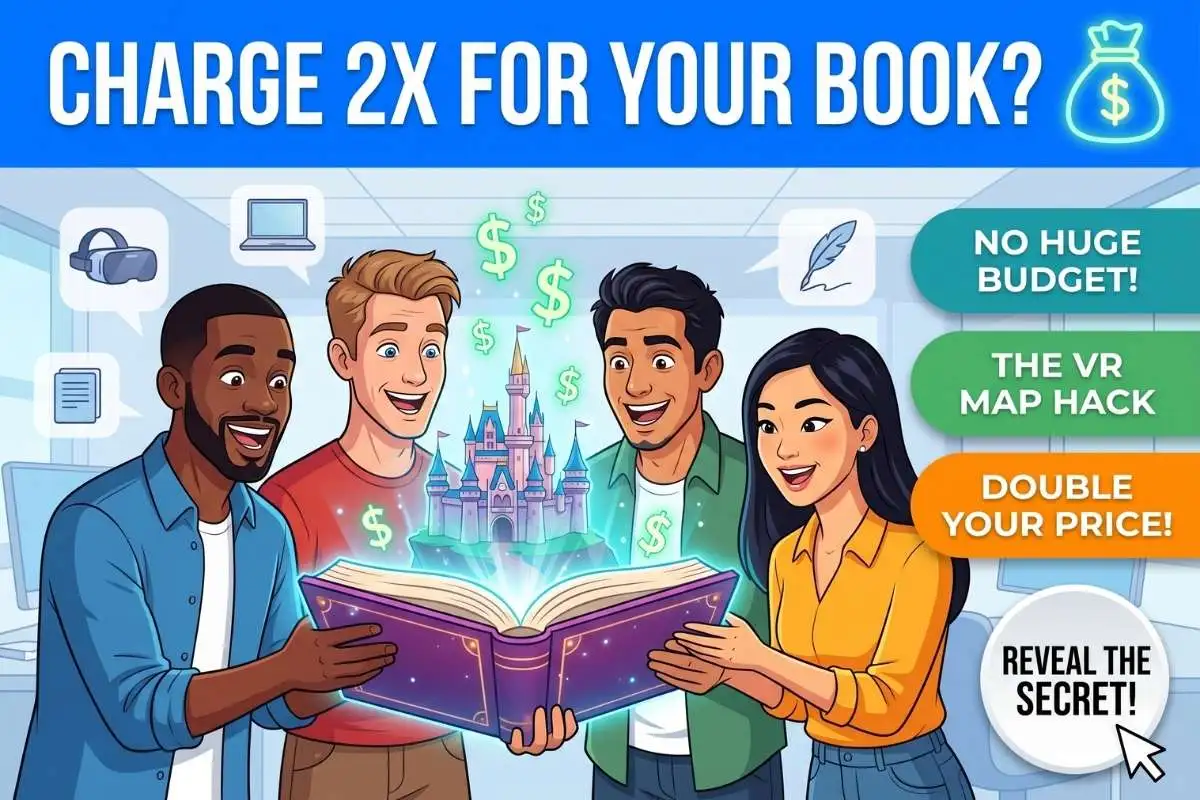
Imagine opening a highly anticipated new fantasy novel. You turn past the dedication page, and instead of finding a flat, black-and-white ink map of the fictional continent, you discover a digital access code. Scanning it with your smartphone instantly transports you into that very world. You are standing on the cobblestone streets of the capital city, the wind howling through digital trees, as a towering, majestic castle looms in the distance. This is the new reality of interactive VR book mapping. Independent authors and traditional publishers alike are discovering that adding an immersive, three-dimensional world to their stories completely transforms the reading experience. More importantly, it allows creators to position their books as premium entertainment products. By blending traditional storytelling with cutting-edge technology, you are not just selling a story—you are selling a ticket to another universe. Modern audiences are more than willing to pay double the standard retail price for the opportunity to take this extraordinary digital journey.
The Evolution from Paper to Pixels
For decades, the intricate art of Worldbuilding has relied almost entirely on the reader’s imagination, supported occasionally by a few static illustrations at the front of a book. While these paper maps hold a nostalgic charm, modern technology has cracked open entirely new dimensions for storytelling. Interactive VR book mapping takes the geographical layout of your novel and turns it into a fully navigable, living digital twin. When readers wear a Virtual Reality headset, they are enveloped in a breathtaking 360-degree environment. They can physically look around the cozy tavern where the heroes first meet, or inspect the crumbling architecture of ancient, forgotten ruins. This powerful sensory immersion bridges the gap between classic literature and modern video games, allowing the audience to truly feel the massive scale of the fictional world before they even read the very first chapter.
Why Readers Are Happy to Pay a Premium Price
You might naturally be wondering how an author can justify charging thirty dollars for a standard ebook, or fifty dollars for a physical hardcover copy. The secret lies entirely in the perceived value of the product being offered. Today’s consumers are bombarded with endless cheap content, making it incredibly difficult for a standard novel to stand out in a crowded marketplace. However, when you bundle a novel with exclusive, lifetime access to an interactive VR map, you elevate your book from a simple commodity to a premium, interactive experience. Readers are no longer just buying pages of text; they are investing in an unforgettable adventure. A VR map allows them to click on specific locations to read hidden backstories, uncover secrets about side characters, or find hidden clues. This rich interactivity perfectly justifies a significantly higher price tag for dedicated fans who want to experience the story on a deeper level.
Tools and Techniques for the Modern Storyteller
One of the biggest misconceptions about creating virtual reality environments is that you need an advanced degree in computer science or a massive Hollywood production budget. In reality, the barrier to entry has plummeted dramatically over the last few years. Today, there are numerous user-friendly software platforms that allow practically anyone to build impressive 3D landscapes. A booming and affordable freelance market also exists where talented digital artists can bring your simple 2D sketches to life for a very reasonable fee. The process simply involves taking your basic layout, extruding the terrain into a 3D space, and dropping in pre-made digital assets like buildings, mountains, and trees. While it does require a moderate initial investment of time and resources, the resulting premium product quickly recoups the cost upon release, generating significantly higher profit margins for the author over the long term.
Marketing Your Immersive Novel to a Wider Audience
Having a breathtaking VR map is an incredible asset, but it simply won’t help your book sales if no one knows it exists. Fortunately, virtual reality content is inherently highly visual and incredibly shareable, making it an absolute dream for digital marketers. When trying to attract new readers on platforms like Google Discover, Facebook, or TikTok, an immersive video snippet of a user flying through your fantasy city will capture attention significantly faster than a static book cover. You can create captivating 360-degree videos or short, cinematic tours of your world to use as highly effective advertisements. Potential readers stop scrolling because they are mesmerized by the visuals, and then discover they can purchase the novel to explore the world themselves. This modern strategy effectively converts casual social media scrollers into highly engaged, paying buyers eager to dive into your universe.
Building a Loyal Community Around Your Expanding Universe
The true, long-term power of interactive VR book mapping reveals itself over time as you write sequels and expand your literary series. Your digital map is not just a static piece of art; it is a living, breathing document that can evolve right alongside your expanding narrative. When a new book is released, you can update the digital map to unlock previously hidden continents or show the devastating aftermath of a massive magical battle. This ongoing evolution creates an incredibly sticky ecosystem for your readers. They return to the map again and again to see what has changed, keeping your story at the very top of their minds between releases. By transforming your solitary map into a communal gathering space, you foster a fiercely loyal fanbase that will enthusiastically support your writing career, purchase your merchandise, and back your future projects indefinitely.
To better understand the dramatic differences between a traditional publishing approach and the new immersive model, consider the following comparison. It clearly illustrates why authors are shifting their strategies and why the modern audience eagerly embraces this leap.
| Feature | Standard Fantasy Novel | Immersive VR Novel Experience |
| Retail Price Range | $9.99 – $15.99 | $24.99 – $45.99 |
| Reader Engagement | Passive reading | Active exploration and interaction |
| Visual Elements | 2D paper map, cover art | 360-degree 3D navigable environments |
| Community Building | Low to medium | Extremely high via digital spaces |
| Marketing Potential | Relies on cover and blurb | Highly viral visual video content |
Frequently Asked Questions About VR Book Mapping
Q: Do my readers need an expensive VR headset to enjoy the interactive map?
A: Not at all! While a dedicated virtual reality headset provides the most immersive, deeply engaging experience, it is entirely optional. Modern web technologies allow stunning 3D maps to be hosted directly on a standard website. Readers can simply use their smartphone or desktop computer browser to click and drag their way around the environment, exploring your world just like they would use an online street view map. This ensures your content is accessible to everyone.
Q: How much does it cost an author to produce a basic VR map?
A: The cost varies depending on the level of detail you desire. If you use accessible, subscription-based map-making software and build it yourself using pre-made digital assets, your only real cost is your time and a small monthly software fee. If you hire a professional 3D environmental artist to custom-build a highly detailed, bespoke world from scratch, you could expect to invest anywhere from a few hundred to a few thousand dollars, which is easily recouped through higher retail prices.
Q: Can this immersive mapping technique be applied to genres other than fantasy?
A: Absolutely! While high fantasy and science fiction are the most obvious fits due to their heavy reliance on unique, fictional settings, any genre that features a strong sense of place can benefit immensely. Historical fiction authors can recreate ancient Rome or Victorian London, allowing readers to walk the streets exactly as they were centuries ago. Thriller and mystery authors can provide interactive floor plans of a crime scene, letting the reader actively search for clues alongside the detective.
A Final Curiosity: The Science of Spatial Storytelling
To wrap things up, let’s look at a truly fascinating psychological aspect of why this technology is so effective for authors. When a reader physically navigates a digital version of your fictional city using VR, their brain maps those fictional streets just as it would map their actual hometown. When they subsequently read your novel, the rich textual descriptions trigger those vivid spatial memories. This psychological phenomenon dramatically enhances reading comprehension, boosts emotional attachment to the characters, and makes the story feel astonishingly real to the audience. Interactive VR book mapping is not just a clever marketing gimmick or an excuse to charge double; it is a profound evolution in how we process and experience narratives as human beings. By giving your audience a world they can truly step into, you ensure your novel will be remembered long after the final page is turned.
