
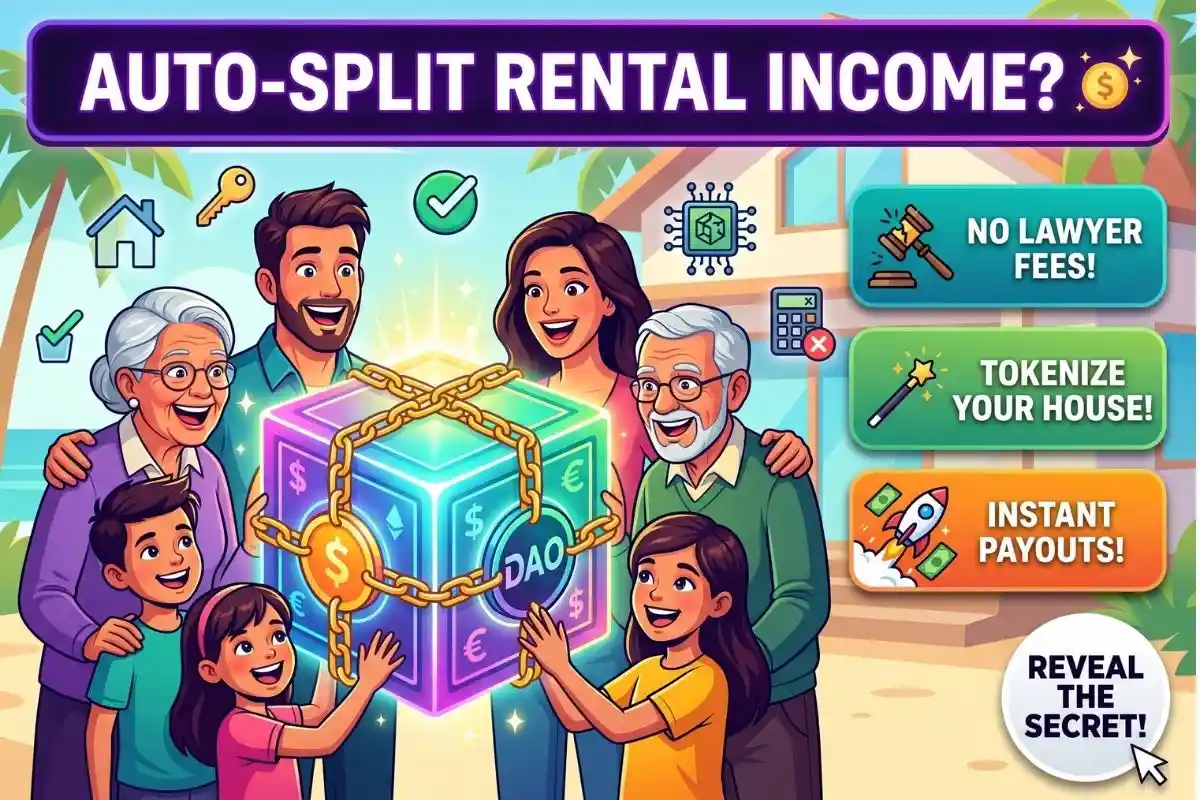
Picture this: your family owns a beautiful, sun-drenched summer beach house that has been the backdrop of your fondest childhood memories. It is a cherished asset, but as the family has grown, so have the logistical nightmares. During the weeks when no one is using the property, you rent it out to eager vacationers. In theory, this is a fantastic way to cover property taxes, maintenance, and perhaps even turn a tidy profit. In practice, however, it usually means one responsible sibling is burdened with managing a chaotic spreadsheet, chasing down relatives for repair contributions, and manually sending out fractional payments at the end of the season. It is a recipe for holiday dinner arguments and lingering resentment. But what if there was a way to put all of this on autopilot? Enter the concept of the Family DAO, a revolutionary approach to managing shared assets that uses modern blockchain technology to eliminate the friction of co-ownership. By embracing this digital structure, you can preserve family harmony, ensure absolute financial transparency, and never have to look at a complicated accounting spreadsheet again.
The End of the Family Spreadsheet
To understand how this modern miracle works, we first need to understand the underlying technology. A Family DAO, or Decentralized Autonomous Organization, is essentially a digital cooperative managed by computer code rather than a single human leader. Imagine a virtual joint bank account equipped with a highly efficient, robotic accountant that never sleeps and never makes a mathematical error. When you set up a Family DAO for your summer rental, you create a set of digital rules—known as smart contracts—that automatically govern how money flows in and out. For example, if the beach house brings in $2,000 for a week’s rental, the smart contract can immediately and automatically route 20% into a digital maintenance fund for future roof repairs, while instantly distributing the remaining 80% equally among the four siblings’ digital wallets. There is no human intervention required, no waiting for checks to clear, and absolutely no arguing over who owes what.
This level of automation transforms the traditional family dynamic around shared assets. Instead of Uncle Bob having to remind everyone to chip in for the broken water heater, the DAO’s treasury handles it transparently. Every single transaction is recorded on a public ledger, meaning every family member can log into a dashboard and see exactly how much income the property generated, what expenses were paid, and where the remaining funds went. Because the rules were agreed upon by the family beforehand and baked into the unchangeable code of the smart contract, the system operates with absolute fairness. This narrative shift—from one of stress and constant manual oversight to one of automated peace of mind—is why so many tech-savvy families are abandoning traditional LLCs and joint bank accounts in favor of decentralized solutions. It brings a level of professional asset management to the everyday family, ensuring that the property remains a source of joy rather than a source of administrative dread.
Understanding the Magic of Tokenized Housing
At the heart of the Family DAO is a fascinating concept known as tokenized housing. In simple terms, tokenization is the process of taking a physical asset—like your four-bedroom summer rental—and breaking its ownership down into digital shares, or “tokens,” on a blockchain. Think of these tokens as digital stock certificates. If your family decides to issue 100 tokens representing the entire property, and there are four siblings, each sibling might hold 25 tokens. These tokens are held in secure digital wallets, and the smart contract uses these token balances to determine exactly how the rental income should be divided. If you hold 25% of the tokens, the smart contract guarantees that 25% of the distributed rental profits will instantly appear in your wallet the moment a renter pays their bill. It is a seamless, elegant solution that bridges the physical world of real estate with the hyper-efficient digital world of blockchain technology.
The true beauty of tokenized housing within a Family DAO becomes apparent when family circumstances inevitably change. Let us say one sibling wants to sell their share to help pay for their child’s college tuition, but the rest of the family wants to keep the house. In a traditional setup, this often forces a complicated legal buyout, refinancing, or even the forced sale of the beloved family property. With tokenized housing, that sibling can simply sell their 25 digital tokens to another family member, a cousin, or even back to the DAO’s treasury. The smart contract automatically recognizes the new token distribution and seamlessly adjusts the future rental payouts accordingly, all without requiring expensive lawyers, real estate agents, or mountains of paperwork. It provides a level of liquidity and flexibility that traditional real estate ownership simply cannot match, allowing the asset to adapt to the family’s evolving financial needs over time.
Securing the Future with Crypto Inheritance
As we look toward the future, the conversation naturally shifts to the transfer of generational wealth, which brings us to the critical topic of crypto inheritance. Passing down a physical property through traditional probate courts can be an agonizingly slow, expensive, and public process. Disputes among heirs can tie up the asset for years, draining its value through legal fees and leaving the property neglected. A Family DAO offers a radically different approach. Because the ownership of the house is represented by digital tokens, the family can program specific inheritance rules directly into the smart contract. These rules can dictate exactly what happens to a family member’s tokens upon their passing, ensuring a smooth, instant, and undisputed transfer of ownership to the next generation.
By utilizing crypto inheritance strategies, a parent can set up a “dead man’s switch” within the DAO. If a family member’s digital wallet is inactive for a specified period, or if a decentralized oracle verifies a death certificate, the tokens can be automatically routed to the designated children’s wallets. There are no probate fees, no greedy lawyers taking a cut, and no ambiguity about the deceased’s final wishes. Furthermore, the DAO structure inherently educates the younger generation on financial responsibility and asset management. As teenagers or young adults receive a small portion of the tokens, they gain voting rights within the Family DAO, allowing them to participate in decisions about property upgrades or rental pricing. This modern approach to estate planning not only preserves the financial value of the summer rental but also preserves the emotional bonds of the family by removing the structural friction that so often leads to generational conflict.
Bringing It to the Real World: Legal Wrappers
While the technology behind a Family DAO is incredibly powerful, it is crucial to recognize that we still live in a physical world governed by traditional laws. You cannot simply write a computer program and declare it the legal owner of a beachfront property without interacting with the local county clerk. To bridge this gap, families utilize what is known as a legal wrapper. A popular choice in the United States is the DAO LLC. States like Wyoming have pioneered legislation that officially recognizes DAOs as legitimate limited liability companies. In this structure, the traditional LLC holds the physical deed to the house, but the operating agreement of the LLC explicitly states that the company is governed by the smart contract on the blockchain. This setup provides the family with the best of both worlds: the limited liability protection and legal recognition of a traditional business entity, combined with the automated efficiency and transparency of a decentralized network.
Setting this up requires careful planning and compliance with local regulations. It is highly recommended to consult with forward-thinking legal professionals who specialize in digital assets. You will also want to pay close attention to guidelines from federal agencies to ensure your tokenization strategy doesn’t inadvertently violate securities laws. For instance, reviewing resources provided by organizations like the National Institute of Standards and Technology (NIST) can offer valuable insights into the secure deployment of blockchain architectures. Ultimately, creating the legal wrapper is a one-time administrative hurdle. Once the LLC is formed, the deed is transferred, and the smart contracts are deployed, the heavy lifting is done. From that point forward, the Family DAO takes the wheel, quietly and efficiently managing the summer rental income while you and your family focus on what truly matters: enjoying the beach house and making memories together.
Comparing Your Options: Traditional LLC vs. Family DAO
| Feature | Traditional Family LLC | Family DAO (Tokenized) |
| Income Distribution | Manual (requires a manager to write checks or send wires). | Automated (smart contracts instantly split funds). |
| Transparency | Relies on one person sharing complex spreadsheets. | 100% transparent on a public or private ledger. |
| Transfer of Shares | Requires lawyers, new operating agreements, and notary fees. | Simple digital token transfer; instant recognition. |
| Maintenance Funds | Manager must actively hold back funds and budget. | Smart contract auto-deducts a set percentage instantly. |
| Voting & Decisions | Scheduled board meetings and manual vote counting. | Digital voting via tokens on a transparent dashboard. |
Frequently Asked Questions (FAQ)
What exactly is a smart contract? A smart contract is simply a self-executing computer program that runs on a blockchain. You can think of it like a digital vending machine: if you input the right condition (like a renter paying $1,000), it automatically executes the programmed outcome (sending $250 to four different family members) without needing a human to press a button.
Do we need to use cryptocurrency like Bitcoin to run a Family DAO? No, you do not have to expose your family to the wild price swings of traditional cryptocurrencies. Most modern Family DAOs use “stablecoins”—digital tokens whose value is pegged directly to the US Dollar. Renters can pay in traditional cash, which is converted to stablecoins, processed by the DAO, and sent to your bank account as dollars.
Is tokenized housing legally recognized? Yes, but it requires a “legal wrapper.” The tokens themselves don’t hold the deed; rather, an LLC holds the physical deed, and the state-recognized operating agreement of that LLC dictates that the token holders are the legal owners of the company. States like Wyoming and Tennessee have specific laws making this very easy.
What happens if a family member loses access to their digital wallet? This is a critical part of the setup process. A well-designed Family DAO will include “multi-signature” recovery options or social recovery mechanisms. This means if Uncle Bob loses his password, a majority vote by the other family members can authorize the smart contract to burn his old tokens and issue him new ones, ensuring his share of the house is never permanently lost.
A Final Curiosity: The Evolution of Ownership
It is fascinating to consider how the concept of property ownership has evolved over the centuries. We have moved from physical handshakes and wax-sealed parchment deeds to computerized county registries, and now, to decentralized digital tokens floating in cyberspace. The Family DAO represents the pinnacle of this evolution, stripping away the bureaucratic friction that has plagued co-ownership for generations. By embracing tokenized housing and crypto inheritance, families are doing much more than just optimizing their summer rental income. They are pioneering a entirely new, stress-free way to build, manage, and pass on generational wealth. So before you open that messy spreadsheet for the upcoming summer season, take a moment to consider if it’s time to let the blockchain do the heavy lifting. Your family—and your sanity—will thank you.
