
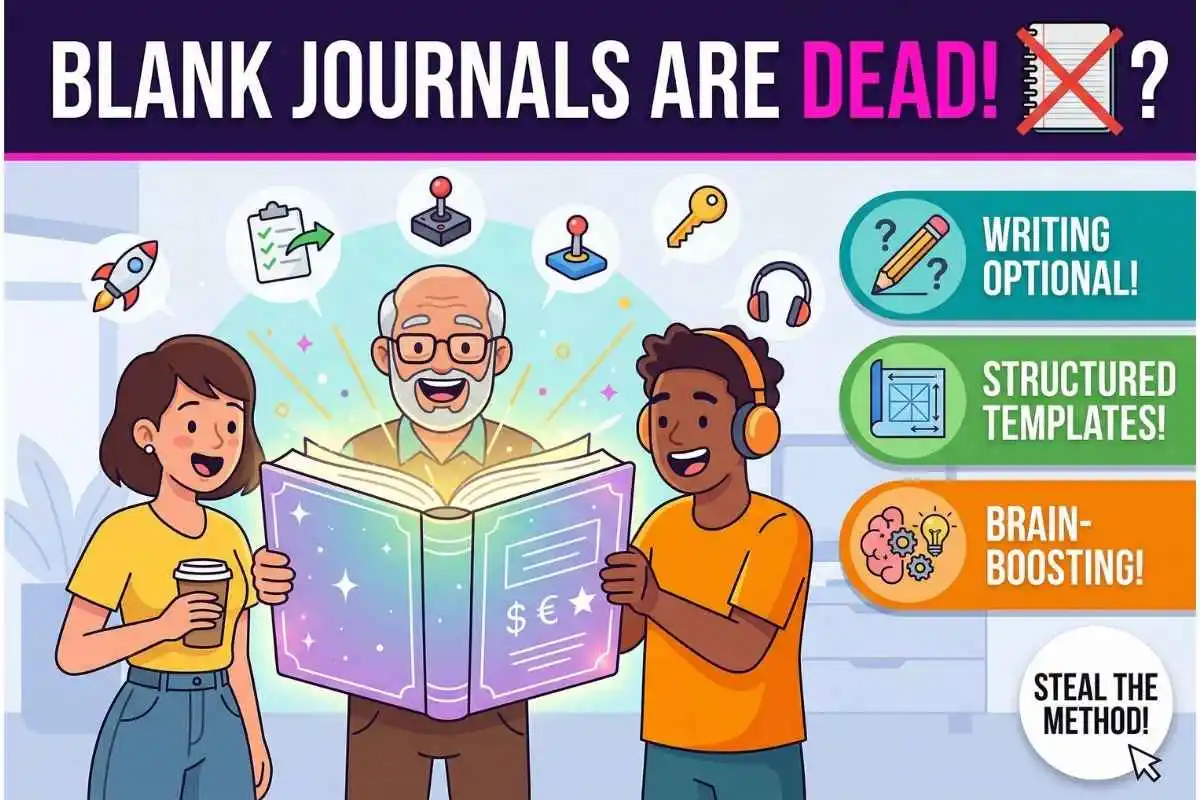
Have you ever walked down the stationery aisle, picked up a beautiful, leather-bound blank journal, and then immediately felt the crushing weight of “blank page syndrome”? You are certainly not alone in this experience. For years, the self-publishing world and traditional stationery markets were flooded with “low-content” books—essentially, blank lined notebooks adorned with aesthetically pleasing covers. However, severe consumer fatigue quickly set in. People soon realized they did not need another empty, intimidating book gathering dust on a desk; they desperately needed guidance, structure, and a genuine spark of inspiration to get their pens moving. Enter the lucrative and rapidly expanding era of “medium-content” books. These are highly interactive, purpose-driven publications that bridge the vast gap between an empty notebook and a full-length, text-heavy novel. From intricately designed adult activity books to highly specialized hobby logbooks, medium-content books are currently dominating the print-on-demand market. This article explores exactly what modern readers are eagerly purchasing right now, why these structured formats are so incredibly popular, and how they offer a unique, tactile experience in our increasingly digital world.
The Shift from Low-Content to Meaningful Engagement
The self-publishing and book retail landscape has undergone a dramatic transformation over the last five to seven years. Initially, aspiring entrepreneurs flocked to digital platforms to upload hundreds of thousands of simple, lined notebooks. It was a veritable gold rush of low-content publishing, requiring virtually zero writing skills. But as the global market became impossibly saturated with millions of nearly identical blank journals, buyers understandably started looking for something with a bit more substance and utility. This distinct shift in consumer behavior gave birth to the medium-content book category. Unlike their completely blank predecessors, medium-content books require a modest but significant amount of writing, graphic design, or thoughtful formatting from the creator. In return, they offer significantly more value and direction to the end user. They provide a vital, foundational framework. Think of them as meticulously drafted architectural blueprints for a reader’s personal project, whether that project is organizing chaotic weekly family meals or tracking a six-month marathon training journey. By offering engaging prompts, structured templates, and guided exercises, these books completely remove the paralyzing intimidation factor of a pristine blank page. Readers are actively seeking out this guided experience because it effectively saves them precious time and mental energy while still allowing for personal expression. As a result, creators who put genuine thought into interior formatting and niche targeting are seeing massive, sustainable success today.
The Therapeutic Power of Guided Journals
Perhaps the most significant and emotionally resonant driver of the current medium-content boom is the increasing global focus on mental health, intentional living, and daily mindfulness. People from all walks of life are turning to guided journals as highly accessible, affordable tools for quiet self-reflection and necessary emotional regulation. Unlike a traditional diary where you must painstakingly generate your own profound thoughts from scratch every single evening, a thoughtfully designed guided journal offers specific, thought-provoking daily prompts. You might be asked to list three specific things you are deeply grateful for, vividly describe a recent challenge you successfully overcame, or systematically map out your fluctuating mood for the entire month. This highly structured approach is heavily grounded in the proven principles of cognitive behavioral therapy and established mindfulness practices. By providing a safe, organized physical space to properly process complex emotions, these workbooks feel significantly less like a dreaded chore and much more like a luxurious daily retreat for the overworked mind. Furthermore, hyper-niche workbooks carefully tailored to specific life experiences—such as profound grief recovery, chronic anxiety management, or financial rehabilitation—are proving to be incredibly popular among consumers. They serve as quiet, steadfast companions that offer genuine therapeutic value. For those specifically interested in the psychological benefits of structured journaling, the National Institutes of Health (NIH) offers extensive, peer-reviewed research detailing how regular expressive writing can positively impact overall emotional and physical well-being.
Activity Books and the Resurgence of Adult Play
Another massive, highly lucrative segment of the booming medium-content market is entirely dedicated to adult activity books. While intricate coloring books designed specifically for adults famously exploded in popularity about a decade ago, the overall category has since beautifully evolved and expanded into a wonderfully diverse array of brain-teasing and creative, hands-on formats. Today, eager readers are enthusiastically purchasing complex, themed word searches, challenging cryptograms, advanced sudoku puzzles, and intricate logic games that are designed specifically to keep aging adult minds sharp and engaged. But the current trend goes far beyond traditional pencil puzzles. We are currently witnessing a massive surge in consumer demand for highly specialized, interactive activity books, such as satisfying “paint by sticker” books, incredibly intricate, multi-page mazes, and detailed origami instructional guides that come packaged with beautiful folding paper. The primary appeal of these products lies in the deep, focused, almost meditative relaxation they consistently provide to the user. In a frantic, modern era where our precious attention is constantly and aggressively fractured by endless smartphone notifications and infinite social media scrolling, sitting down with a physical activity book forces the brain into a highly desirable state of psychological flow. It is a nostalgic return to the simple, unplugged pleasures of childhood, cleverly repackaged for the stressed adult mind. These beautiful books offer a desperately needed screen-free escape that actively engages the cognitive brain while relaxing the nervous system.
Specialized Logbooks and the Beauty of Niche Tracking
The final, and perhaps most fascinating, pillar of the ongoing medium-content revolution is the rise of the highly specialized, hyper-niche logbook. While countless smartphone applications currently exist for tracking almost every conceivable aspect of human existence, there is a rapidly growing demographic of consumers who strongly prefer the absolute reliability, guaranteed privacy, and tangible satisfaction of using a physical logbook. These are absolutely not your standard, generic daily planners; they are highly customized tracking tools painstakingly designed for very specific hobbies, passions, and unique professions. For example, dedicated bird watchers eagerly buy detailed, rugged birding logbooks to meticulously record spotted species, shifting weather conditions, and precise GPS coordinates. Amateur home mechanics readily purchase comprehensive vehicle maintenance trackers for their garage. Obsessive specialty coffee enthusiasts buy beautifully bound tasting journals featuring complex flavor wheels and dedicated spaces for roasting notes. The true magic and immense value of these specific medium-content books genuinely lies in their deeply tailored, highly intuitive formatting. A standard, generic notebook stubbornly requires the user to manually draw their own clumsy tables and constantly remember exactly what specific data points they need to record. A specialized logbook, however, cleverly anticipates the user’s exact needs with pre-formatted charts, convenient checkboxes, and dedicated sections for all essential metrics. If you want to deeply understand the fascinating history of how meticulous humans have officially documented their observations over several centuries, the Wikipedia page on Logbooks provides a wonderfully detailed look at the early maritime origins of this vital recording practice.
Market Snapshot: The Medium-Content Ecosystem
To better understand the distinct categories driving this publishing trend, here is a breakdown of the most popular medium-content formats currently dominating reader’s shopping carts:
| Category | Target Audience | Key Features & Contents |
| Guided Journals | Wellness seekers, busy professionals | Daily writing prompts, mood trackers, gratitude lists, inspirational quotes. |
| Activity Books | Adults seeking screen-free relaxation | Sudoku, cryptograms, complex mazes, paint-by-sticker, logic puzzles. |
| Hobby Logbooks | Enthusiasts (birders, brewers, mechanics) | Pre-formatted data tables, specialized checklists, observation logs. |
| Workbooks | Self-learners, students, therapy patients | Educational exercises, fill-in-the-blank assessments, goal-setting frameworks. |
Frequently Asked Questions (FAQ)
What exactly is the difference between “low-content” and “medium-content” books? Low-content books have little to no text or design on the inside pages—think standard lined notebooks, sketchbooks, or blank diaries. Medium-content books require structural design, written prompts, specific formatting, or puzzle generation. They provide a user framework rather than just empty space.
Why are people buying physical logbooks when smartphone tracking apps are free? Many consumers experience “app fatigue” and prefer to disconnect from their screens while engaging in a hobby. Physical logbooks offer complete privacy (no data harvesting), do not require a battery or internet connection, and provide a tactile, nostalgic satisfaction that digital tapping simply cannot replicate.
Are medium-content books strictly self-published? While self-publishing platforms heavily popularized the trend due to the ease of print-on-demand technology, traditional publishing houses have absolutely taken notice. You will now frequently see major traditional publishers releasing guided journals, licensed activity books, and specialized planners in major retail bookstores.
A Final Curiosity: The Science of Paper Over Glass
As we watch the medium-content market soar, it leaves us with a fascinating curiosity regarding human nature. Despite living in an era where artificial intelligence can draft emails and smartphones can track our exact heart rates, we still possess a deep-seated, biological craving for paper. Cognitive psychologists suggest this is due to the “haptic feedback” of writing—the slight physical resistance of a pen dragging across paper grain. This subtle friction sends stronger sensory signals to the brain than a finger gliding effortlessly over smooth glass, leading to better memory retention and a deeper sense of emotional processing. So, the next time you find yourself entirely absorbed in a guided journal or carefully tracking your morning coffee brews in a customized logbook, remember that you are not just passing the time. You are participating in a quiet, tactile rebellion against the digital age, proving that sometimes, the best technology is simply a well-formatted piece of paper.
