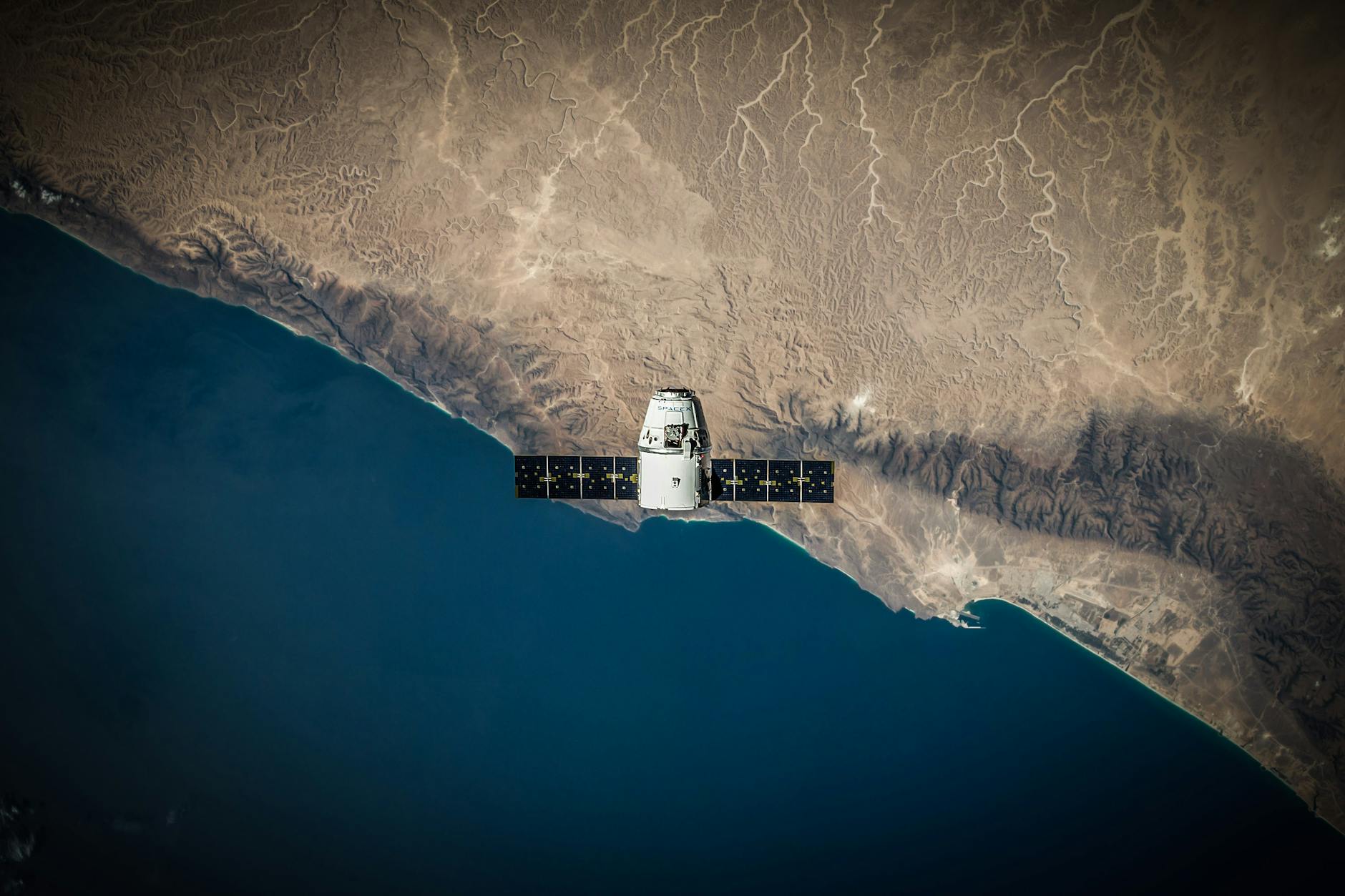
The space domain, once the exclusive frontier of national pride and scientific endeavor, is increasingly becoming a messy attic of orbital debris. This week, the focus shifts from grand exploration back to terrestrial anxieties as a relic of scientific success hurtles toward the atmosphere. We are tracking the uncontrolled re-entry of a 1,300-pound NASA satellite, the Van Allen Probe A, a technological marvel whose final, unplanned descent serves as a stark, tangible reminder of the financial and logistical burdens inherent in space exploration.
This isn’t some tiny fleck of paint burning up harmlessly on approach. This is a significant piece of hardware, launched back in the relative calm of optimism in August 2012\. After 14 years orbiting our planet, culminating in a mission that radically expanded our understanding of Earth’s magnetic shield, the probe is now a piece of potentially hazardous space junk. The recent projections place its arrival into the denser layers of our atmosphere with a shrinking window of uncertainty. While scientists at NASA assure the public that the risk calculation is infinitesimally small—a mere 1 in 4,200 chance of harm to anyone on Earth—the public fascination, and the implied cost of cleanup or consequence, elevates this from a minor news wire item to a viral financial story.
The Shifting Timelines: Why Timing Matters in Orbital Decay
The initial predictions for the Van Allen Probe A’s demise floated around Tuesday evening via U. S. Space Force modeling. However, as the satellite plunged through successive layers of the upper atmosphere, these predictions shifted dramatically, landing Wednesday morning in revised estimates. This 24-hour margin of error highlights a fundamental challenge in predicting chaotic atmospheric re-entry events: atmospheric drag is not constant. It is dictated by solar activity, which influences the density of the thermosphere.
The fact that the probe is coming down faster than the original 2034 projection indicates a powerful surge in space weather. The current active solar cycle, bombarding our upper atmosphere with higher energy particles, effectively inflates the atmosphere, increasing drag on orbiting objects. For operators of active satellites, this is the nightmare scenario. It means scheduled maneuvers to de-orbit or adjust trajectory must overcome increasingly energetic resistance, often requiring precious fuel reserves.
The comparison here must be drawn to other large, uncontrolled re-entries. While the public often recalls the spectacular, or terrifying, returns of larger stages like the Chinese Long March rockets, the Van Allen Probe A, at 1,300 pounds, falls into a category that demands significant monitoring. It is large enough that significant chunks will survive the fiery passage. The burn-up rate is never 100 percent when dealing with dense metallic components designed to withstand extreme radiation environments.
This event acts as a perfect, unsolicited stress test for global tracking infrastructure. Agencies like the U. S. Space Force are dedicating resources to continuously map the slowing trajectory, a process that costs taxpayer dollars and diverts attention from cataloging active threats or potential collisions involving operational satellites—a significant opportunity cost for national security and commercial interests.
The Van Allen Legacy: Mission Success That Created Space Junk
The irony of this situation cannot be overstated. The Van Allen Probes, Probe A and its twin Probe B, were not failures; they were spectacular successes. Launched in 2012, they were tasked with solving one of space science’s enduring mysteries: the creation and loss of charged particles trapped deep within Earth’s magnetic field, the Van Allen Belts. These belts are crucial; they are Earth’s natural shield against solar storms and harsh cosmic radiation.
The mission was planned for a two-year ride. It lasted nearly seven. This longevity demonstrated incredible engineering resilience, pushing the limits of spacecraft design in an environment where radiation exposure constantly degrades electronics. Their data revealed the existence of a dynamic, third radiation belt that could suddenly form during geomagnetic storms, drastically altering our understanding of planetary protection mechanisms. Hundreds of scientific publications trace their lineage back to these specific data points.
The end came in 2019, not suddenly, but predictably, as the fuel reserves necessary for continuous attitude control—keeping the solar panels pointed at the sun—were depleted. Without the ability to orient properly, power generation ceased, and the mission concluded. The post-mission analysis correctly projected a re-entry around 2034, assuming certain solar conditions. The fact that we are seeing this descent a decade early is the clearest signal of the intensification of solar activity, which is a major theme influencing current stock valuations in the aerospace and insurance sectors.
This successful, prolonged data collection mission now enters its unintended final phase: orbital disposal. It forces a conversation about the true lifecycle cost of a space mission, extending well beyond the operational budget into decades of passive, uncontrolled risk management. Economists argue that the price of building something to last in space must inherently include the cost of ensuring its safe demise.
The Economics of Uncontrolled Re-entry: Risk vs. Reality
While NASA emphasizes the low probability of injury, the financial world must calculate the potential liability and the cost of monitoring. When a large object like the Van Allen Probe A comes down, it triggers immediate economic reactions, particularly in the nascent but highly valued commercial space insurance market. Insurers must assess accumulated risk based on ground track predictions, even for decommissioned assets.
More broadly, this event fuels the debate surrounding orbital debris mitigation policies, often referred to as Space Traffic Management or STM. Currently, the responsibility for controlled re-entry—burning up safely over unpopulated areas like the South Pacific Ocean Uninhabited Area—falls largely on the operators. However, non-operational probes, especially those retired years ago, have little incentive or means to perform these costly maneuvers without external regulatory force.
The current framework rewards longevity but penalizes responsible disposal if fuel is exhausted. If space exploration continues at its breakneck pace—with thousands of new satellites launched annually—these uncontrolled descents will become commonplace. The cost of building robust, last-stage de-orbiting systems, which might add complexity and weight to initial missions, is rapidly becoming cheaper than the aggregate risk of managing cascading collision events or the political fallout from debris damaging infrastructure below.
Furthermore, the entire system of orbital slot management relies on the predictability of decay. When active solar cycles accelerate decay rates, it throws off long-term planning models used by commercial satellite operators who rely on precise orbital life expectancies to maximize their return on investment. The Van Allen Probe A is an analog demonstration of the chaos introduced when space weather defies static models.
The Future Trajectory: Three Scenarios for Post-Mission Space Assets
What does the uncontrolled re-entry of a significant NASA asset herald for the next decade of orbital operations? We can map out three distinct pathways based on how governments and industry react to this persistent debris challenge.
Scenario One is regulatory tightening coupled with technological mandates. Following several high-profile uncontrolled re-entries, international bodies, possibly driven by the EU or the US Congress, impose strict, non-negotiable rules requiring licensed satellites above a certain mass to carry active de-orbiting technologies that function even without primary power. This scenario would favor established aerospace giants capable of absorbing the certification costs but could slow the proliferation of smaller, innovative startups by increasing initial build complexity.
Scenario Two involves the privatization and monetization of orbital cleanup. If the risk to communications infrastructure becomes too palpable, we could see the rapid maturation of a specialized salvage industry. Companies already exploring debris removal technology would gain significant government contracts to responsibly shepherd legacy assets like Probe A, or those like Probe B which is expected down later, into the atmosphere. This would position space debris management as a profitable sector, much like hazardous waste cleanup on Earth, driven by insurance payouts and regulatory compliance fees levied against the original asset owners.
Scenario Three is the grim acceptance of a higher debris risk, leading to orbital reallocation. If the regulatory and cleanup costs prove too high politically or economically, the highest, most valuable Low Earth Orbits may become significantly riskier. Satellite constellations might be forced to move to higher, less desirable, or more fuel-intensive orbits to avoid the debris field created by decommissioned probes. This would increase operational costs across nearly every orbital service sector, from GPS augmentation to global broadband, effectively raising the cost of doing business in space for everyone, not just the originators of the legacy hardware.
Ultimately, the slow burn of the Van Allen Probe A’s final descent is a powerful piece of viral financial news because it connects distant science with immediate, albeit slim, terrestrial risk. It forces shareholders, executives, and policymakers to acknowledge that every object sent into orbit accrues a long-term, externalized liability. The age of simply letting things fall when they are done is swiftly coming to an end under the harsh scrutiny of crowded orbital lanes.
FAQ
What is the specific object causing the current uncontrolled re-entry?
How much does the Van Allen Probe A satellite weigh?
Why is the re-entry timing of the satellite changing unpredictably?
What is the actual calculated risk of harm to people on Earth from this re-entry?
What core scientific mystery were the Van Allen Probes designed to investigate?
When was the Van Allen Probe A originally launched?
Why did the Van Allen Probe A mission end prematurely in 2019 rather than the projected 2034 end-of-life?
What is the significance of this 1,300-pound satellite surviving re-entry compared to smaller space debris?
How does active solar cycle activity affect the decay rate of orbiting objects?
What is the ‘opportunity cost’ cited regarding the monitoring of this uncontrolled re-entry?
Which agencies are primarily responsible for tracking the satellite’s current trajectory?
How does the longevity of the Van Allen Probes mission relate to its current status as space junk?
What specific aspect of space weather caused the probe to re-enter a decade earlier than projected?
How does this incident impact commercial space insurance calculations?
What is the primary debate surrounding orbital debris mitigation policies referenced in the article?
What is the potential commercial consequence if uncontrolled re-entries become commonplace?
What is Scenario One for the future handling of post-mission space assets?
What is Scenario Two focusing on for managing legacy space assets?
What is the potential outcome described in Scenario Three if regulatory costs are deemed too high?
Why are dense metallic components less likely to achieve 100% burn-up during re-entry?
What is the economic argument being made regarding the true lifecycle cost of a space mission?