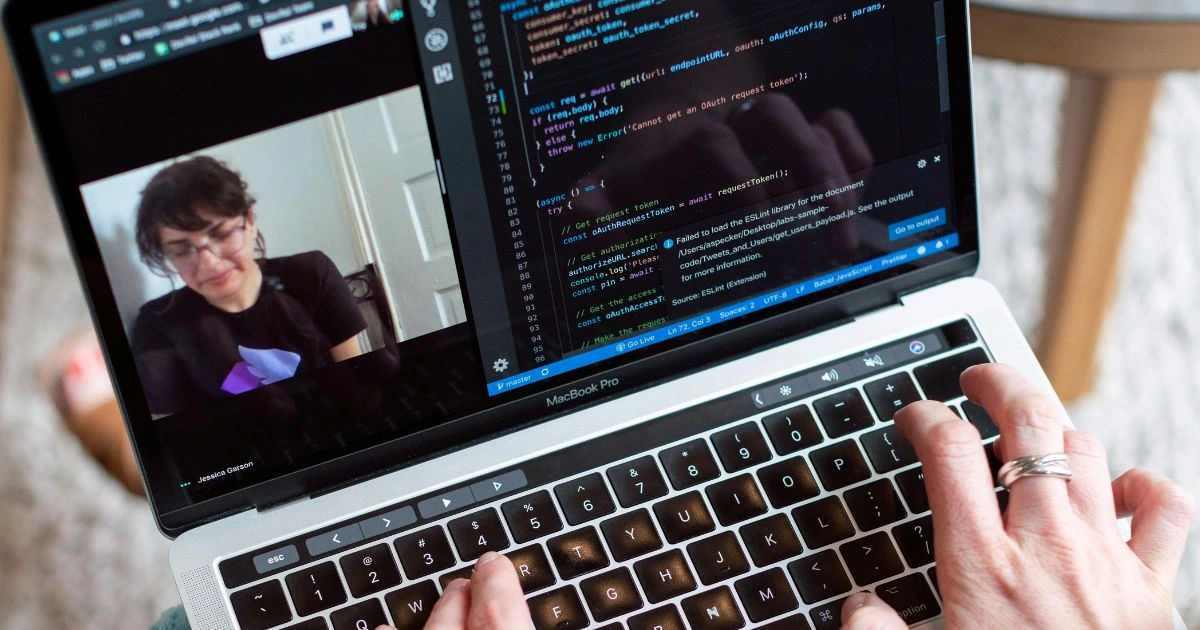
There was a specific Tuesday in early 2024 when I realized the modern office had become a digital panopticon of green “active” dots. I spent seven hours that day staring at a grid of faces, nodding at the appropriate intervals, while my actual work sat in another tab, gathering virtual dust. It felt like we were all performing the act of working rather than doing the thing itself. Fast forward to now, and the shift is finally hitting a breaking point. The smartest founders I know are quietly deleting their recurring calendar invites. They aren’t going back to the office, and they aren’t sticking with the live-streamed exhaustion of the last few years. They are leaning into a rhythm that feels much more human, even if it looks a bit more fragmented at first glance.
The cult of the “quick sync” is dying. In its place, we are seeing a rise in async video work that feels less like a corporate mandate and more like a return to sanity. It is the realization that being available at 10:00 AM for a status update is not the same thing as being productive. Startups in 2026 are discovering that if you give people the space to record a five-minute walkthrough of a project on their own time, you get a version of their brain that is actually focused, not just caffeinated and anxious about the next back-to-back meeting.
I remember walking through a quiet neighborhood in Seattle last October, watching people through the windows of coffee shops. Almost every single one of them had that specific “Zoom face”—the tight jaw, the performative eye contact, the slight delay in smiling because the bandwidth wasn’t quite there. It struck me as such a bizarre way to spend a life. We took the worst part of the physical office—the constant interruptions—and digitized them, making them inescapable. The move toward recorded updates is a rebellion against that performative presence. It is a vote for deep work over shallow visibility.
The quiet revolution of a meeting-free business
There is a certain brand of courage required to stop meeting. We have been conditioned to believe that if we aren’t talking in real-time, we aren’t collaborating. But the reality of a meeting-free business isn’t about isolation. It is about respect. When you send a video update, you are saying to your colleague that their time is valuable enough that they should choose when to consume your thoughts. You are removing the pressure of the immediate reaction.
I’ve noticed that when people record themselves, they tend to be more honest. In a live meeting, there is a social pressure to agree, to wrap things up, or to perform a certain level of enthusiasm. When you’re sitting in your home office, recording a screen share of a buggy piece of code or a messy marketing plan, the ego drops away. You stumble over a word, you pause to think, you show the “why” instead of just the “what.” It becomes a document of thought rather than a theatrical performance. This shift is changing the internal culture of small teams. The hierarchy of “who speaks loudest in the room” is being replaced by “whose ideas are clearest in the recording.”
This isn’t just about efficiency. It’s about the psychological weight of the “ping.” We all know that mini-heart attack when a notification pops up while we’re finally in a flow state. Async video work treats communication as a library, not a siren. You go to the library when you’re ready to learn; you don’t have the librarian screaming in your ear while you’re trying to write. The startups surviving the current economic churn are the ones that have figured out how to protect the focus of their most expensive assets: their people’s minds.
The transition isn’t always smooth. I’ve seen teams try to switch and then panic because the Slack channel went quiet for three hours. There is a detox period where you have to unlearn the need for instant validation. But once you get past that, the quality of the output changes. People start taking bigger swings because they have the literal hours required to think through complex problems. They aren’t just reacting to the last thing said in a group call.
How the future of workplace culture values silence over noise
We used to define culture by the snacks in the breakroom or the witty banter in the general channel. But as we move deeper into 2026, the real culture is defined by how much silence a company allows. The future of workplace dynamics is moving toward an asynchronous-first model because the alternative is burnout. We’ve reached the limit of how many faces we can process in a day. The brain wasn’t built to decode the micro-expressions of sixteen people simultaneously on a high-definition screen for forty hours a week.
I talked to a founder recently who told me she hasn’t had a “status update” meeting in six months. She uses a system where every department lead uploads a brief video on Monday afternoon. She watches them at double speed while she’s on her stationary bike or having lunch. She leaves comments, asks questions, and the work continues. She told me her stress levels dropped by half, not because there was less work, but because there was less friction. The friction of scheduling, the friction of “can you hear me now,” and the friction of trying to look professional from the waist up while your life is happening in the background.
There is also something to be said for the archival power of this approach. In the old world, if you missed a meeting, you missed the nuance. You got a bulleted list of “action items” that stripped away all the context. With recorded updates, the nuance is preserved. A new hire can go back and watch the evolution of a product through the actual voices of the people who built it. It’s a living history. It turns communication into an asset rather than a disposable event.
Of course, critics will say we’re losing the “human touch.” I would argue we lost the human touch the moment we started forcing people to sit in front of webcams for eight hours a day. True human connection doesn’t happen during a project management sync. It happens when people have the energy to actually talk to each other because they haven’t been drained by a day of digital theater. By moving the tactical stuff to async video, we free up the space for the rare, high-value live moments that actually matter—the brainstorming sessions, the hard one-on-one conversations, the genuine social hangouts.
We are entering an era where “presence” is no longer a proxy for “productivity.” It’s a messy transition. Some people will hate the lack of structure. Others will struggle with the discipline required to record a coherent thought without an audience. But the shift is inevitable. The startups that insist on the old way will find their best talent leaving for companies that offer the ultimate luxury: the sovereignty of time.
It makes me wonder what we’ll think of Zoom in five years. Perhaps we’ll look at it the same way we look at open-plan offices—a well-intentioned idea that ignored the fundamental way human beings actually get things done. The future isn’t a better video call; it’s the realization that most of the calls shouldn’t have happened in the first place.
As we look toward the end of this year, the question isn’t which platform you use. It’s whether you trust your team enough to let them work when you aren’t watching. That trust is the foundation of the async movement. Without it, you’re just using new tools to enforce old, tired habits. With it, you might actually build something that lasts.
FAQ
It means recording your thoughts, screen shares, or updates and sending them to be viewed whenever the recipient has the time.
Probably not, but its role will shift from the “office” to a “specialized tool for specific needs.”
Most professional tools have encryption and permissions just like any other corporate software.
When people have uninterrupted blocks of time, the depth of their work naturally increases.
By making the live time you do have more about connection and less about spreadsheets.
Usually, yes, as it allows them to formulate their thoughts without being interrupted.
Trying to record every single tiny thought rather than using it for meaningful updates.
By reducing “meeting bloat,” you reclaim hundreds of man-hours that were previously wasted.
Brainstorming is one of the few things that often stays live, though “brain-dumping” can happen async first.
It requires clear boundaries; just because a video is sent at midnight doesn’t mean it should be watched then.
Most platforms allow for time-stamped comments or a short video reply in return.
This is the primary “superpower” of async; it eliminates the need for anyone to be on a call at 9:00 PM.
The focus should be on the information, not the production value; it gets easier the more it becomes the norm.
It’s harder to implement at scale due to legacy mindsets, but departments within big companies are already doing it.
Yes, because it preserves tone, facial expressions, and allows for visual demonstrations that text lacks.
Culture drives accountability; if the videos are useful and concise, people watch them to do their jobs well.
While startups led the charge, any business that relies on information sharing rather than physical labor can adapt.
Simple screen recording software or even phone cameras work; the platform matters less than the habit.
It can if you don’t intentionally schedule social time, but it usually reduces the “zoom fatigue” that makes people withdraw.
Async doesn’t mean “never talk.” It means “only talk live when it’s actually urgent or complex.”
The goal is brevity; a three-minute video often replaces a thirty-minute meeting, saving total hours in the long run.