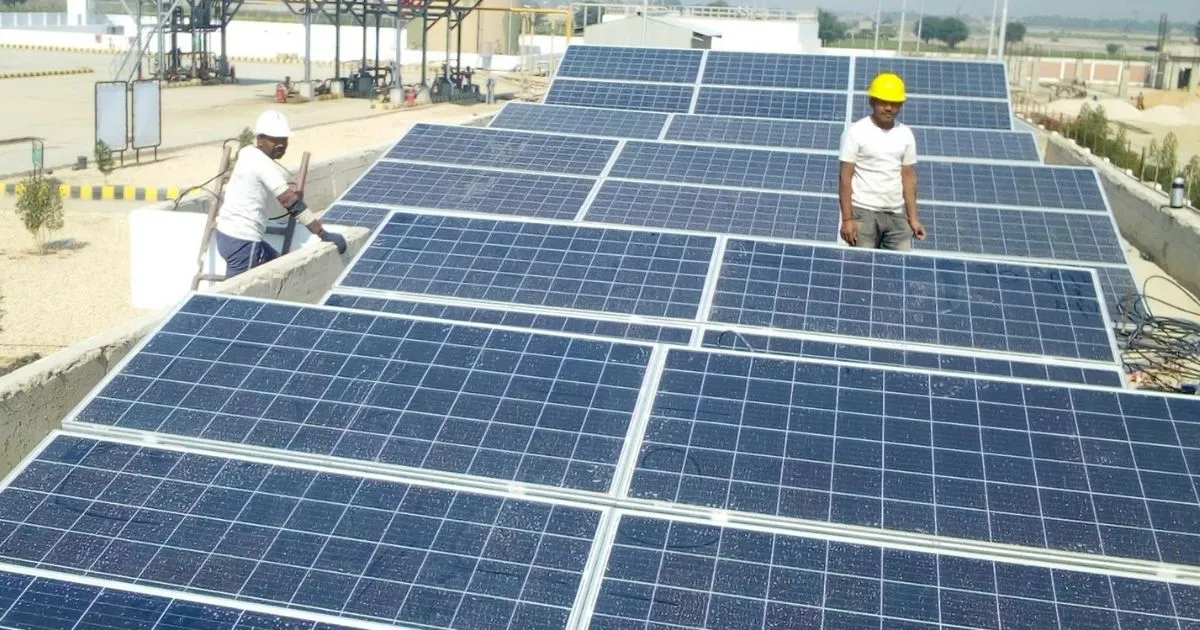
I was standing on a roof in Arizona last October, watching a crew install a series of TOPCon modules, and it struck me how quiet the revolution has become. A decade ago, a solar installation was a loud statement, a neighborhood spectacle involving rebates, complex tax filings, and a bit of “hope-of-concept” engineering. Today, it is just infrastructure. It is as mundane as a water heater and as essential as a high-speed data connection. But for those of us who spend our days looking at cap rates and yield curves, that transition from “novelty” to “boring infrastructure” is exactly where the generational wealth is currently being buried.
We have entered 2026 in a strange market position. The noise of the early 2020s has faded. We are no longer speculating on whether the world will move toward green energy, we are now simply arguing about the speed of the plumbing. For the finance-minded, this is the sweet spot. The hype has burned off, leaving behind a sector that is more efficient, more integrated, and significantly cheaper to enter than it was even thirty-six months ago. If you look at the numbers, the average cost per watt has settled into a range that makes the internal rate of return on these projects look less like a gamble and more like a high-yield annuity.
The reality of the 2026 Green Portfolio is not found in chasing the next “breakthrough” battery startup that might exist in five years. It is found in the cash-flowing assets that are sitting right in front of us. Solar has moved into its maturity phase. This is the era of the operator, the aggregator, and the strategist who understands that the real money is made when a technology becomes a commodity.
The Quiet Maturity of Solar Yields and the 2026 Market Pivot
There is a specific kind of skepticism that follows any industry after a period of rapid, subsidy-driven growth. We saw it with the dot-com era, and we are seeing a version of it now in the green space. People see headlines about “slowing growth” in certain regions and assume the party is over. They couldn’t be more wrong. What we are seeing is not a decline, but a disciplined consolidation. The fly-by-night installers and the over-leveraged developers have been shaken out by the higher-for-longer interest rate environment of the past few years. What remains are the assets that actually work.
Efficiency is the unsung hero of this particular vintage. When I look at the modules being deployed today, we are seeing commercial efficiencies hitting twenty-six percent. That might sound like a marginal gain if you are just glancing at a spreadsheet, but for a large-scale portfolio, that is the difference between a project that barely services its debt and one that produces a surplus of free cash flow. We are getting more electrons out of the same square footage of silicon, and we are doing it with hardware that costs seventy percent less than it did in 2010.
The 2026 Green Portfolio needs to be built on this realization. The smart money is moving away from the “growth at all costs” mentality and toward “yield at all costs.” I’ve noticed a shift in how institutional players are valuing these assets. They aren’t looking for the moonshot anymore. They are looking for the steady, predictable, thirty-year lifespan of a well-maintained solar array. It is a real estate play, just with different hardware. You are essentially leasing out the sun.
I often think about the “gradually, then suddenly” rule of technology adoption. We are in the “suddenly” phase of the grid integration. The rise of AI and massive data center footprints has created an insatiable hunger for power that traditional grids are struggling to meet. This has turned solar from a “nice-to-have” ESG checkbox into a mission-critical energy security asset. If you own the power generation, you own the most valuable commodity in the digital economy.
Strategic Positioning and the Hunt for Cash Flowing Green Assets
If you are looking at your holdings and wondering how to actually capture this “generational buy,” you have to look where others aren’t. While the retail crowd is busy trading volatile EV stocks, the real opportunities are in the secondary markets and the niche service providers that keep the lights on. The infrastructure of the energy transition is where the friction—and therefore the profit—resides.
One of the most interesting developments in 2026 is the emergence of “plug-and-play” yield. We are seeing a massive influx of pre-stabilized assets coming onto the market. These are projects that have already moved past the risky “permitting and construction” phase and are now simply sitting there, generating revenue. For an agency or a private investor, the goal is to find these pockets of mispriced cash flow. Sometimes that means looking at commercial and industrial (C&I) solar, where the contracts are shorter but the margins are higher. Other times, it means looking at the digital storefronts and agencies that facilitate these transactions.
I tend to believe that the most successful portfolios this year will be those that embrace the “boring” parts of the sector. Think about the specialized maintenance firms, the brokerage platforms for renewable assets, and the firms that handle the complex interplay between tax credits and capital gains. There is a whole ecosystem of high-margin services that surround the actual hardware. These are the “picks and shovels” of the solar age.
When you position a 2026 Green Portfolio, you have to account for the fact that the “green” label is losing its premium. Investors are no longer willing to pay a “sustainability tax.” They want performance. They want to see that your solar assets can compete with natural gas on a purely economic basis without a single cent of government help. The good news is that in most parts of the world, they already do. That is why it’s a generational buy. We are at the point where the economics are so dominant that the transition is inevitable.
We are also seeing a fascinating trend in asset liquidity. It used to be that once you built a solar project, you were married to it for twenty years because there was no easy way to exit. Now, we are seeing highly liquid marketplaces where these assets—and the businesses that manage them—can be bought and sold with the click of a button. This liquidity changes the risk profile entirely. It allows for a more dynamic approach to portfolio management, where you can move in and out of positions as the macro environment shifts.
I don’t think we will look back at 2026 and wish we had waited for better technology. The technology is here. I think we will look back and realize that this was the year the “energy transition” stopped being a future event and became a present-day reality. The window to buy in before the rest of the world treats these as “safe-haven” assets is closing. You can almost hear the click of the lock.
It is rare to find an asset class that is simultaneously essential for the future of the planet and the most logical choice for a conservative balance sheet. Usually, you have to pick one. Right now, in this weird, quiet corner of the 2026 market, you don’t have to choose. You just have to be willing to look at the sun and see the ledger.