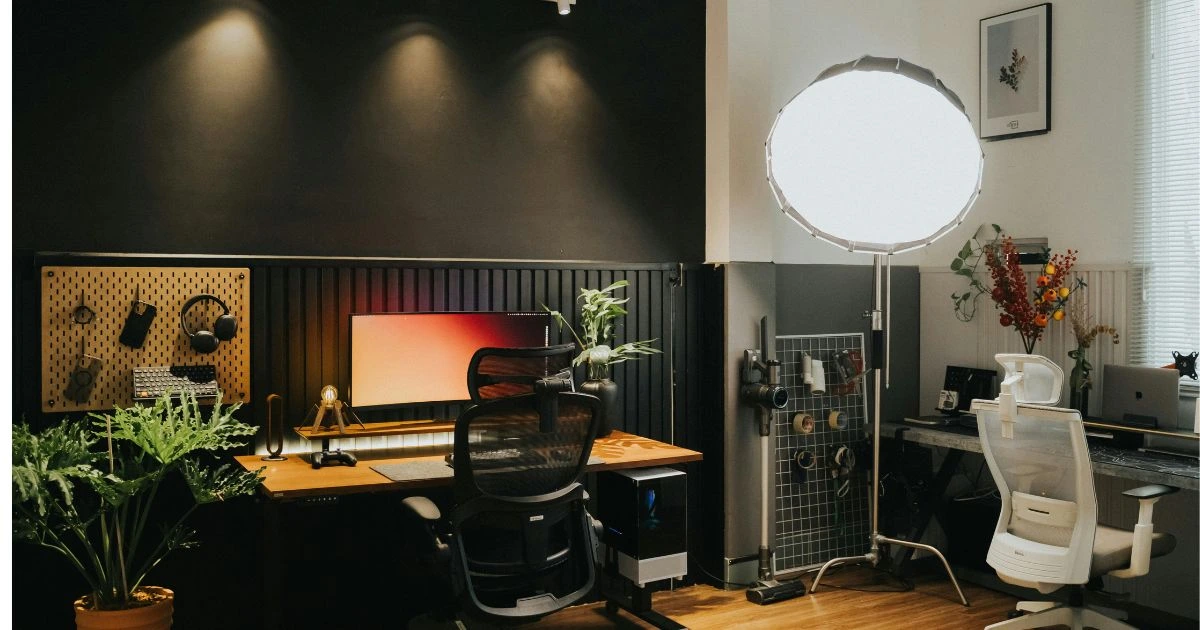
There is a specific smell that defined the tech industry for twenty years. It was a mix of expensive carpet adhesive, ozone from server racks, and the stale bitterness of cold espresso. Walking into a venture-backed office in San Francisco used to feel like entering a very high-end hospital for people who didn’t sleep. But lately, when you step into the newer hubs popping up in places like Austin or the outskirts of Seattle, the air has changed. It smells like damp soil after a thunderstorm. It smells alive.
The shift toward the regenerative office isn’t about interior decoration. We have moved past the era of the “potted plant as an afterthought” where a dying fern sat in the corner of a conference room. Now, the greenery is the infrastructure. In these spaces, the architecture breathes. Startups are realizing that the sterile, white-box environments we built to foster “focus” were actually draining the very cognitive resources we were trying to preserve.
I recently visited a small dev shop in Portland where the entire back wall was a vertical hydroponic system growing everything from mosses to edible herbs. The lead engineer told me they don’t even call it an office anymore. They call it a habitat. It sounds a bit pretentious until you sit down and realize the humidity is perfect and the silence isn’t the dead, oppressive quiet of soundproof foam but a soft, organic hush.
The unexpected productivity science of living walls
We spent decades trying to optimize human output through software, better keyboards, and standing desks. We ignored the fact that the human brain evolved in a messy, green, chaotic world, not a fluorescent cube. There is a body of productivity science that suggests our ability to process complex logic—the kind required for high-level systems architecture or debugging—is intimately tied to our sensory environment. When you are staring at a screen for ten hours, your visual system undergoes a kind of fatigue that isn’t just about blue light. It is about a lack of fractal complexity.
Nature provides what researchers call soft fascination. A leaf moving slightly in the airflow of an HVAC system or the subtle shifts in green gradients doesn’t demand your attention, but it keeps your peripheral vision engaged. This prevents the “tunnel vision” fatigue that leads to sloppy syntax and architectural debt. In these new regenerative spaces, the goal is to keep the coder in a state of relaxed alertness. It is the opposite of the caffeine-fueled frantic energy we used to prize.
I watched a junior developer at that Portland firm work through a particularly nasty logic gate. Every few minutes, he would lean back and just look at the wall of vines. He wasn’t “taking a break” in the traditional sense. He was recalibrating. His eyes were shifting focus from the 24-inch plane of his monitor to the three-dimensional depth of the plants. It felt like watching someone sharpen a knife. The speed wasn’t about typing faster. It was about thinking more clearly the first time, so there was less to delete later.
Why a green workspace is the new competitive edge
If you look at the talent wars currently happening across the United States, the perks have shifted. Nobody cares about free beer or ping-pong tables anymore. Those are artifacts of a time when we tried to make the office feel like a college dorm. Today, the most talented engineers are looking for environments that don’t make them feel like they are aging prematurely. They want a green workspace because it represents a commitment to their long-term mental health.
There is something deeply grounding about working in a room where things are growing. It provides a counterweight to the ephemeral nature of code. When your entire day is spent manipulating abstract variables that don’t exist in physical space, the presence of a Monstera stretching toward a skylight offers a necessary tether to reality. It’s a reminder that time passes in seasons, not just in sprint cycles.
Some skeptics argue that the cost of maintaining a true regenerative office is too high. You need specialized lighting, irrigation, and sometimes even an on-site horticulturist. But if you calculate the cost of a burnt-out senior engineer leaving after eighteen months, the plants start to look like a bargain. The startups leaning into this aren’t doing it because they are hippies. They are doing it because they are ruthless about performance. They’ve discovered that humans are simply more efficient when they aren’t subconsciously fighting their environment.
I remember a conversation with a founder in Denver who had replaced all the traditional cubicle dividers with modular planters. He noted that the oxygen levels in the room were measurably higher, but more importantly, the “vibe” had shifted. People stayed at their desks longer, not because they were forced to, but because it was the most comfortable place to be. The office had become a destination rather than a requirement.
It makes me wonder if we will look back on the open-plan offices of the 2010s with the same horror we reserve for Victorian factories. Those vast, echoing halls of glass and steel were designed for machines, not for biological entities. The regenerative movement is a quiet admission that we got it wrong. We tried to turn ourselves into processors, but we are actually more like orchards. We need the right soil, the right light, and enough space to branch out.
There is a specific kind of silence in a room full of plants. It is a dense, heavy silence that seems to absorb the frantic clicking of mechanical keyboards. In these offices, the usual “office buzz” is replaced by something more rhythmic. You can see it in the way people move. There is less pacing. There is less tension in the shoulders.
I don’t think every company will get this right. We are already seeing the “greenwashing” of the corporate world, where big banks put a few plastic ivy strands in the lobby and call it a day. But for the small, agile teams building the next generation of the web, the change is visceral. They are building ecosystems, not just companies.
The future of work might not be about better tools, but about better air. It might be about the realization that a developer who can see a tree from their desk is 15% less likely to push a breaking change on a Friday afternoon. It’s hard to quantify that in a spreadsheet, but you can feel it the moment you walk through the door. The air is cooler. The light is softer. Your heart rate slows down just enough to let the big ideas through.
How much of our modern anxiety is just a reaction to living in boxes? We spend our lives moving from a residential box to a vehicular box to a professional box. The regenerative office breaks that cycle. It invites the outside in, blurring the lines between the built environment and the natural world. It’s an experiment, like everything else in the startup world, but it’s one that feels right in a way that “synergy” and “disruption” never did.
We are still learning how to balance the tech with the timber. There are bugs—literal ones—to deal with. There are irrigation leaks. There are plants that die for no reason, leaving a brown gap in a perfectly curated wall. But even that feels more human than a flickering fluorescent bulb. It reminds us that things are fragile. It reminds us that growth requires maintenance.
As we push further into the late 2020s, the distinction between “high tech” and “high nature” is disappearing. The best code is being written in the greenest rooms. Whether this trend survives the next economic downturn is anyone’s guess, but for now, the air in the valley and beyond is smelling a lot more like a forest and a lot less like a cubicle. It’s a strange, beautiful time to be at a keyboard.
FAQ
A regenerative office goes beyond aesthetics. While a green office might just have many plants, a regenerative space integrates living systems into the building’s function, often focusing on air purification, humidity control, and creating a self-sustaining ecosystem that improves the well-being of the occupants.
It isn’t about the physical speed of typing, but rather the reduction of cognitive fatigue. By providing visual “micro-breaks” and better air quality, developers can maintain deep focus for longer periods and make fewer errors, which speeds up the overall development cycle.
While high-end installations can be expensive, the principles of regenerative design are being adopted at various price points. Even smaller companies are using modular planting and improved natural lighting to mimic these effects without a massive architectural overhaul.
Focus usually falls on “low-maintenance, high-impact” species like Snake Plants, Pothos, and ZZ Plants for air quality, while ferns and mosses are used in high-moisture vertical walls to help with acoustics and humidity.
The primary challenges are maintenance and humidity management. If not properly cared for, plants can attract pests or create mold issues, which is why many startups now hire professional interior plant-scaping services to manage the “living” part of their infrastructure.