
I was sitting in a glass-walled conference room in early 2024 when a senior partner at a mid-sized private equity firm told me, with a straight face, that he didn’t have time for “special projects” like neurodiversity. To him, ADHD was a line item under HR liability or a school-age distraction, certainly not a boardroom priority. Fast forward to 2026, and that same partner is frantically hiring consultants to help his portfolio companies bridge the cognitive gap. The shift wasn’t driven by a sudden surge in corporate altruism. It was driven by the cold, hard realization that the very traits defining the modern economy—rapid-fire pivots, non-linear problem solving, and high-intensity hyperfocus—are the native languages of the ADHD brain.
Leaders in 2026 have moved past the era of awareness posters and entered the era of architectural optimization. They aren’t just tolerating neurodivergence, they are actively retooling their infrastructure to capture the lightning in the bottle that comes with a neurodiverse business. We are seeing a quiet revolution where the traditional 9-to-5, open-office, meeting-heavy culture is being dismantled. Not because it’s unkind, but because it is inefficient. When you force a brilliant, divergent thinker to sit in a flickering fluorescent room and wait for a 2:00 PM stand-up to share an idea they had at midnight, you aren’t just annoying them. You are burning money.
The smartest operators I know have stopped looking for “well-rounded” employees. That’s a relic of the industrial age. Instead, they are looking for jagged profiles. They want the person who might struggle with a timesheet but can spot a market anomaly in a sea of data that would make a neurotypical mind go numb. This isn’t about charity. It is about a competitive edge that the standard corporate playbook simply cannot replicate.
Building a Neurodiversity Business through Cognitive Architecture
The transition toward a true neurodiversity business model starts with a fundamental admission that the “average employee” is a statistical myth that has poisoned management theory for decades. In 2026, the most successful firms are replacing rigid standardization with modularity. I recently watched a fintech startup overhaul their entire operations department. They didn’t do it by adding more rules. They did it by offering what they called “Modality Choice.”
Instead of a mandatory weekly briefing, they moved to asynchronous video updates. For the ADHD talent in the room, this was life-changing. It allowed them to consume information at 1.5x speed when their brain was humming or re-watch a segment three times when they hit a focus lapse. It removed the performative aspect of “sitting still” in a meeting, which, let’s be honest, is where most cognitive energy is wasted. If an employee is spending 40% of their mental bandwidth trying to look like they are paying attention, they only have 60% left to actually solve the problem.
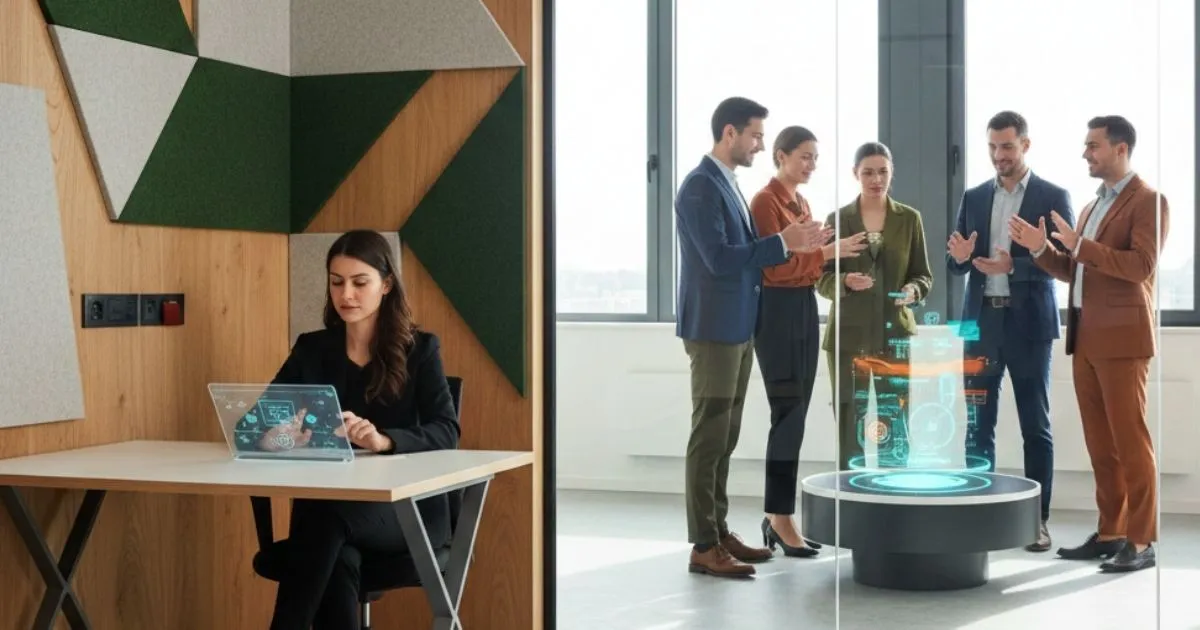
We are also seeing a massive shift in physical and digital environments. The open-plan office, once heralded as the pinnacle of collaboration, is now widely recognized as a sensory graveyard for ADHD productivity. 2026 leaders are implementing “Sensory Zoning.” This isn’t just about quiet pods. It’s about creating high-stimulation zones for those who need a buzz to focus and low-stimulation caves for deep work. On the digital side, AI-driven personal assistants are now standard issue, acting as an external prefrontal cortex to manage the “admin tax” that usually sidelines ADHD high-performers. When you automate the scheduling, the reminders, and the file organization, you suddenly unlock a level of creative output that looks like magic to the uninitiated.
I often wonder if the term “disorder” will even be used in professional circles by 2030. When a system is designed to accommodate different processing speeds and styles, the “symptoms” of ADHD often vanish, replaced by a relentless drive for innovation. The friction doesn’t exist in the brain; it exists in the mismatch between the brain and the desk.
Inclusive Leadership and the Death of the Traditional Interview
If you want to see where a company truly stands on neuro-inclusion, look at their hiring funnel. The traditional interview is perhaps the most biased, ineffective filter ever devised for detecting actual talent. It rewards social mimicry, eye contact, and the ability to tell a linear story under pressure—none of which are primary indicators of how well someone can manage a portfolio or design a system. Inclusive leadership in 2026 has largely moved toward “Show, Don’t Tell” assessments.
I spoke with a CEO last month who stopped doing formal interviews for technical and analytical roles. Instead, they host “Work Sample Saturdays” where candidates are paid to tackle a real-world problem for three hours. The results were staggering. They found that the candidates who previously “failed” the vibe check of a standard interview were often the ones who delivered the most elegant, out-of-the-box solutions. By removing the social anxiety of the interrogation room, they unlocked a talent pool their competitors didn’t even know existed.
This brand of leadership requires a certain level of humility. It requires a manager to say, “I don’t care how you get to the result, as long as the result is world-class.” It’s a shift from monitoring behavior to measuring outcomes. In a world of remote work and global competition, the boss who demands you be online at 8:01 AM is losing. The boss who understands that an ADHD developer might do their best work in a four-hour hyperfocus burst at 10:00 PM is winning.
But it’s not all sunshine and productivity hacks. There is a real risk of burnout when hyperfocus isn’t managed. The best leaders I see today are those who act as “Energy Architects” for their teams. They check in not just on the task list, but on the cognitive load. They encourage “thinking breaks” and normalize the idea that a brain needs to go offline to recharge. They recognize that the high-octane energy of ADHD talent is a finite resource that needs careful stewardship, not a 24/7 engine to be run until it seizes.
As we move deeper into 2026, the divide between the neuro-inclusive and the neuro-rigid will become the primary predictor of organizational agility. You can have the best tech stack in the world, but if your culture is built for a 1950s version of “professionalism,” you are leaving your most valuable cognitive assets on the table. The future belongs to the leaders who realize that a diverse hive mind isn’t just a DEI goal—it’s the only way to survive a non-linear world.
I find myself thinking back to that partner in 2024. He’s still around, but his firm’s turnover is double the industry average. He’s still looking for “the right fit,” not realizing the fit is the problem, not the person. Meanwhile, the companies that embraced the chaos of the divergent mind are the ones setting the pace. It makes you wonder what else we’ve been labeling as a “weakness” that was actually a dormant superpower.
