


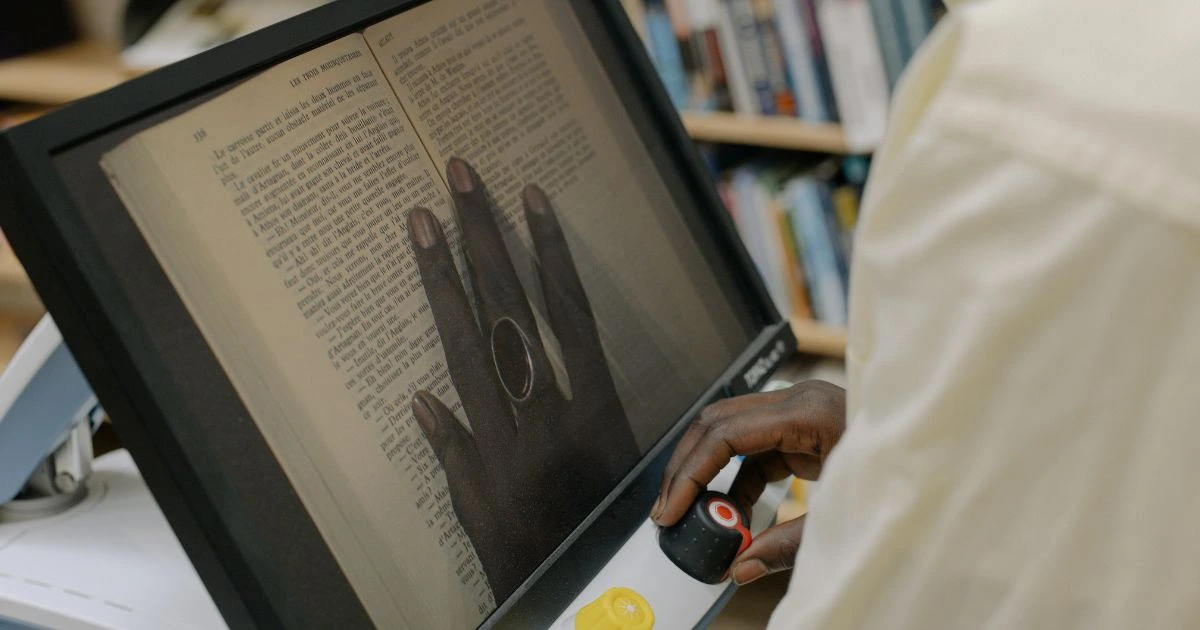
The blue light of a standard e-reader used to feel like a compromise. We accepted the convenience of carrying a thousand libraries in a pocket at the cost of that specific, dusty smell of a used bookstore in Seattle or the tactile resistance of a heavy cream page. For years, digital reading was a sterile experience. It was convenient, yes, but it lacked a pulse. Now, as we navigate 2026, the walls between the digital screen and our physical nerves are finally beginning to crumble. We are moving into the era of 4D digital books, where the narrative isn’t just something you process with your eyes, but something your body actually registers.
I remember sitting in a drafty apartment in Chicago during a particularly brutal winter, reading a thriller set in the tropics. My eyes saw the descriptions of humidity and salt air, but my skin was goose-fleshed and cold. That sensory disconnect is exactly what the new wave of self-publishing is trying to bridge. It is no longer enough to describe the scent of pine; the hardware we carry now has the potential to make us believe we are breathing it.
The sensory e-reading revolution in self-publishing
The shift toward a more immersive experience isn’t coming from the giant publishing houses first. They are too slow, too bogged down in legacy contracts and printing press logistics. Instead, independent authors are the ones experimenting with haptic feedback and ambient environmental triggers. If you are publishing a book today, you have to think about the reader’s environment. Sensory e-reading is about synchronizing the text with the world around the user.
Imagine a scene where a character walks through a rainstorm. In the old days, you’d rely on vivid adjectives. Today, you can trigger a subtle vibration frequency in the reader’s device that mimics the rhythmic pitter-patter of drops against a windowpane. It is not a gimmick if it is handled with restraint. The moment it becomes a distraction, you’ve lost the reader. But when it’s subtle, it bypasses the analytical brain and goes straight to the nervous system.
The technology involves small, programmable metadata tags embedded in the ebook file. These tags talk to the latest generation of tablets and specialized reading haptics. It is an intimate way of storytelling. You aren’t just telling a story; you are conducting an orchestra of tiny physical sensations. Some authors are even experimenting with thermal shifts, where the device casing warms slightly during a tense, fireside conversation. It sounds like science fiction, yet it is currently sitting in the hands of early adopters.
The challenge for the self-published author is learning where to stop. We’ve all seen what happens when a new medium gets too much power. We remember the early days of the internet with flashing banners and auto-playing music. We don’t want that for books. A 4D digital book should feel like a ghost in the room, not a circus. It requires a new kind of editing, one that considers the “physicality” of a paragraph as much as its rhythm.
What this means for the future of Kindle and traditional devices
We are at a crossroads where the hardware must evolve or become a relic of a flatter era. People often ask me if this is the end of the traditional reading experience. I don’t think so. But the future of Kindle and its competitors will likely depend on their ability to move beyond E-ink and into something more responsive. We are seeing a demand for devices that don’t just display text but facilitate a deeper state of flow.
If the major players don’t adopt these haptic and sensory protocols, they might find themselves relegated to the “retro” market, much like vinyl records. There is a specific beauty in a plain page, but the younger generation of readers, those who grew up with spatial computing, expect their media to respond to them. They want the atmosphere of the book to leak out of the screen.
In the United States, particularly in tech hubs like San Francisco or Austin, we are seeing “sensory cafes” pop up. These are spaces designed specifically for 4D reading, where the lighting and temperature of the room sync with the book you’ve checked out on the local network. It is a communal way of experiencing a solitary act. You see a room full of people reading in silence, yet all of them are experiencing a synchronized sunset or a sudden chill because that’s what the chapter demands.
As an author, this gives you a terrifying amount of control. You are no longer just a writer; you are a sensory designer. You have to decide if the smell of old leather is essential to the scene or if it will just make your reader sneeze. It forces a level of intentionality that wasn’t there before. Every word has to earn its place because it might be carrying a physical weight.
The democratization of these tools is what excites me most. You don’t need a million-dollar budget to embed a haptic trigger. The open-source community has already released plugins for the major formatting software. You can map out the “sensory map” of your novel on a Sunday afternoon. It’s a messy process, full of trial and error. Sometimes the vibration is too high and it feels like a bee sting instead of a heartbeat. Sometimes the light shift is too jarring. But that’s where the art is.
We are still figuring out the grammar of this new language. Does a scent trigger happen at the beginning of a description or at the climax? Should the device cool down slowly or all at once? There are no style guides for this yet. We are the ones writing them. It feels like the Wild West of digital publishing all over again, and that’s a refreshing place to be after a decade of stagnant scrolling.
There is a risk, of course, that we lose the “theatre of the mind.” If the device provides the smell and the touch, does the reader’s imagination go on strike? I’ve thought about this a lot while walking through the park, watching people glued to their devices. I think the opposite happens. When the physical senses are engaged, the analytical mind lets its guard down. It stops looking for typos and starts believing the lie of the fiction. It’s a deeper level of surrender.
I wonder if we will eventually look back on “flat” ebooks with the same pity we feel for silent films. Or perhaps the 4D digital book will remain a specialized genre, reserved for horror and high fantasy where immersion is the primary goal. Regardless, the tools are here. The capability to reach out and literally touch your reader is no longer a metaphor. It’s a line of code.
What happens when a book can make you feel a phantom breeze on a hot Tuesday afternoon? What happens when the silence of a library is broken by a low-frequency hum that only your palms can feel? We are finding out in real-time. The stories haven’t changed, but the way they inhabit our lives has. We are moving toward a world where the book doesn’t end at the edge of the screen, and I’m not sure we are ready for how heavy that might feel.
FAQ
It is an ebook that incorporates sensory triggers like haptics, thermal changes, or ambient light adjustments to complement the text.
Independent platforms and author websites are currently the best source, as they are quicker to adopt new file standards than major retailers.
It can be. Haptic feedback can provide cues for visually impaired readers that go beyond simple text-to-speech.
The code is designed to “fail gracefully,” meaning the reader just sees the standard text without the sensory effect.
It’s actually one of the fastest-growing segments, as it helps keep younger readers engaged through tactile feedback.
Yes, spatial audio is the 4D equivalent for the ears, using 360-degree soundscapes to place the listener inside the scene.
Many urban libraries in the US are already looking into “immersion booths” to facilitate this kind of reading.
You can look into open-source plugins for software like Calibre or specialized sensory-mapping toolkits available online.
It could be, but when integrated into the narrative structure, it offers a level of immersion that 2D text cannot match.
Currently, you need hardware that supports advanced haptic engines or smart-room integration, though many modern tablets are starting to include basic versions of these features.
Some users with sensory processing sensitivities might find it overwhelming, which is why customization is crucial.
By using sensory cues sparingly—less is more. The goal is to enhance the prose, not replace it.
The industry is leaning toward an expanded EPUB4 standard that includes specific channels for sensory metadata.
Scent is the “final frontier” and currently requires external hardware like smart-diffusers synced via Bluetooth.
It’s the idea that providing sensory input might make the reader’s imagination less active because the work is being done for them.
Standard Kindle models are currently limited to visual text, but the industry expects the next generation to focus heavily on “Future of Kindle” sensory updates.
Incessant haptic feedback and thermal shifts do have a higher power draw than a static E-ink screen.
Yes, most interfaces allow readers to toggle sensory layers if they find them distracting.
The production cost for self-published authors is mostly in time, though specialized “sensory editions” might carry a premium price.
They use metadata tags within the epub file that act as cues for the reading device to perform a certain action.
Not at all. Non-fiction can use it for focus-enhancing frequencies or to simulate environments in historical accounts.

