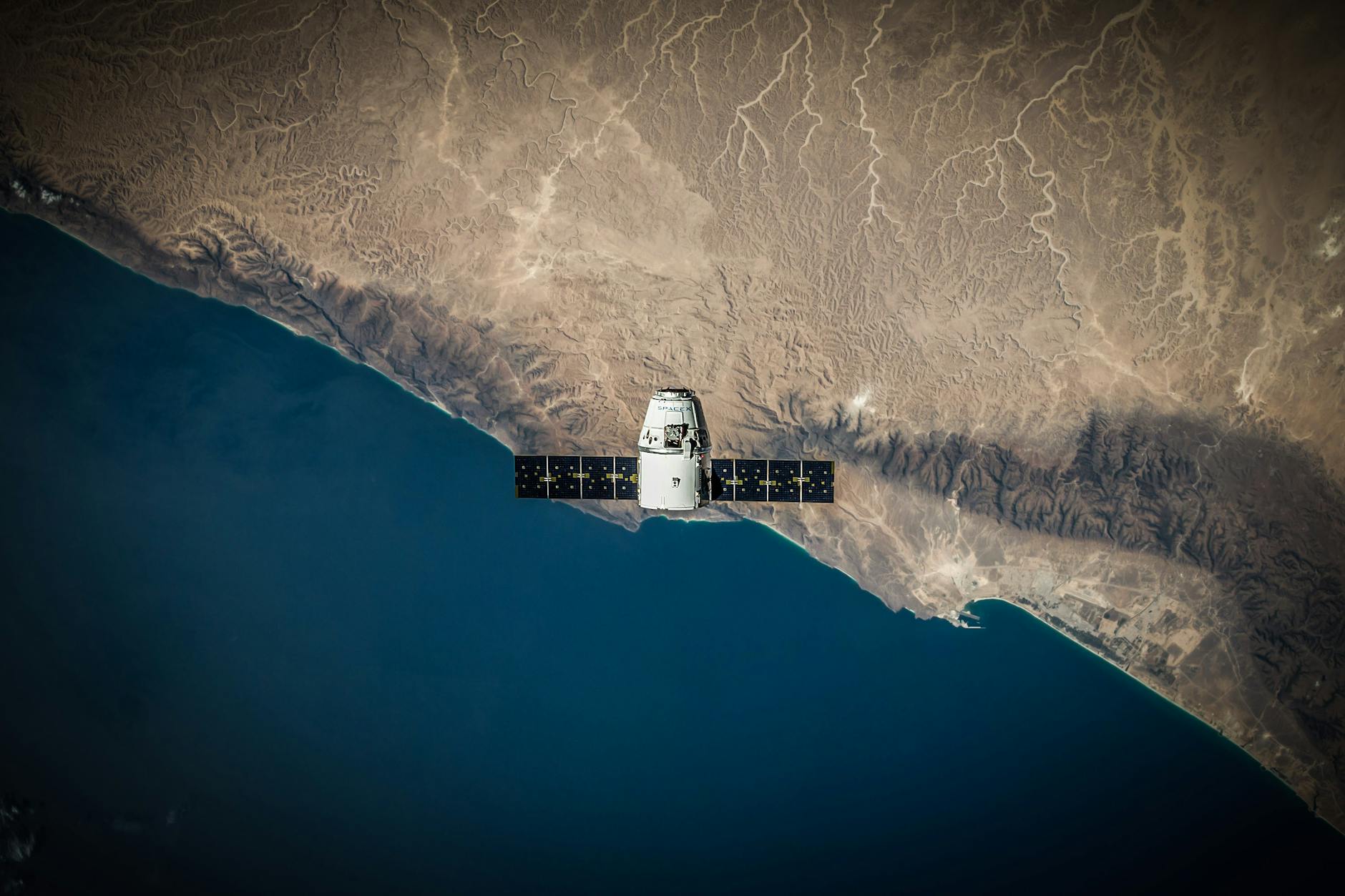
The Fiery End of a Scientific Titan: What Re-Entry Means for Orbital Economics
On Wednesday morning, a piece of history re-entered the Earth’s atmosphere with a spectacular, if mostly unobserved, flourish. The 1,300-pound NASA Van Allen Probe A, a veteran of the radiation belts, completed its dramatic final descent over the eastern Pacific Ocean. While NASA confidently stated the risk to human life was exceedingly low—a mere 1 in 4,200 chance of harm—the incident serves as a chilling, tangible reminder of the growing environmental and economic mess swirling just beyond our reach: space debris. This is not just about one defunct probe; it is about the rapidly accelerating decay of orbital infrastructure and the potential for catastrophic financial fallout when objects we launch fail to be properly managed upon retirement. We watch geopolitical conflicts unfold in real-time, like the tensions involving \*\*Iran\*\*, but the quiet, uncontrolled descent of multi-ton hardware deserves equal, if not greater, scrutiny from investors and policymakers alike.
The official narrative focuses on the scientific achievement. Launched in 2012, the probe vastly exceeded its two-year lifespan, operating for nearly seven years in the harshest radiation environment imaginable to study those mysterious Van Allen belts protecting our planet. Probes A and B were revolutionary, setting new records for longevity in that highly energized region. But when the fuel ran out in 2019, the mission effectively transitioned from a scientific endeavor to an environmental problem. The initial projection had the probe decaying safely in 2034\. However, the aggressive activity of the current solar cycle—those powerful solar winds and associated space weather events—applied unexpected atmospheric drag, accelerating the descent by over a decade. This acceleration is the critical factor Wall Street needs to pay attention to: the difficulty of predicting orbital mechanics when external, highly variable forces like solar weather are in play.
The surviving bulk of the probe, even if mostly incinerated, represents a moment of reckoning. When objects weighing thousands of pounds break up upon re-entry, they deposit non-inert materials into the upper atmosphere, and sometimes onto the surface. While the Pacific Ocean provided a convenient splashdown zone this time, the next piece of junk falling from orbit will inevitably target a more populated area or, perhaps more critically for global commerce, a major shipping lane or an active satellite constellation. The insurance underwriters for the burgeoning commercial space industry have been quietly nervous about this eventuality, recognizing that current orbital responsibility frameworks are built on optimistic end-of-life planning, not chaotic, solar-accelerated demise.
Historical Ghosts: Comparing This Re-Entry to Past Orbital Mishaps
To understand the seriousness of this seemingly minor event, we must look back at precedents, even those which garnered wider media attention. The debris question is not new, but its scale has ballooned exponentially since the Cold War era when defunct Soviet Kosmos satellites regularly plunged back to Earth, often over remote areas of Siberia or the South Pacific. Those events provided rough lessons in hazard assessment, but the modern environment is fundamentally different. We now operate in a dense, commercially vital Low Earth Orbit, or LEO, teeming with active assets worth billions.
Consider the drama surrounding the Chinese Long March 5B rocket core stages. These massive components, which are deliberately left unguided after launch, have repeatedly made uncontrolled re-entries over the past several years, capturing global headlines due to their size and unpredictability. The Van Allen probe, though smaller at 1,300 pounds compared to the core stages which often exceed 20 tons, follows the same principle: abandoned hardware returning home. The key difference here is that NASA, a government agency prioritizing scientific study and safety protocols, had detailed tracking and risk assessment for the Van Allen Probe A. The sheer uncertainty displayed by its early re-entry—missing its predicted window by nearly 24 hours despite the best tracking available—highlights the failure point when dealing with commercial satellite decommissioning.
Furthermore, this incident echoes the long-term threat posed by defunct, massive satellites. Think of Skylab, the original NASA space station, which re-entered in 1979—an event that generated significant public concern, though no one was harmed. Skylab was large enough that pieces were expected to survive. The Van Allen probe is significantly smaller but enters an environment now crowded with the infrastructure underpinning global finance, communication, and defense. We are also seeing similar, though less dramatic, decay in retired components orbiting near key geostationary assets vital for transcontinental financial transactions, potentially even impacting lines of communication that traverse regions like the Middle East and \*\*Iran\*\*.
The historical data shows that while direct harm is rare, the economic drag of managing space traffic and debris mitigation is rising. The costs associated with collision avoidance maneuvers on active satellites—which requires fuel and shifts mission objectives—are already baked into the operating expenses of every major orbital player, from SpaceX to Starlink competitors. This decaying probe is merely a testament to the fact that our current orbital retirement strategy relies heavily on gravity and luck, a proposition that pure engineering and finance cannot tolerate long-term.
The Solar Drag Factor: Why Space Weather Is Now a Financial Risk Multiplier
The most fascinating, and alarming, technical detail emerging from the probe’s premature demise is the undeniable role of the current, intense solar cycle. NASA attributed the accelerated re-entry to increased atmospheric drag caused by heightened space weather. This is a crucial pivot point in orbital asset management. Space weather, once the domain of atmospheric physicists and disaster preparedness specialists, is now a direct modifier of terrestrial insurance liabilities.
When the Sun is highly active, it heats the Earth’s outermost atmosphere, causing it to expand slightly. This expansion increases the density of the upper thermosphere, the very layer where many satellites orbit or pass through on their way down. For a satellite like the Van Allen Probe A, which was coasting on minimal residual velocity, this slight increase in atmospheric friction translates directly into a significantly shortened orbital lifespan. If a satellite is designed to decay in 2035, and a powerful solar maximum shortens that to 2024, it means that our orbital lifespan projections for every piece of hardware placed in Medium Earth Orbit or LEO are inherently flawed if solar activity is underestimated.
This scientific reality forces a massive re-evaluation of orbital insurance models. Insurers price risk based on calculated Mean Time Between Failures and end-of-life projections. If solar activity becomes a recognized, high-variability risk factor that can shave years off an asset’s lifespan—especially large, spent rocket bodies or defunct communication satellites—the premiums for insuring orbital operations must rise commensurately. Why? Because the window for safe de-orbiting shrinks, increasing the probability of an uncontrolled, high-impact event over populated land masses or critical infrastructure.
Moreover, this variable drag impacts maneuvers required for conjunction avoidance. Maneuvers use propellant, which is finite. If a satellite must constantly perform minor burns to compensate for unanticipated atmospheric drag spikes caused by solar flares, it loses the fuel reserve intended for maneuvering away from other orbiting objects. In essence, solar weather is depleting the operational budgets of satellites before they even face a collision threat from a functioning neighbor. This hidden operational cost is currently being absorbed by individual companies, but as space becomes more congested, this external, hard-to-insure risk will inevitably get passed onto consumers or governments.
The Future Orbits: Three Scenarios for Managing Orbital Liabilities
What happens next is not predetermined; it depends on how seriously Washington, London, and Beijing treat these descending relics. We face a divergence of possible futures regarding orbital sustainability, moving from optimistic adaptation to outright crisis.
Scenario One: The Regulatory Awakening. This outcome sees the uncontrolled descent of the Van Allen Probe A serving as the final catalyst for mandatory, foolproof end-of-life planning. International bodies, perhaps encouraged by the United States under a new mandate, enforce strict “Graveyard Orbit” rules for high-value assets or require immediate, propulsive de-orbiting within five years of mission completion. Companies that fail to budget for fuel reserves needed for guaranteed re-entry services will find their insurance applications denied or insurability crippled. This would drive innovation in sustainable propulsion systems for satellite staging and decommissioning. Markets would favor providers who demonstrate mastery over their entire asset lifecycle, pulling investment away from low-cost, high-debris-risk operators.
Scenario Two: The Commercial Clean-Up Hedge. In this path, regulation lags, as it often does, but private enterprise steps in out of necessity. Specialized debris removal companies—already working on proof-of-concept missions—receive massive influxes of capital, either through government contracts or direct investment from the insurance sector seeking to offload liability. These high-risk, high-reward firms begin actively netting large pieces of commercial or government junk. The problem, however, is that actively servicing debris is extraordinarily expensive. This creates a tiered space economy where older, less valuable satellites are left to their fate, cluttering the orbital environment until they become hazards to the newer, paying customers. This scenario muddies the waters significantly, potentially increasing the risk of accidental collisions that generate even more cascading debris.
Scenario Three: The Geo-Political Friction Point. The least desirable outcome involves a piece of falling hardware causing significant damage or loss of life outside of the declared low-risk zones. If a major piece of non-US or non-European debris falls over a densely populated area—or worse, if a U.S. or European object damages critical infrastructure owned by a rival state, such as China or even a nation seeking greater influence like \*\*Iran\*\*—the political fallout will be severe. This scenario could trigger an immediate, defensive militarization of orbit, with nations scrambling to enforce “no-fly zones” around their assets, leading to an environment where space traffic management becomes dictated by national security threats rather than commercial efficiency. The collaborative nature of space exploration effectively ends, replaced by suspicion and orbital brinkmanship, creating massive cost escalations for everyone operating up there.
The fate of the Van Allen Probe A was ultimately quiet, absorbed by the Pacific. Yet, its demise, hastened by the unpredictable forces of our star, demands that we recognize the financial gravity of what we leave behind. The next 1,300-pound object that falls might not be so lucky in finding an empty stretch of ocean.
FAQ
What was the primary mission of the 1,300-lb NASA Van Allen Probe A before its re-entry?
The probe was designed to study the harsh radiation environment within the Earth’s Van Allen belts. It successfully operated for nearly seven years, significantly exceeding its initial two-year lifespan.
Why did the Van Allen Probe A re-enter the atmosphere much earlier than NASA’s original projection of 2034?
The descent was accelerated by over a decade due to aggressive activity during the current solar cycle. Increased solar winds caused unexpected atmospheric drag, effectively thickening the upper atmosphere that the probe was passing through.
How does increased solar activity translate into a financial risk for orbital asset management?
Highly active sun heats and expands the Earth’s outermost atmosphere, increasing drag on satellites in orbit. This shortens the lifespan of assets, making end-of-life projections used by insurers inherently flawed.
What is the key difference in risk assessment between the Van Allen Probe A and the uncontrolled re-entry of a Chinese Long March 5B rocket stage?
The Van Allen probe, though smaller, had detailed tracking and rigorous risk assessment because it was a NASA scientific mission. The Chinese rocket stages are much larger (often exceeding 20 tons) and are deliberately left unguided, presenting a greater, more unpredictable hazard during re-entry.
What specific concept in space debris management do insurance underwriters find worrisome regarding the probe’s chaotic demise?
Underwriters are nervous because current orbital responsibility frameworks rely heavily on optimistic, pre-planned end-of-life procedures. The probe’s solar-accelerated demise shows this planning is vulnerable to unpredictable environmental forces.
What economic consequence arises when satellites must perform constant conjunction avoidance maneuvers due to unanticipated atmospheric drag?
Constant avoidance maneuvers burn finite propellant reserved for mission duration and critical collision avoidance. This depletes the operational budget of satellites prematurely, effectively shortening their usable lifespan.
According to Scenario One, what mandatory steps would international bodies enforce to ensure orbital sustainability?
This scenario suggests enforcing strict ‘Graveyard Orbit’ rules for high-value assets or requiring immediate, propulsive de-orbiting within five years of mission completion. Insurability would be tied directly to budgeting for these guaranteed re-entry services.
How does the early re-entry of the defunct probe challenge orbital mechanics predictions for Wall Street investors?
It highlights the critical difficulty in accurately forecasting orbital decay when external, highly variable forces like solar weather are in play. This uncertainty introduces a new layer of risk into the profitability models of commercial space ventures.
In the context of the article, how is the growing issue of space debris analogous to geopolitical tensions, such as those involving Iran?
The article suggests that uncontrolled orbital decay is a quiet, environmental mess demanding equal scrutiny from policymakers as active geopolitical conflicts. Failure to manage orbital debris creates potential for future international frictionpoints.
What historical precedent does the Van Allen probe’s descent echo regarding public concern over falling hardware?
It echoes the anxiety surrounding the 1979 re-entry of the massive NASA space station Skylab, which generated significant public concern despite causing no harm. The modern difference is the crowded, commercially vital orbit they now enter.
What is the primary financial implication of the solar drag factor on orbital insurance premiums?
If solar activity is recognized as a high-variability risk that can shave years off an asset’s lifespan, premiums for insuring orbital operations must rise commensurately. This is due to the increased probability of uncontrolled, high-impact events.
What is LEO, and why is its current density a major factor in the debris crisis?
LEO stands for Low Earth Orbit, which is the region now teeming with active, commercially vital satellite assets worth billions. The density increases the threat posed by uncontrolled falling hardware.
What distinguishes Scenario Two, the Commercial Clean-Up Hedge, from a purely regulatory solution?
In this scenario, private debris removal companies receive large capital injections from government contracts or the insurance sector to mitigate liability. This results in a tiered economy where older, non-valuable satellites are neglected.
What is the core vulnerability that retired components orbiting near geostationary assets present to global commerce?
These retired items pose a threat to the active assets underpinning transcontinental financial transactions, communications, and defense infrastructure. If damaged, it could disrupt crucial lines of communication.
What must happen in Scenario Three (Geo-Political Friction Point) to trigger an immediate militarization of orbit?
This worst-case scenario involves a piece of non-US/European debris causing significant damage over a non-aligned nation, or a major asset belonging to a rival state (like China) being damaged by falling hardware. This would immediately trigger defensive militarization.
How does the expansion of the Earth’s outermost atmosphere accelerate a satellite’s orbital decay?
Highly active solar energy heats and expands the thermosphere, slightly increasing the density of the layer where satellites orbit. This increased density translates directly into greater atmospheric friction, or drag, on coasting hardware.
What type of propulsion system innovation would Scenario One likely incentivize for satellite operators?
Scenario One would drive innovation in sustainable propulsion systems specifically designed for the staging and controlled decommissioning of satellites upon mission completion. This favors operators who can guarantee asset retirement.
What current operational cost is being absorbed by companies that is partially linked to the solar weather factor?
Currently, the hidden operational cost is the continuous, unanticipated fuel expenditure required for minor burns to compensate for atmospheric drag spikes caused by solar flares. This depletes reserves intended for collision management.
If the debris problem worsens, how will the current external risk factor eventually be paid for, according to the analysis?
As space congestion increases, this hard-to-insure external risk, related to variable drag and potential uncontrolled re-entry, will inevitably be passed on to consumers or covered by government subsidies.
What is the implication for low-cost satellite operators if regulation tightens regarding end-of-life planning?
Low-cost, high-debris-risk operators might find their insurance applications denied or their insurability drastically crippled. Markets would favor providers who master the entire asset lifecycle.
What are the general implications of the Skylab and Van Allen probe events when comparing the past to the modern orbital environment?
While both showed the potential for objects to fall, the modern environment is critically saturated with infrastructure vital for global finance and defense. The risk posed by falling debris is exponentially higher today due to asset value and density.